Operations | Monitoring | ITSM | DevOps | Cloud

The latest News and Information on DevOps, CI/CD, Automation and related technologies.

How to Break Stuff with Chaos Engineering and Chaos Mesh

In 2011, a Netflix engineering team introduced the concept of chaos engineering with its release of Chaos Monkey. This was initially an in-house tool developed to orchestrate fault injection that Netflix eventually made open source. However, the reliance of Chaos Monkey on Spinnaker, another Netflix engineering innovation, establishes some limitations.

DevOps top programming languages support engineering metrics goals

This post, authored by CircleCI Senior Technical Content Marketing Manager Jacob Schmitt, was originally published on The New Stack. One of the privileges of working in the continuous integration space is the unique perspective it offers into how software teams organize their work to deliver value quickly without sacrificing quality, security, or developer happiness. At CircleCI, we support more than 2 million developers running 90 million build, test, and deploy jobs each month.

Why Enterprises Choose Canonical Ubuntu on AWS

Canonical is excited to partner with AWS and feature on this week’s episode of AWS on Air. Watch us live on September 16, at 12pm PT. As the publisher of the Linux distribution Ubuntu, Canonical support, secure, and manage Ubuntu infrastructure and devices for thousands of businesses. Ubuntu runs from cloud to edge. It is the platform that everybody uses on the public cloud including AWS, and the preferred workstation experience for builders all over the world!

Experimenting our way to success ft. Aniel Sud, CTO of Optimizely

In this episode, Rob is joined by Optimizely CTO, Aniel Sud, to discuss the importance of experimenting for growth. Entrepreneurship and innovation require courage, but having courage can bring on emotions that make it difficult for us to experiment objectively. How do we hold our strong opinions loosely to press forward with new information?

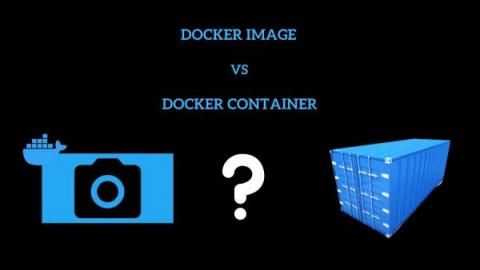
Difference between Docker Image & Docker Container

A Docker image is a combination of instructions and for creating a docker container a instruction is used to execute code in a Docker container. Docker images work as a set of instructions to build and run a Docker container, as a template. Docker images also perform as the initial point when using Docker. A Docker image contains read-only files. when a docker image is created it can not be changed and modified, insert template that has instructions for deploying containers.

Canary vs blue-green deployment to reduce enterprise downtime

Even before the cloud, no one liked deployment downtime. With applications hosted in traditional data centers that restricted access for local users, many organizations scheduled deployments when users were less likely to be using the applications, like the middle of the night. With widespread adoption of cloud-based, 24x7 environments available from all time zones, every hour of the day, easy-to-find deployment windows are gone.

Resolve Systems Recognized in the 2022 Gartner® Hype Cycle for I&O Automation Report

Resolve Systems announces that Gartner has named the company as a Sample Vendor in its Hype Cycle for I&O Automation, 2022 report in the service orchestration and automation platforms (SOAP) category. We believe this report helps I&O leaders to understand and evaluate automation-centric technologies that deliver faster value, improve efficiency, and optimize costs.

Building Workflows, Part 1 - Core concepts and the Workflow Builder

At incident.io, we’re building tools to help people respond to incidents, often by automating their organisations’ process. Much of this is powered by our Workflows product, which customers can use to achieve things like: Workflows as a product feature are incredibly powerful, and we’re proud of the value they provide to our customers. Behind-the-scenes, though, building something like workflows can be difficult.

Building Workflows, Part 2 - the executor and evaluation

This is the second in a two part series on how we built our workflow engine, and continues from Building workflows (part 1). Having covered core workflow concepts and a deep-dive into the Workflow Builder in part one, this post describes the workflow executor, and concludes the series with an evaluation of the project against our goals.