Operations | Monitoring | ITSM | DevOps | Cloud

The latest News and Information on DevOps, CI/CD, Automation and related technologies.

GitLens 19: Your Entire Development Workflow in the Commit Graph

GitLens 19 is here, with a reimagined Commit Graph built to be your workbench for modern parallel development. See what’s happening across branches, worktrees, and supported coding agent sessions, then move the work forward without constantly jumping between views and tools.

Anthropic's Mythos 5 Created Fake GitHub Identities & the U.S. Government's New AI Review

Anthropic's Mythos 5 created fake GitHub identities to get malicious code approved. Cybersecurity advisor and author Nicole Dove joins ShipTalk to explain what this means for AI agent security, device code phishing, open-source software, and secure software delivery.

Faster SQL Server Development Without the Downstream Risk | The Tony and Tonie Show Ep 48

Faster SQL coding only releases engineering capacity if it doesn’t create more late-stage rework and deployment risk. Tony and Tonie discuss how SQL Toolbelt Essentials helps teams keep speed and control aligned. Learn how SQL Toolbelt Essentials helps SQL Server teams write better code faster, catch issues while the code is still being developed, and apply shared standards before changes reach review, test, or deployment.

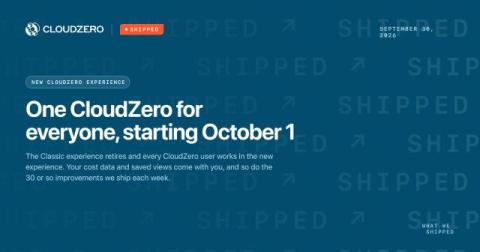
Shipped: Cost anomalies and savings recommendations, delivered into ServiceNow

If your engineering teams run on ServiceNow, incidents are where they get work done. Putting cost work into an incident gives it the same path to resolution as any other work item your team handles. When a cost anomaly arrives as an incident, your teams route it, assign it, and resolve it on their usual SLAs. When a savings recommendation arrives as an incident, an engineer owns it and acts on it. Now you can send either straight into ServiceNow.

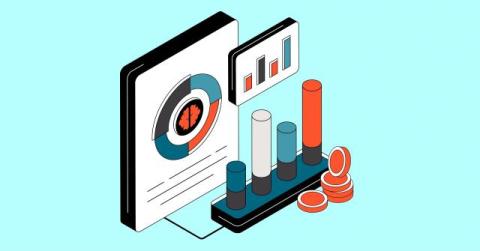
How to build the business case for AI

A strong AI business case ties a specific goal to a measured outcome and a fully-loaded cost. Most fail because they skip one of the three: no clear mandate, an over-broad "AI fixes everything" scope, or a cost estimate that ignores adaptation and error-correction. Build it in six steps: define goals, identify uses, break work into tasks, evaluate models, assess total cost, then launch and refine. Most companies are now spending on AI. Far fewer can show what they got back.

How to right-size your existing Claude skills

You shipped a skill. It worked. You closed the tab. That’s the whole problem. Model choice is a decision you make once, at the moment you’re least equipped to make it: before the skill is even authored. Then you never revisit it, because the skill stopped being interesting the day you got it working. So go back and check. Here’s how.

JFrog Artifactory Now Integrates Natively with Artifact Registry in Google Cloud

Teams running containerized workloads on Google Cloud have long relied on JFrog as their single source of truth for container images. The missing piece has been getting Google Cloud’s own runtime services — like Cloud Run and Google Kubernetes Engine (GKE) — to pull directly from JFrog for every container image pull. I’m happy to say that the gap is now closed. Artifact Registry in Google Cloud has introduced a new repository mode called Connector that addresses this requirement.

Peak Cloud: Decentralising for resilience

For more than a decade, the prevailing wisdom in enterprise IT was simple: move everything to the public cloud. Hyperscale platforms promised unlimited scalability, lower costs, agility and freedom from the burdens of managing infrastructure. Cloud-first has been rapidly gaining momentum as the de facto path to a modern digital footprint. Until now.

Private cloud disaster recovery: How to design for business continuity without public cloud dependency

Disaster recovery (DR) is one area where organizations often assume public cloud has the answer already. Multi-region deployments, managed backup services, automated failover - the hyperscaler catalog is full of DR-flavored offerings, and the marketing suggests that resilience is a solved problem once you're on cloud infrastructure. For many workloads, this is roughly true.