Kubernetes Master Class: Securing the Supply Chain and Infrastructure for Kubernetes Deployments
Secure your CI/CD pipeline with vulnerability scanning and configuration auditing using NeuVector and KubeWarden.


The latest News and Information on Containers, Kubernetes, Docker and related technologies.
If you’re involved in IT, you’ve likely come across the word “Kubernetes.” It’s a Greek word that means “boat.” It’s one of the most exciting developments in cloud-native hosting in years. Kubernetes has unlocked a new universe of reliability, scalability, and observability, changing how organizations behave and redefining what’s possible. But what exactly is it?
Cloud native is a term that’s been around for many years but really started gaining traction in 2015 and 2016. This could be attributed to the rise of Docker, which was released a few years prior. Still, many organizations started becoming more aware of the benefits of running their workloads in the cloud. Whether because of cost savings or ease of operations, companies were increasingly looking into whether they should be getting on this “cloud native” trend.
Another conversation that was recently had during our weekly field enablement office hours here at Shipa was “what exactly is a microservice?”. Certainly, a term that has been used to describe a paradigm and architectural practice. One can argue that the breaking down or decomposing of applications has been going on for decades and is not a monumental shift in computing. There are several definitions of microservices from a purist definition to a definition resembling a movement.
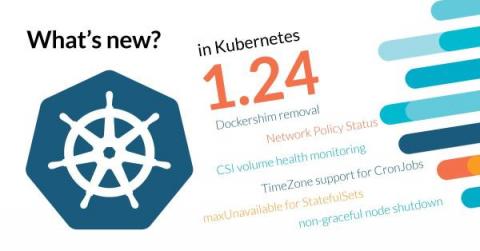
Kubernetes 1.24 is about to be released, and it comes packed with novelties! Where do we begin? Update: Kubernetes 1.24 release date has been moved to May 3rd(from April 19th). This release brings 46 enhancements, on par with the 45 in Kubernetes 1.23, and the 56 in Kubernetes 1.22. Of those 46 enhancements, 13 are graduating to Stable, 14 are existing features that keep improving, 13 are completely new, and 6 are deprecated features.
In March, the Cloud Native Computing Foundation (CNCF) released its Annual Survey 2021. Civo featured alongside the likes of Amazon and Azure when CNCF asked developers "Does your organization use any certified Kubernetes installers?". Saiyam, Director of Technical Evangelism at Civo, also released an update on the new advancements so far for our 2022 Roadmap.