Operations | Monitoring | ITSM | DevOps | Cloud

The latest News and Information on Application Performance Monitoring and related technologies.
Monitor your AWS generative AI Stack with Datadog

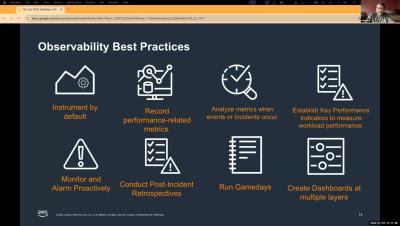
As organizations increasingly leverage generative AI in their applications, ensuring end-to-end observability throughout the development and deployment lifecycle becomes crucial. This webinar showcases how to achieve comprehensive observability when deploying generative AI applications on AWS using Amazon Bedrock and Datadog.

Understanding application performance monitoring

Applications drive user engagement, support internal operations, and facilitate revenue generation for modern businesses—so much so, that it could be called a fundamental element of an organization. Application performance monitoring ensures these applications function optimally and reliably. It provides insights for proactive problem identification and prevention to minimize downtime and ensure a smooth user experience.

Introducing Raygun AI Error Resolution for Aspire

Last month, we rolled out Raygun4Aspire, our Crash Reporting client for.NET Aspire applications. That release included a free, lightweight version of the full Raygun web app that runs locally. After the successful launch of our recent AI Error Resolution feature for Crash Reporting, we knew that we had to bring this feature into the Aspire local development experience. Today, we’re thrilled to announce that AI Error Resolution for Raygun4Aspire is now available for all Aspire app developers!

How eG Enterprise helps MSPs offering digital workspaces, add value-added services

In a fiercely competitive market, against a background of vendor licensing cost changes that are impacting profit margins, many MSPs offering digital workspaces are modernizing to remain relevant and futureproof. Many managed service providers have historically focused mostly on uptime/downtime, resource monitoring and so on. Automation tools are reducing the value of conventional managed services.

API update: Sessions, pages and Customers

Today, we’re excited to roll out 6 new endpoints for the Raygun API, making it simpler than ever to query Sessions, Pages, and Customers. Raygun’s Real User Monitoring helps you track and enhance your front-end and mobile page speed performance. It analyzes user sessions and page views to calculate your overall page speed. Previously, this required someone to log into Raygun, find the right application, and manually inspect sessions and page views in Real User Monitoring.

6 Tips to Integrate Container Orchestration and APM Tools

Application performance monitoring (APM) setup and strategies vary based on the application’s infrastructure design. Containers managed by orchestration tools like Docker Swarm or Kubernetes are dynamic and ephemeral, significantly affecting monitoring strategies. Container development speeds up an organization’s ability to build, deploy and scale new features.

etcd in Kubernetes: What is it and Why is it Important?

A Comprehensive Guide for SREs Build Foundational Knowledge on How etcd fits into the Kubernetes Ecosystem etcd is the single source-of-truth data store for the Kubernetes cluster. As a Key-Value store with advanced features, etcd stores mission-critical Kubernetes data: configuration data, the cluster state and metadata. This information is key for the Kubernetes cluster to scale and self-heal. If etcd malfunctions, it can cause failures on the Kubernetes cluster.

What is Application Performance Monitoring (APM)?

As modern applications and IT infrastructures become increasingly complex, the need for effective monitoring and management tools has never been more critical. Application Performance Monitoring (APM) is a comprehensive approach that provides visibility into application performance, availability, and user experience. APM is an important tool for platform engineers and developers who are tasked with ensuring that applications run smoothly and efficiently and meet end-user needs.

How to achieve Observability for Microservices-based apps using Distributed Tracing?

Modern digital organizations have rapidly adopted microservices-based architecture for their applications. Microservices-based apps have components designed around business capabilities serving a specific purpose. It enables smaller engineering teams to own specific services that lead to increased productivity. But componentization also leads to complexity. Today’s modern internet-scale businesses have hundreds or thousands of microservices.