Operations | Monitoring | ITSM | DevOps | Cloud

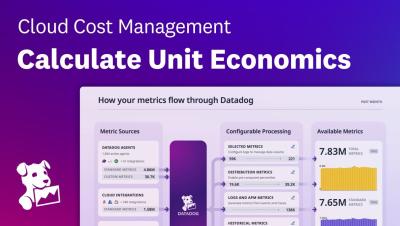
Drive business outcomes with Unit Economics in Datadog Cloud Cost Management

See how Datadog turns cloud usage and performance data into actionable business insights by helping teams calculate unit economics to measure and optimize the efficiency of every service. You’ll discover how to: Datadog bridges the gap between cloud costs and business value—helping organizations get the most value out of their cloud investment.
Reducing OpenTelemetry Bundle Size in Browser Frontend

When I was building applications, I used to always rely on the DevTools console of my web browser to examine logs in the frontend. But, with UI log messages only being accessible within your browser rather than forwarded to a file somewhere, which is the common pattern with backend services, losing visibility of this resource when triaging user issues was a real dilemma.

What is DEX? And Why DEX is Important

Digital Employee Experience (DEX) refers to how employees interact with the digital tools, systems, and technologies they use at work-and how those interactions affect their productivity, satisfaction, and overall work experience. DEX encompasses the quality of the digital interactions and services that employees encounter while using workplace technologies. It includes various factors such as application performance, network connectivity, device usability, and overall user satisfaction.

From Zero to Open Source Contributor

Never contributed to open source and feeling intimidated? Same. Before joining Datadog, Alessandro had zero open source experience. Now he's a regular contributor to Apache Iceberg. Here's exactly how he got started. Step 1: Join the Slack community and answer user questions. Step 2: Look for "good first issue" tags in the repo. Step 3: Remember that opening bug reports and doing code reviews count as contributions too.

The Hidden Costs and Concerns of Iceberg Maintenance

Everyone talks about how great Apache Iceberg is, but nobody warns you about this: without proper maintenance, your tables will bloat, queries will slow down, and your catalog will run out of memory. Here are the 4 critical operations you MUST run regularly. Expiring snapshots prevents metadata bloat (Datadog learned this the hard way with catalog memory pressure). Deleting orphan files cleans up failed writes. Compacting data files keeps streaming workloads fast. Compacting manifests optimizes query planning.

Improve log utilization with Datadog log exclusion filters | Datadog Tips & Tricks

Want to make your logs easier to work with? Excluding unneeded logs from indexing reduces noise and may reduce log management costs. In this video, you’ll learn how to: See for yourself how to improve log utilization with Datadog Log Patterns and log exclusion filters. Then set up an alert to track ingestion spikes.

OpenTelemetry Agents - The Complete Beginner's Guide (2025)

If you search for “OpenTelemetry Agent”, you will likely encounter two completely different definitions. This ambiguity often leads to confusion between infrastructure teams and application developers. SREs and DevOps engineers would describe it as a component deployed as a sidecar, whereas application developers would understand it as a language-specific library. Let’s break it down in the next section.

Setup and Explore OpenTelemetry Demo Application (with Examples)

Everyone knows that debugging is twice as hard as writing a program in the first place. So, if you’re as clever as you can be when you write it, how will you ever debug it? — Brian W. Kernighan and P. J. Plauge, The Elements of Programming Style, 2nd ed. Maybe you can let SigNoz do some heavy lifting for you!

Training Foundation Models on a Trillion Data Points with Apache Iceberg

Training an AI foundation model on over a trillion data points sounds impossible without hitting your production systems. Here's how Datadog did it with Apache Iceberg for their time series forecasting model TOTO. The key challenge: extracting massive historical observability data (metrics spanning years) and running incremental preprocessing pipelines without overwhelming production services. Iceberg solved this by providing schema governance, consistency guarantees, and seamless integration with ML tools like Ray and PyTorch.

OpenTelemetry Metrics with 5 Practical Examples

Picture this, your observability tool already nails the basics like request rates, latency and memory usage, but you need more insight. Think user churn rates, engagement spikes, or even how many carts get abandoned mid-checkout. That’s where OpenTelemetry steps in, providing a way to track those critical custom metrics with ease.

How Inkeep Monitors Their AI Agent Framework with SigNoz

AI agents are fundamentally different beasts to monitor compared to traditional applications. A single user request can trigger a cascade of 10+ internal operations: sub-agent transfers, tool executions, LLM calls, API requests, each with unpredictable latency and failure modes. When something goes wrong (and with LLMs, things go wrong in creative ways), you need to see the entire execution flow to debug effectively.

Overcoming ClickHouse's JSON constraints to build a high-performance JSON log store

Customer logs data is always messy. Being (and building!) an observability platform, we get to see all the beautiful, creative ways it can be messy, every single day. And yet, our customers expect, quite fairly, I might add, perfect query results and peak performance. Info SigNoz is an open-source observability platform that can be your one-stop solution for logs, metrics and traces.

How to Track Cloud Costs in Real-Time Instead of Waiting Days

Tired of waiting days to see your AWS bill spike? Datadog solved this problem using Apache Iceberg to deliver real-time cloud cost visibility - updating every 15 minutes instead of waiting for billing data. Here's how it works: They sync real-time resource inventory (EC2 instances, Kubernetes pods) into Iceberg tables, then use Trino to join those snapshots with unit pricing data. The result? FinOps teams can catch cost anomalies before they become budget disasters.

How Datadog Manages 50,000 Apache Iceberg Tables at Scale

Think managing a few database tables is hard? Try 50,000 production Iceberg tables storing petabytes of data with 8 million scans per day. In this clip, Datadog's platform team reveals the architecture choices behind their managed Iceberg implementation that serves hundreds of internal engineering teams.

Datadog at AWS re:Invent, Bits AI SRE, MCP Server, CloudPrem, and more | This Month in Datadog

Get a closer look at features we announced at AWS re:Invent in the latest episode of This Month in Datadog. Tune in for spotlights of Bits AI SRE, now generally available, and Datadog’s MCP Server, which connects AI agents to our platform by ingesting prompts and mapping them to Datadog resources and data. Plus, we cover how to: This Month in Datadog brings you the latest updates on our newest product features, announcements, resources, and events.

Datadog on Apache Iceberg

Historically, Datadog has relied on technologies like Snowflake and Apache Spark on raw parquet files (lacking consistent table structure) to power internal analytics and data science at scale. As usage grew across product teams, more features depended on data science teams, and our datasets grew to include more telemetry data, these systems became complex to manage and govern both technically and financially. The need for a more flexible and scalable solution led Datadog to adopt Apache Iceberg, an open source table format for data lakes that brings reliability and performance while remaining SQL-friendly.
Sponsored Post

Adding a CDN to a load balancer (for a much faster website)

Here at Raygun, we like to go fast. Really fast. That's what we do! When we see something that isn't zooming, we try to figure out how to make it go faster. So today, we're answering a simple (and relevant) question; how do we make our public site, raygun.com, much, much faster? The answer, at first glance, is simple-we build it into a Content Delivery Network (CDN). But what if you have a load balancer serving your website, and you don't want to rebuild everything to serve from a CDN? Well, that's more complicated. Let's start by describing the issue.

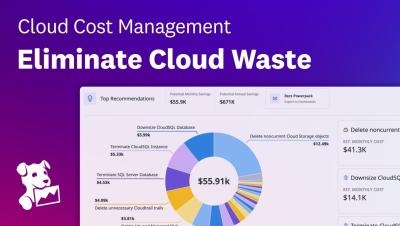
Optimize Your Oracle Cloud (OCI) Spend with Datadog Cloud Cost Management

Support for Oracle Cloud Infrastructure (OCI) is now live in Datadog Cloud Cost Management. In this short demo, you’ll learn how to: Get granular visibility into OCI cost and usage—by service, compartment, tag, and resource tier. Uncover savings opportunities by combining cost data with observability metrics like CPU, memory, and storage utilization. Set up anomaly monitors and budgets to avoid cost overruns—especially for high-risk workloads like AI and GPU training.

Datadog Bits AI SRE: Your new teammate for on-call shifts

Bits AI SRE is an always-on SRE agent built to handle complex troubleshooting and late-night alerts. Developed against thousands of real-world incidents and powered by Datadog’s platform, Bits AI SRE analyzes your entire stack, tests hypotheses, and identifies root causes in minutes. Resolve faster, get back to sleep sooner, and give your on-call team the confidence and capacity they need.

Patterns for Deploying OpenTelemetry Collector at Scale

So, you've embraced OpenTelemetry, and it's been great. Pat, Pat. That single, vendor-neutral pipeline for your traces, metrics, and logs felt like the future. But now, the future is getting bigger. That simple OTel Collector configuration that worked perfectly for a few services is starting to show its limits as you scale. The data volume is climbing, reliability is becoming a concern, and you're wondering if that single collector instance is now a bottleneck waiting to happen.