The latest News and Information on APIs, Mobile, AI, Machine Learning, IoT, Open Source and more!
Maintenance of machines is an incredibly important task. And it is important to fix a machine before it completely fails. In reactive maintenance scenarios, speed of response is key. Once an issue is detected is important to communicate as reliably and quickly as possible to the right engineer. Ideally, the machine is connected directly to team of mobile engineers in charge and can let them know what exactly happened and what needs to be fixed.
In my last post, Getting Started With Android Enterprise in Supply Chain – Series 1, we talked about a couple tools you need to understand before jumping into Android Enterprise. Now that we’ve got that sorted out, let’s talk about the features. Not all of the features, but the ones that are going to really matter in supply chain.
You’ve probably heard the term API (application program interface) used more than a few times, but do you really understand what an API is, what it does, and how it works? In this article, we dissect the term and examine the many various aspects of an API call.
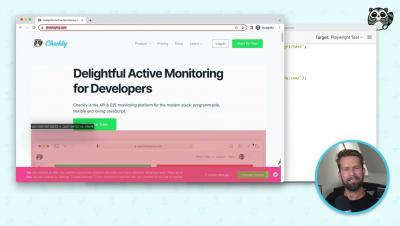
We are really excited to announce that you can now use Playwright in your browser checks. If you didn't know yet, Playwright is Microsoft's headless browser library. It's very similar to Puppeteer. In fact, it was built by the original creators of Puppeteer and has mostly the same features and a remarkably similar API. This was in our public roadmap and cooking for some time now and we're glad to have it out the door!
I have a beef with companies that don’t expose nearly everything their product can do with an API. I get anxious wondering, “why can I only do some of the things via the API? How is this sausage made?” Sure, there are plenty of examples of endpoints that shouldn’t be exposed, such as changing passwords probably should be kept private. Regardless, there are tons of examples of products that I can type in a field in the UI, but that field isn’t available in the API.
From a security breach to a complete system outage, when an incident occurs and your network or service is impacted, it’s typically the result of a chain of events. A problem with one service has impacted another service, and so on until finally, you’re facing a problem that’s compromising availability and damaging your customer experience. In the event of a serious incident, your team’s immediate response is to focus on identifying the root cause and restoring service.
Webhooks, so what are they good for? Well, quite a lot as it turns out! Webhooks are great for integrating Cloudsmith with other systems that you use, by sending data or notifications to other tools in your stack and helping to enable automation across your workflows. I know what you’re thinking, this sounds a lot like an API right? Well, not quite. Webhooks are almost like a sibling of an API call. So, what’s the real difference?