Operations | Monitoring | ITSM | DevOps | Cloud

The latest News and Information on APIs, Mobile, AI, Machine Learning, IoT, Open Source and more!


The Unsolved Challenges of LLMs in Open-Ended Web Tasks: A Case Study on the Future of Work

Welcome to the AI research bites. This series of short and informative talks showcases cutting-edge research work from ServiceNow AI Research team. The AI Research Bites are open to all, especially those interested in keeping up with the fast-paced AI research community.

How Proper Infrastructure Design Impacts Network Reliability

In the digital age, network reliability is paramount for businesses of all sizes. A robust and dependable network infrastructure ensures seamless operations, uninterrupted communication, and efficient data transfer. However, achieving this level of reliability hinges on a well-designed infrastructure that accounts for factors like redundancy, security, and performance optimization. Proper infrastructure design plays a critical role in reducing downtime, mitigating disruptions, and ultimately improving an organization's bottom line.

AI-driven contextual mastery for incident response

Context is fundamental to well-run tech operations, which require an understanding of systems, services, architectures, and teams to interpret the real-time data streaming in from observability and change systems. The delivery of context is crucial for effective operations performance. And it’s a universally important skill set for tech Ops teams to master.

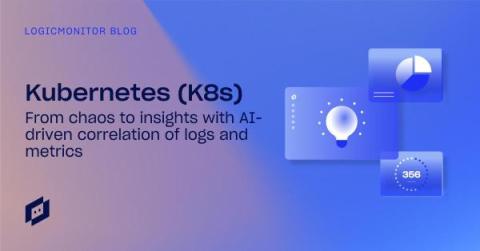
Kubernetes - From chaos to insights with AI-driven correlation of Logs and Metrics

Written by John Stimmel, Principal Cloud Specialist Account Executive, LogicMonitor It’s common knowledge that Kubernetes (commonly referred to as “K8”s) container management and orchestration provide business value by enabling cloud-native agility and superior customer experiences. By their nature, the speed and agility of Kubernetes platforms come with complexity.

Practical Zephyr - Devicetree practice (Part 5)

In the previous articles, we covered Devicetree in great detail: We’ve seen how we can create our own nodes, we’ve seen the supported property types, we know what bindings are, and we’ve seen how to access the Devicetree using Zephyr’s devicetree.h API. In this fifth article of the Practical Zephyr series, we’ll look at how Devicetree is used in practice by dissecting the Blinky application.