Operations | Monitoring | ITSM | DevOps | Cloud

Sponsored Post

Chaos Monkey Won't Find Your Bug

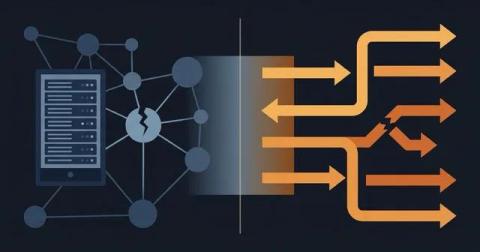
We shipped a chaos feature that never caused any chaos. Our mock server has had a fault-injection effect for years with a straightforward job: withhold the response entirely and see whether the caller copes. Last week I audited it against the actual code path. It had never withheld anything. The handler returned early without writing a response. Go's net/http then did what it is designed to do, which is synthesize a 200 OK and flush the recorded body. Every experiment anybody ever ran with that effect handed the application a perfectly good answer, and every one of them passed.

The SAP Automation Advantage: What High-Performing SAP Teams Have in Common

Every Basis team has a list. The tasks nobody schedules because they get done by hand, by a Basis miracle worker who knows the sequence. System refresh. Parameter settings across multiple production systems. The cloud invoice with a number nobody can explain. The teams with a short list of manual tasks got there with automation. What separates them isn’t enthusiasm for automation as a concept.

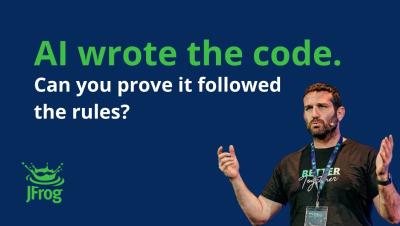
AI wrote the code. Can you prove it followed the rules?

AI agents now write, review and ship code, and our supply-chain security can't tell how that code was made. A green build and a clean scan don't tell you which model or tools the agent used, whether it had your security guidelines, or whether a human actually reviewed the change. In this talk I introduce Agentic Process Evidence, a proposed open community standard. It records the AI development process as structured, signed evidence that is attached to the commit and linked back to the full agent session logs, so release policies can enforce it automatically as policy as code.

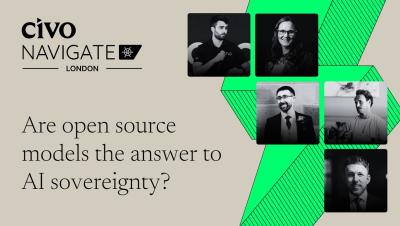
Are Open Source Models the Answer to AI Sovereignty? | Civo Navigate London

Open source models are closing in on the frontier. But is running them the same as being sovereign? David Sullivan explains why true sovereignty means owning the whole model lifecycle, and why that's where prototypes stall before production. James Faure shows how distilling small, task-specific models can slash costs. Dr Rosemary Francis argues it's ridiculous to use the most expensive model for every task, and that your harness and engineering process matter more than which model sits at the top of the leaderboard.

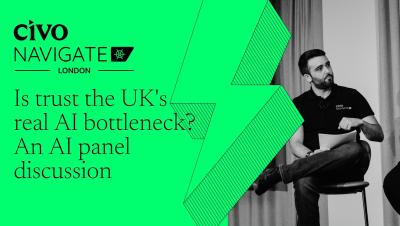
Is Trust the UK's Real AI Bottleneck? | Civo Navigate London

Why can't the UK make its own AI chips? David Sullivan argues that the biggest gap isn't chips, compute or electricity. It's trust. If people won't let AI near their finances, the best model in the world goes unused, and that's where the UK has a real chance to lead. Civo makes complexity a thing of the past.

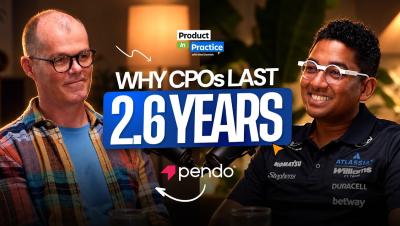
Dave Killeen: What to Do When Execs Demand AI

Dave Killeen will tell you, on record, that his relationship with AI has crossed into unhealthy territory. He also says he has never felt more alive, that he is 50 and feels 30, and that he sometimes waits for his two small children to go to bed so he can start a coding session. In between, he gives Axel Sooriah the most practical answer on this show yet to the question every product team is facing: your exec says "we need AI," and you have no idea what they actually want.

AI Prompts For IT Asset Management: Ready-to-Use Inventory Questions

AI prompts for IT Asset Management (ITAM) are the questions and instructions IT teams type into an AI assistant to get answers from their asset inventory. They're searched by IT asset managers, technicians and IT leaders whose assistant can already read inventory data and who want ready-made questions that return useful answers about devices, owners, warranties and costs.

Shipped: Drill into your cloud bill up to eight levels deep

Most cost questions have more than one layer. Which team spent the most, which services drove it, and which accounts were behind those services? Previously, following that path meant changing dimensions, adjusting filters, and re-running the query at every step. Multi-dimensional drill-down has been one of the most-requested features in Explorer. The team shipped two-level group-by earlier this year, collected feedback, and kept going. Now the path goes eight levels deep.