Operations | Monitoring | ITSM | DevOps | Cloud

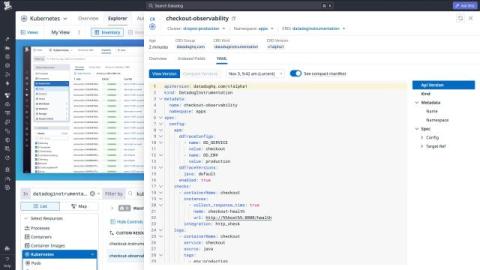
Manage Kubernetes observability with DatadogInstrumentation

For teams that own an application running on Kubernetes, updating its observability configuration should be as straightforward as updating any other Kubernetes resource. But configuring integration checks, log collection, and tracing often means working across multiple configuration paths. If those settings live in pod annotations, adding a metric check or changing log processing rules requires a Deployment rollout.

PagerDuty Microsoft Teams Integration: Setup and Limits

The PagerDuty Microsoft Teams integration gets incident notifications into Teams channels and lets responders acknowledge and resolve from there. It does not turn Teams into your on-call tool. It will not answer "who is on call for payments?" from a channel, it cannot post into private or shared channels, and it needs three different admins to set up. If your company runs on Teams, you should know exactly where that line falls before you design your incident process around it.

Survey: How Much Do Data Center Managers Trust Their Data? And Where Can They Improve?

Data center decisions are only as reliable as the information behind them. An asset inventory can accurately describe the equipment it records while still omitting assets that have not been documented. Power readings can be current for monitored equipment while other gaps go unnoticed. And when infrastructure data is spread across disconnected systems, getting a complete picture becomes harder.

GitHub's AI Coding Boom Exposes a Bigger Security Problem

GitHub's AI coding boom is exposing a major problem in software security. As AI coding agents generate more code and developers push commits faster than ever, can traditional DevSecOps and shift-left security practices keep up? In this episode of ShipTalk, cybersecurity leader Jake Bernardes breaks down GitHub Universe's AI coding trends and argues that shift-left security is dead in the age of AI-generated code.

Monitoring WooCommerce Background Jobs with AppSignal

WooCommerce relies on a lot of work happening in the background. Some of that is handled by WordPress cron, while other tasks are queued through Action Scheduler. This can include things like sending scheduled emails, processing subscription renewals, delivering webhooks, running scheduled WooCommerce actions, and other maintenance tasks that do not happen during a normal page request. The problem is that when one of these background jobs stops running, it is not always obvious straight away.

What's new with Grafana variables: less clutter, easier reuse across dashboards, and more

Template variables are one of the most used features in Grafana, providing users with a dropdown to turn one dashboard into hundreds: pick a different cluster, region, or service, and every panel updates. For most of Grafana's history, variables had a single home at the top of the dashboard. Each dashboard had one flat list of variables, and that list was shared by every panel on it. But as dashboards grew in size and number, those controls became harder to organize and maintain.

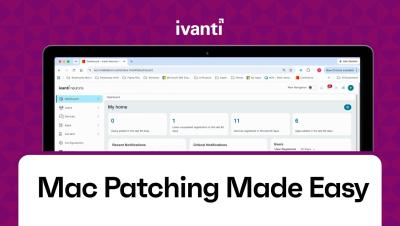
Mac Deployment & Management with Ivanti

In this demo, see how Ivanti Neurons for MDM delivers complete data authority across every stage of the Apple lifecycle — from zero-touch enrollment through continuous compliance and automated software updates. Whether you're onboarding a single Mac or scaling across thousands, Ivanti combines Apple-native management with governed automation to keep your fleet secure, compliant, and productive.

We Rebuilt Harness for Agents: Introducing a New Platform Experience

Hundreds of millions of deployments taught us what delivery takes. The new platform experience applies it to a world where agents do the work. A year ago, the question was whether agents could write code. That question is settled. The new question is whether they can ship it. Building an agent is easy. Running one inside a real delivery process is not. Real work runs through pipelines, approvals, data, and quality gates. Delivery has always been designed around the people doing the work.

Announcing HAProxy Enterprise 3.4

We're excited to announce the release of HAProxy Enterprise 3.4, which gives customers more control over how HAProxy Enterprise behaves under constant change and attack. UDP load balancing becomes programmable, and whole backends can be published dynamically through the HAProxy Runtime API or the HAProxy Data Plane API.