Operations | Monitoring | ITSM | DevOps | Cloud

The latest News and Information on CyberSecurity for Applications, Services and Infrastructure, and related technologies.

Securing XML implementations across the web

In December 2020, we blogged about security issues in Go’s encoding/xml with critical impact on several Go-based SAML implementations. Coordinating the disclosure around those issues was no small feat; we spent months emailing the Go security team, reviewing code, testing and retesting exploits, coming up with workarounds, implementing a validation library, and finally reaching out to SAML library maintainers and 20 different companies downstream.

Malware alert: The RedXOR and Mamba attacks and how to defend against them

Picture this: It’s a normal day of working from home as usual since the COVID-19 outbreak. After that satisfying cup of coffee, you log in. But something is wrong. No matter how many times you click, your files don’t open. Your screen is frozen and refuses to budge. And then, you see one of the worst nightmares any IT admin can imagine: “Oops, your files have been encrypted. But don’t worry, we haven’t deleted them yet.

Do you really need a service mesh?

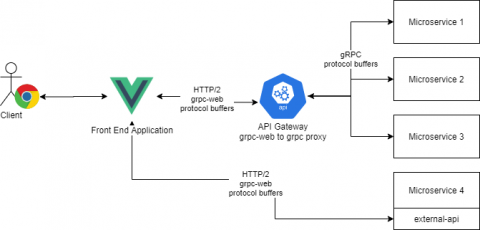
The challenges involved in deploying and managing microservices have led to the creation of the service mesh, a tool for adding observability, security, and traffic management capabilities at the application layer. While a service mesh is intended to help developers and SREs with a number of use cases related to service-to-service communication within Kubernetes clusters, a service mesh also adds operational complexity and introduces an additional control plane for security teams to manage.

Zero Trust Network Access: Accelerating Zero Trust Maturity with nZTA

Covid made the hypothetical necessity of IT risk planning a reality. Many organizations responded to the immediate need for remote workforces by adding more VPN licenses. But while adding more VPN capacity solved the problem of resource access, it also led to network bottlenecks and application latencies.

Defending the Internet of Things from hackers and viruses

The 2010 Stuxnet malicious software attack on a uranium enrichment plant in Iran had all the twists and turns of a spy thriller. The plant was air gapped (not connected to the internet) so it couldn’t be targeted directly by an outsider. Instead, the attackers infected five of the plant’s partner organizations, hoping that an engineer from one of them would unknowingly introduce the malware to the network via a thumb drive.

Collecting and operationalizing threat data from the Mozi botnet

Detecting and preventing malicious activity such as botnet attacks is a critical area of focus for threat intel analysts, security operators, and threat hunters. Taking up the Mozi botnet as a case study, this blog post demonstrates how to use open source tools, analytical processes, and the Elastic Stack to perform analysis and enrichment of collected data irrespective of the campaign.

Detecting SeriousSAM CVE-2021-36934 With Splunk

SeriousSAM or CVE-2021-36934 is a Privilege Escalation Vulnerability, which allows overly permissive Access Control Lists (ACLs) that provide low privileged users read access to privileged system files including the Security Accounts Manager (SAM) database. The SAM database stores users' encrypted passwords in a Windows system. According to the Microsoft advisory, this issue affects Windows 10 1809 and above as well as certain versions of Server 2019.

What's new in Sysdig - July 2021

Welcome to another monthly update on what’s new from Sysdig! Happy 4th of July to our American audience, and bonne Bastille to our French friends. It’s been heating up in the northern hemisphere, so we hope you’ve all been managing to stay cool and safe. Our team continues to work hard to bring great new features to all of our customers, automatically and for free! The big news this month is our intent to acquire Apolicy, which has everyone full of excitement.

Splunk SOAR Feature Video: Custom Functions

Splunk SOAR’s custom functions allow shareable custom code across playbooks and the introduction of complex data objects into the playbook execution path. These aren’t just out-of the-box playbooks, but out-of-the-box custom blocks that save you time and effort. This allows for centralized code management and version control of custom functions providing the building blocks for scaling your automation, even to those without coding capabilities.

Splunk SOAR Feature Video: Contextual Action Launch

Splunk SOAR apps have a parameter for action inputs and outputs called "contains". These are used to enable contextual actions in the Splunk SOAR user interface. A common example is the contains type "ip". This is a powerful feature that the platform provides, as it allows the user to chain the output of one action as input to another.