Operations | Monitoring | ITSM | DevOps | Cloud

The latest News and Information on Monitoring for Websites, Applications, APIs, Infrastructure, and other technologies.

Monitoring Kafka with OpenTelemetry including client side monitoring

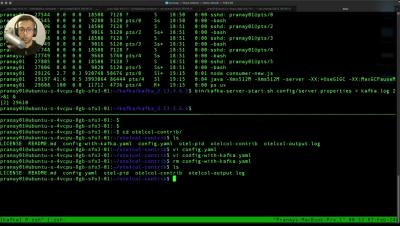
In this video, you will see a demo of how to monitor Kafka with OpenTelemetry. We will instrument a NodeJS application using Kafka and get client side metrics like delay between producer emitting a message to consumer receiving it via distributed tracing. We will also get Kafka server metrics like consumer lag and plot it dashboards.

Safer Client-Side Instrumentation with Honeycomb's Ingest-Only API Keys

We're delighted to introduce our new Ingest API Keys, a significant step toward enabling all Honeycomb customers to manage their observability complexity simply, efficiently, and securely. Ingest Keys are currently available for Environment & Services customers, with Classic support and programmatic key management capabilities under development and coming soon!

Powering Real-Time Data Processing with InfluxDB and AWS Kinesis

Imagine a data engineer working for a large e-commerce company tasked with building a system that can process and analyze customer clickstream data in real-time. By leveraging Amazon Kinesis and InfluxDB, they can achieve this goal efficiently and effectively. So, how do we get from idea to finished solution? First, we need to understand the tools at hand.

Your Global Microsoft Teams Performance Action Plan

Our ‘Global Microsoft Teams Performance Trends’ report revealed some very interesting facts about enterprise usage of Teams. Using insight drawn from hundreds of thousands of Teams users, we’ve figured out the issues that plague certain regions. Don’t worry, we haven’t just filed that under “important stuff for later”, we’ve created an action plan for your organization you use to make its Teams performance much better. Let’s dive straight in.

The Real Cost of Synthetic User Testing with AWS

Every time I share a project using SaaS tools, someone inevitably responds that they could do the same thing on their own home server ‘for free.’ I mention this not because it is annoying, since I would never go on social media at all if annoying responses were allowed to change my behavior, but because I think it points to a basic misconception that still affects DevOps practitioners today: the refusal to accurately estimate the real costs of self-managed solutions.

Get Swept Off Your Feet by Cribl Stream 4.5: Converting Dimensional Metrics to the OpenTelemetry Protocol Format with the OTLP Metrics Function

In the dynamic world of observability and analytics, everyone’s looking for smarter, more efficient, and interoperable ways to handle their data. That’s where Cribl steps in, bringing you an exciting update to our product lineup. We’re thrilled to introduce the OTLP Metrics Function to Cribl Stream 4.5! This Function converts metrics into the OpenTelemetry Protocol (OTLP) format with ease!

Mastering high web traffic: Essential strategies for success

Preparing for high-traffic scenarios is crucial for the success of any website. As your online presence grows, you'll inevitably face challenges associated with increased traffic. This article will discuss key strategies to effectively manage high web traffic and ensure your website maintains optimal performance.

Why DNS Monitors Are Crucial for Your Infrastructure

In the early 90s, it was easier—and more affordable—to register a domain name with the same as a company’s. Now, it requires other services to register it and keep it from potential competitors. Despite the process change, registering a domain name is still one of the most crucial aspects of supporting a business online. This blog details the behind-the-scenes processes on how domain names become accessible content to users, starting with what a Domain Name System (DNS) is.

Debugging and Decoding MongoDB with OpenTelemetry

MongoDB’s flexibility and document-oriented nature have always stood out to me as its most compelling features, setting it apart from the strict schema constraints of traditional relational databases. This adaptability is a boon for application development, allowing for more dynamic data interactions that mirror real-world information complexities and freeing table schemas’ constraints.