Operations | Monitoring | ITSM | DevOps | Cloud

The latest News and Information on DevOps, CI/CD, Automation and related technologies.

Skipping artifact downloads in Bitbucket Pipelines

Allowing steps to skip downloading artifacts has been a highly requested feature from our customers. You can now disable artifact downloading on certain steps that do not require any artifacts, which will allow faster builds and can reduce your costs as a result. Disabling artifact downloads during a step is as easy as switching off a flag. Note that these steps can still produce artifacts to pass down to future steps.

How to set up Software Security and Compliance for Your Artifacts

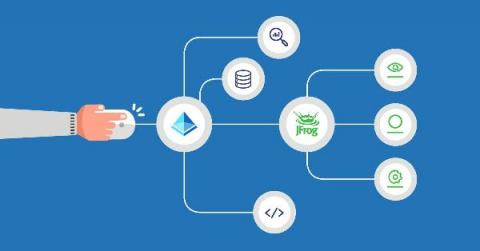
The simplest way to ensure the safety of all the open source (OSS) components used by your teams and sites, is with a software composition analysis (SCA) tool. You need an automated and reliable way to manage and keep track of your open source usage. With JFrog Xray, you can set up vulnerability and license compliance scanning built into your software development lifecycle (SDLC).

Why Real-Time Visibility Into Cloud Cost Is Essential During a Migration To AWS

There’s no question that the cloud offers efficiencies and innovation opportunities that are near impossible to replicate on-premise. In fact, Amazon reports that companies achieve 31% infrastructure cost savings, as well as 62% more efficient IT infrastructure management, when they move to AWS (and that doesn’t include the many other cost benefits — like improved security and on-demand services). But the extent of those efficiencies can vary.

2021 Hybrid Cloud Predictions: CEO Perspective

COVID-19 certainly accelerated some trends. For example, in my view, COVID-19 accelerated the pace and progress of digital transformation by five to 10 years, as companies faced the need to adapt to a post-COVID-19 world, involving permanently the higher adoption of remote work, remote education, and digital touch-points. Technologies requiring less human touch and more digital touch-points will be adopted faster in the aftermath of COVID-19.

The essential steps to building your own DevOps pipeline

Keeping up with customer demand and staying ahead of the competition requires fast releases and efficient code. This is where DevOps comes into play. Where DevOps is the practice, mindset, and culture of combining software development (i.e. Dev) and IT operations (i.e. Ops) to accelerate the development lifecycle and provide continuous delivery without compromising quality.

Civo is coming out of beta! Everything you need to know

It’s with immense pride and excitement we can announce that Civo is coming out of beta! When we planned out our beta program, which we called #KUBE100, our first priority was getting real-world feedback from a wide range of developers, all at various stages in their Kubernetes journey. We wanted to create a Kubernetes platform that plugged the gaps we saw in the industry – speed of deployment, ease of use, and a simple billing model.

Effortless Peering Across Europe With Console Connect

Did you know that you can now use Console Connect for high-performance, on-demand interconnection with peering partners in Europe? We’ve recently on-boarded three of Europe’s largest and most important Internet Exchanges to the Console Connect platform: AMS-IX, DE-CIX and LINX. Discover more about our new IX partners and what their availability on Console Connect means for you…

The Future of Qovery - Week #3

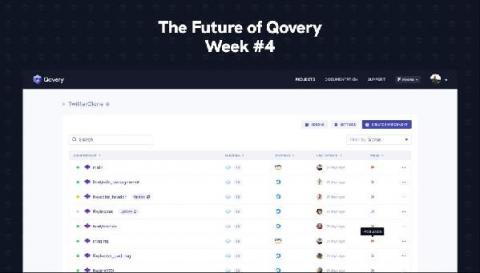
During the next eight weeks, our team will work to improve the overall experience of Qovery. We gathered all your feedback (thank you to our wonderful community 🙏), and we decided to make significant changes to make Qovery a better place to deploy and manage your apps. This series will reveal all the changes and features you will get in the next major release of Qovery. Let's go! Read the previous article: The Future of Qovery - Week #2.

NFV orchestration: Network functions auditability with the open-source LMA stack

The transition to virtualized infrastructure and software network functions requires a re-evaluation in the telecom production environments. Network function is not alone. It has always been an important piece in the puzzle but requires a set of non-functional bits to complete the big picture and which brings the lifecycle management of network functions to the discussion.