Operations | Monitoring | ITSM | DevOps | Cloud

The latest News and Information on DevOps, CI/CD, Automation and related technologies.

What Is Load Balancing

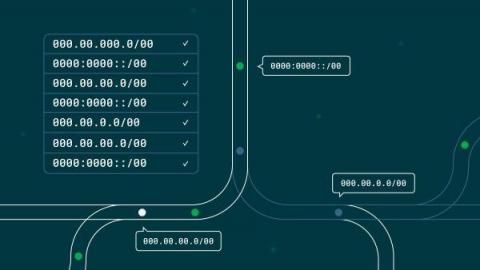
Load balancing means splitting up network traffic so that you can distribute it evenly across a group of backend servers. For example, if you run two web servers, both hosting a copy of the same website, then you can balance the traffic across them, sending half to one and half to the other. The goal of load balancing is to increase the availability of your website or web-based application by routing a portion of requests to each server.

The secrets behind our growth - Customer Success

Companies that want to take care of their customers have to invest in a Customer Success team and define the right strategy (Thanks Rav Dhaliwal for your help here). Thinking about customer success is typically something that happens much later (too late?) after the Sales efforts. Growth pressure on startups puts effort in the sales machine to close as many customers as possible while forgetting that growth comes from the current customers. A happy customer is less likely to churn.

Deploy Friday: E84 How WeWeb rapidly incorporated user feedback into their product

WeWeb.io is a web application builder that enables the development and deployment of interactive sites, without the need to write code. You can import existing front-end components, connect or create databases, and deploy on hyperscale infrastructure all from their web interface. The company got started as a YCombinator graduate, and have quickly developed the product, proven their market, and begun to scale.

Managed Kubernetes Comparison: EKS vs DigitalOcean Kubernetes

The container orchestration service Kubernetes has taken cloud-native application hosting by storm. By automating infrastructure tasks, Kubernetes—an open-source system designed by Google—simplifies the technical work of application deployment, scaling, and management. Managed Kubernetes services take this process a step further, handling more of the management tasks so that engineers can focus more time and resources on developing apps.

Real-Time Debugging of Kubernetes Applications in Production

In this talk, “Real-Time Debugging of Kubernetes Applications in Production”, Josh Hendrick from Rookout looks at some of the challenges developers typically face when remotely debugging Kubernetes applications. We then dive into a hands-on demo of how production debuggers can help you get to the root cause of issues faster, making debugging applications in remote environments much easier.

Build private CircleCI orbs on any organization

Using CircleCI’s orbs is a great way to share CI/CD configuration across projects. Public orbs work well for wide adoption, but private orbs have been helpful for organizations needing to share common internal configuration in a secure, non-public way. Private orbs work only within the organization that publishes them. We recently opened up private orbs access to all CircleCI customers, including those on the Free plan.