Operations | Monitoring | ITSM | DevOps | Cloud

The latest News and Information on DevOps, CI/CD, Automation and related technologies.

Troubleshooting Hyper-V

In the ever-evolving landscape of IT, virtualization has established itself as an irreplaceable cornerstone. While various platforms offer virtualization services, Microsoft’s Hyper-V stands out as a robust, scalable, and user-friendly option. If you’re an IT professional, chances are you’ve come across Hyper-V at some point in your career. With its intricate features and multi-faceted architecture, Hyper-V serves as the backbone for many virtualized environments.

Understanding Zero Trust Principles

Have you ever wondered how to keep your digital assets truly secure in a world where cyber threats seem to evolve quicker than cybersecurity measures? If so, you might want to consider adopting a Zero Trust security model. Far from being a buzzword, Zero Trust has emerged as a holistic approach to cybersecurity that operates on a straightforward principle: “Never Trust, Always Verify”.

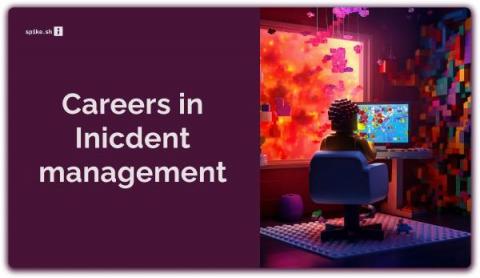
Starting with Incident management career

Businesses and organisations are increasingly reliant on technology for their operations, the significance of alerting platforms has become paramount. Alerting platforms encompass the processes that enable organisations to acknowledge, respond, and to reduce various types of incidents that can impact their services. Incident alerts enable prompt responses,at the right time and minimise potential damage.

Cloud Cost Dashboards: What "A Single Pane Of Glass" Really Means

If you’ve done any shopping around for a cloud cost intelligence platform, you may have heard about the “single pane of glass” approach to presenting cloud cost data. It’s a descriptive phrase uttered by almost every cloud cost company in one form or another. We may not all say it in a similar way, but it’s the same concept across the board.

Learn about LogicMonitor's new launch approach

Check out this on-demand webinar with LogicMonitor’s Chief Product Officer, Taggart Matthiesen, and LogicMonitor’s Senior Director of Product Marketing, Bill Emmett, for a conversation about how our recent product innovations can help you unlock intelligence and extensibility in your hybrid IT environments.

10 Tips To Reduce Your Deployment Time with Qovery

One of the most critical aspects of a developer's workflow is reducing deployment time. While Qovery does a lot of heavy lifting to make your deployments faster and more efficient, there are still ways to fine-tune the process on your end. This guide will help you optimize deployment time across three essential phases: Build, Deployment, and Runtime.

Hyper-V PowerShell Commands: A System Administrator's Guide

Hyper-V has rapidly become an indispensable tool in the system administrator’s toolkit. Not only does it provide a robust, feature-rich platform for virtualization, but it also seamlessly integrates with Windows Server, making it a must-have for any Windows-based enterprise environment. As a system administrator, you’ve probably realized that managing Hyper-V manually through its GUI can be time-consuming.

LogicMonitor Selenium Synthetics Demo

Synthetic Web Checks provides Selenium based recorded web checks with multiple steps and MFA support. By logically grouping all your website’s operations and treating each step as an individual device, Synthetic Web Checks helps you navigate through all of your website’s operations, and provides granular slicing of the data to display information that is more relevant for alerting and troubleshooting. Learn more in this short demo!
Sponsored Post

Avoiding packet loss: 5 steps to a streamlined network

A network outage for an organization is more than just a pesky annoyance. Not only does a business have to bear the cost of the downturn, but it must endure negative user experiences that damage the organization's reputation. One of the most common causes of network interruptions is network packet loss. Packet loss is caused when the data packets carrying the information over the internet or any packet-switched network fail to reach their destination in an expected timeframe. This latency disrupts communication and serves as a trigger for a potential outage.