Operations | Monitoring | ITSM | DevOps | Cloud

The latest News and Information on Cloud monitoring, security and related technologies.

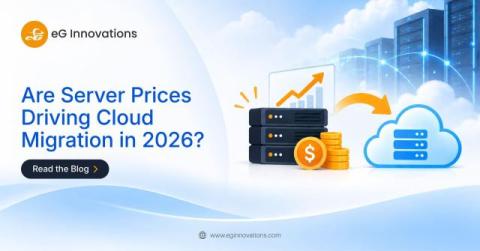
Are Server Prices Driving Cloud Migration in 2026?

For years, moving workloads to the cloud has been driven by scalability, flexibility and the desire to reduce the capital expenditure associated with running a data center. In 2026, however, there is another factor entering the conversation: the rising cost of buying and refreshing physical servers. The question is now whether rapidly increasing hardware prices are enough to push organizations that might previously have refreshed their on-premises infrastructure towards cloud alternatives.
150+ AI statistics for 2026: spend, cost, and AI ROI

Worldwide AI spending will reach $2.59 trillion in 2026, up 47% from 2025, according to Gartner. Yet only 37% of organizations report any earnings impact from AI, McKinsey finds. These AI statistics cover what companies spend, what AI costs to run, and the ROI they're actually getting. That gap between the two headline numbers is the story of AI in 2026.

From a $60K invoice to a $200B earnings call, few can explain the AI bill

CloudZero’s own AI Economics Pulse for September found the 75th percentile of its 430-company customer panel crossed 10% of its cloud bill on AI for the first time in August. Gartner’s latest survey found only 22% of organizations have scaled AI successfully and 11% don’t know what their own function spent on it last year. CJ Gustafson showed what that gap looks like on an actual invoice this week.

Sovereign AI and the future of data centre infrastructure

What does sovereign AI really mean when the hardware powering it is made somewhere else? And how is AI changing where data centres need to be built? In the first episode of Series 2 of Perspectives from the Edge, Rob Cooper, Head of Data Centre Advisory at CBRE, joins Pulsant’s Wendy Shearer to explore the rapidly changing AI infrastructure market. CBRE is a global real estate and infrastructure advisory firm, with a specialist team focused on the data centre sector.

From automotive repair to data centres

Blagomir Petrakiev, Data Centre Services Engineer in Maidenhead, made the move from automotive customer service to data centre operations after studying for his Cisco Certified Network Associate (CCNA) certification. In this Q&A, Blagomir shares what it’s like working behind the scenes at Pulsant, from infrastructure checks and remote hands tasks to learning new skills and building a career in digital infrastructure.

JFrog Agent Power for AWS Kiro

JFrog is bringing software supply chain governance to AWS Kiro. Operating as a power plugin within Kiro, JFrog delivers package safety, agentic access to the JFrog platform, and the JFrog AI Catalog. With simple setup, AI agents make supply chain aware decisions right inside the IDE, ensuring dependencies come directly from Artifactory rather than unverified public registries.

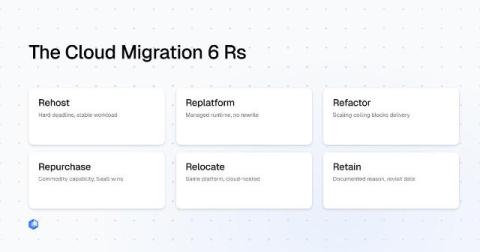
Cloud Migration Strategies, the 6 Rs, and How to Avoid Getting Stuck Mid-Move

Consider a platform team that spends four months building a thorough migration plan. Its pilot, a stateless order-status API, runs on AWS within three weeks. Six months later, that API is still the only workload in the cloud. In this scenario, the blockers are not exotic technical failures.

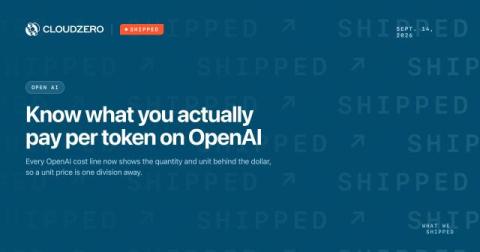
Shipped: Know what you actually pay per token on OpenAI

Picture two teams running the same million input tokens through the same model. One team’s tokens are cache hits, queued through the batch API. The other team’s are fresh, sent live. On a current-generation OpenAI model, cached input runs about a tenth the price of a fresh token, and batch processing cuts whatever’s left in half. Stack the two: at a list rate of $2 per million tokens, one team’s bill comes to 10 cents, the other’s to two dollars.

Are AI agents about to break cloud computing?

AI agents can write code and run tools on their own now. The problem is they still need somewhere to actually do it. exe.dev's David Crawshaw joins Michael Reid to break down why persistent virtual machines might become the backbone of agentic AI, and what happens to cloud economics when one person is running dozens of agents at once.