Operations | Monitoring | ITSM | DevOps | Cloud

env zero Launches EZ Control, the Autonomous Cloud Control Plane for the AI Era

Industry-Leading Asset Coverage Spanning Nearly 2,300 Resource Types Across AWS, Azure, Google Cloud and Kubernetes, Structured into a Real-Time Ontology That EZ Control Uses to Enforce Security, Cost, Availability, Maintenance and Performance Policies Continuously.
How Unified Cloud Monitoring Closes Hybrid IT Blind Spots

Modern IT runs across public cloud, data centers, containers, SaaS, networks, and AI services. Cloud monitoring delivers more value when those environments share the same observability context, giving teams a clearer way to troubleshoot service issues, manage cloud spend, and support AI-assisted operations.

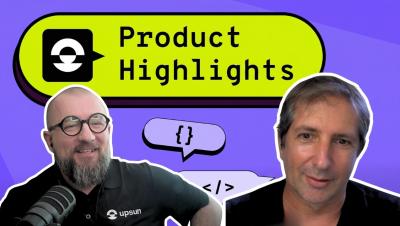
Watch this AI agent find and fix performance bottlenecks

Anyone can claim an AI agent will fix your performance problems. This demo shows exactly what it looks at and what it hands back. In this Product Highlights conversation, Sylvain Guittard, Senior Director of Product at Upsun who leads the team behind the Upsun console and CLI, runs the Upsun Cloud Performance Agent live on a demo project. His take: "You have a patch that is already available, and a recommendation, so you can see if it fits or not to your context." We get into.

This AI agent finds your app's bottlenecks and suggests the fix

Most teams collect the profiles and traffic data that explain a slowdown. Almost nobody has time to read it before users notice. In this Product Highlights conversation, Sylvain Guittard, Senior Director of Product at Upsun who leads the team behind the Upsun console and CLI, breaks down the Upsun Cloud Performance Agent, the first background agent running on Upsun Cloud. His take: "We monitor everything, we feed that into an agent, and the agent will be capable of finding what the bottlenecks are in your application. And on top of it, it gives you a patch, or a way to fix it." We get into.

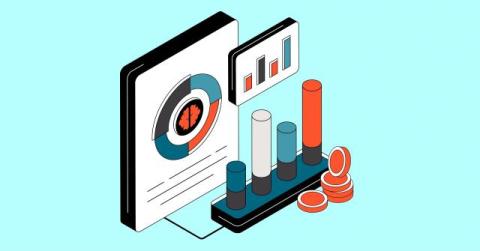
Change the Cloud Cost Conversation from Spend to Margin

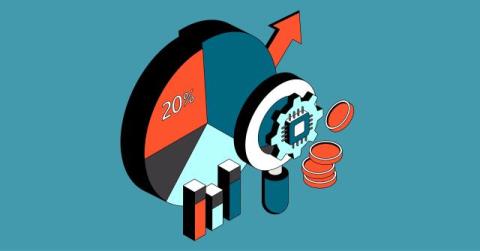
"Our Azure bill went up 20% last month." Without context, finance only sees a rising cost. Unit economics gives them the full picture. Turbo360 lets you overlay business KPIs on your Azure spend. Track units like orders, active users, document views, or monthly recurring revenue alongside cost, and see your cost per unit month over month. Now the conversation becomes: "Orders went up 150% and our cost per order came down." That is a story about efficiency, not overspend.

Auto-Generate Richer Azure Architecture Diagrams

Azure architecture diagrams go out of date fast, and management-plane data alone misses the runtime connections that matter most. In v5.4, diagrams move to their own Diagrams tab in Azure Documenter. Alongside the enhanced network and workload diagrams, there is a new Resource Visualizer diagram. Scope it by subscription and resource group, or write your own custom Azure Resource Graph query to define exactly which resources to include.

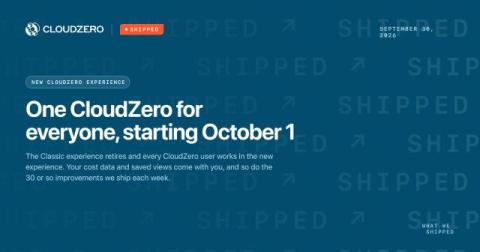
Shipped: One CloudZero for everyone, starting October 1

On June 3, we made the new CloudZero experience the default for every customer. Since then, we’ve shipped around 30 improvements a week: side-by-side period comparisons in Explorer, budgets you can create and edit right in the app, threshold alerts on dashboard tiles, and Monitors, which flags AI and cloud spend that moves outside its normal pattern and shows you what changed. Pages load 28 to 61% faster. JavaScript execution is 85% faster.

AI cost allocation: how to attribute AI spend by team, product, and customer

AI cost allocation is the practice of attributing every dollar of AI spend to the team, product, feature, or customer that generated it. That spend includes API tokens, GPU compute, per-seat tools, and shared infrastructure. It's harder than cloud allocation because AI spend arrives untagged, spans vendors, and pools in shared resources. Four methods cover most cases: tag-based, key-based attribution, proportional split, and usage-telemetry.

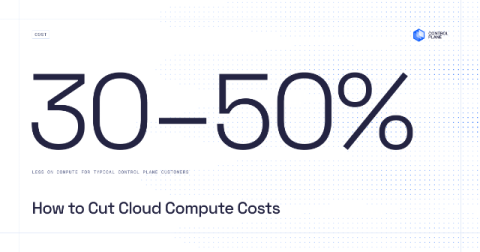
How to Cut Cloud Compute Costs Without Rewriting Your Apps

The fastest way to cut cloud compute costs is to stop paying for capacity your workloads do not use. Right-size CPU and memory to real usage, scale idle workloads to zero, and make cost policy a platform default instead of a quarterly review. Control Plane does all three at the platform level: Capacity AI right-sizes running workloads, autoscaling scales idle ones to zero, and customers typically spend 30 to 50 percent less on compute than running directly on AWS, GCP, or Azure.

Why Engineers Ignore Cloud Cost Optimization & Fixes

Learn why engineers ignore cloud cost optimization and how to build a culture of FinOps governance. See how Harness helps. Engineers often overlook cloud costs due to lack of visibility, fragmented tooling, and competing delivery priorities. Organizations can fix this by embedding FinOps guardrails into developer workflows and providing real-time cost feedback during build cycles.

Juggling AI tools works, until it does not

This isn't a teardown. This stack is a genuinely reasonable way to start. An AI-first editor handles day-to-day writing. A terminal-based coding agent takes on tasks that need more autonomy: a full feature, a migration, a stubborn bug. A few scripts connect the pieces, trigger a run, and post a result somewhere. An observability tool checks what happened after the fact. Every part of that is a real, capable tool. For the first few months, on a small team, it works.

Platform Engineering Without a Platform Team: How Growth-Stage SaaS Companies Get Production-Grade Infrastructure

If your team is outgrowing a simple PaaS and you do not want to spend a year or more building a platform engineering function, adopt a platform that operates Day 2 for you. Control Plane patches and upgrades the platform, autoscales and right-sizes workloads, and runs them active-active across regions and clouds under a 99.999% SLA. It runs natively on AWS, GCP, and Azure, and on your own clusters or on premises through Bring Your Own Kubernetes.

Build a Feature and Release It In a Day

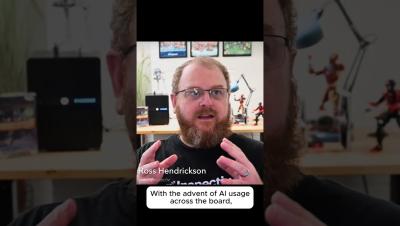
AI-generated code security is the part nobody plans for. Ross Hendrickson, CTO of Inspectiv, on what happens after the AI writes it. He can think of a feature and ship it the same day, generating more code than a week of writing it by hand would have produced. The vulnerabilities don't disappear along with the typing. Something still has to review what was generated, secure it, and get it out the door without becoming the new bottleneck.

Shipped: Every AI provider, one cost story

If you were anywhere near LinkedIn last week, you probably saw us launch AI Signals. We weren’t exactly quiet about it. (Press release, a couple of blog posts, and more social posts than we’d like to admit. Sorry about your feed.) We covered the why behind AI Signals already, but I wanted to actually walk you through what you’re seeing on the screen. Sooner or later someone asks what the company spent on AI last month.

Your AI stack will change again. Stop rebuilding it.

The model your team relies on today is unlikely to be the one you're relying on a year from now. If your team's process for shipping AI-assisted code is built around a specific model, coding assistant, or a vendor's take on an autonomous agent, you are not building infrastructure. You are building something you will tear out and rebuild the next time the leaderboard shifts.

Before your AI bottleneck gets worse: what to put in place now

Your engineers have agents running. Not one agent, but several, spread across the team. Some run in a terminal on a laptop, some are wired into your CI jobs, and some live inside whatever coding tool each person prefers. Each one got set up separately, by whoever needed it, in whatever way worked that week. That is the state most teams are in right now. Code stopped being the slow part a while ago.

Shipped: Don't ask an AI agent what its work will cost

If you set the budget for your team’s AI agent work, or answer to someone who does, you need a rough idea of what a job will cost before it starts. That’s hard to get. Stanford researchers found the same agent, given the same task, can use up to 30 times more tokens from one run to the next, and you usually find out afterward. Most developers just run the job.

Cost per AI outcome: tying AI spend to results

Cost per AI outcome is your total attributed AI spend divided by the business results it produced: resolved tickets, converted leads, merged pull requests. It includes the cost of failed attempts, sits at the top of the AI unit-cost ladder, and it's the number that makes vendor outcome pricing, ROI claims, and build-versus-buy decisions comparable.

What platforms support container auto-scaling and policy-driven resource management?

Table of Contents Autoscaling and policy-driven resource management are two sides of the same coin. Autoscaling adjusts capacity as demand changes, while policies define the boundaries it operates within: who can use how much, which workloads can be changed, and what safeguards must be respected. Without autoscaling, clusters are either overprovisioned or overwhelmed. Without policies, autoscaling can create runaway costs, noisy neighbors, or disruptive changes to critical services.

What tools detect and resolve Kubernetes resource contention automatically?

Table of Contents Resource contention happens when workloads compete for more capacity than a node or cluster can provide. For CPU and memory, the symptoms are familiar: CPU throttling, OOM kills, and noisy neighbors slowing latency-sensitive services. These are largely solved problems, addressed by accurate requests and limits, Quality of Service classes, and autoscalers like VPA and HPA that adjust sizing and replicas as demand changes. GPU contention is different, and far more expensive to get wrong.

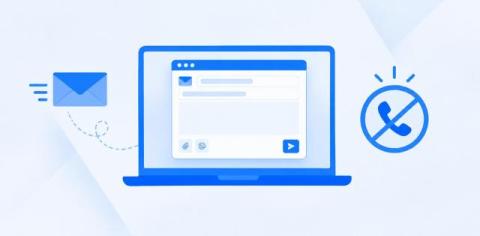
How to Make an Email Without a Phone Number with Internxt Mail

Creating an email account usually seems simple until you’re asked for a phone number. If you’d rather keep your number private, don’t have access to one, or simply want to keep your accounts separate, you may be wondering if there’s another option. The good news is that Internxt lets you create an account without phone verification with an Ultimate Internxt plan, or create temporary emails for free with no phone number or other personal details required.

AI Agent Infrastructure: Where to Run Agents in Production

Run production AI agents on infrastructure with hardware-level isolation, sub-second sandbox restarts, and a compliance posture that already covers PCI DSS, HIPAA, and GDPR, so a single misbehaving agent can’t touch another workload or your audit trail. Control Plane runs every agent workload in a Kata Containers sandbox on a per-workload Firecracker microVM, with Capacity AI packing resources and scaling workloads dynamically to cut compute cost 30-50%.

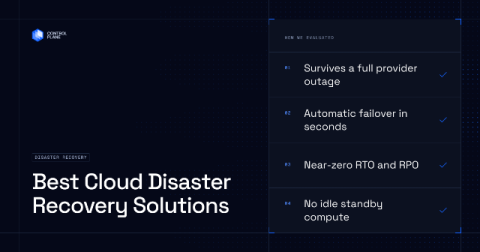
Best Cloud Disaster Recovery Solutions for 2026

Most disaster recovery plans are designed to survive infrastructure failures — a zone goes down, a region becomes unavailable — but assume the cloud provider itself stays up. That assumption fails more often than engineering teams expect, and when it does, the gap between a team that keeps running and a team writing incident reports isn’t luck: it’s whether DR was an architectural default or a runbook nobody has tested.

Cycle and Cherry Servers Webinar: Sovereign Bare Metal with Cloud Simplicity

Cycle teamed up with bare metal service provider Cherry Servers to discuss how rising political tension and controversy involving the United States is pushing many European organisations to take a closer look at where their data is hosted and handled. Many companies have been forced to look into alternative options to ensure their data is not hosted in or accessible by anyone outside of Europe.

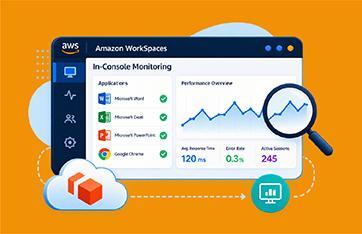
Amazon WorkSpaces Applications In-Console Monitoring

Recently, Amazon announced WorkSpaces Applications in-console monitoring. This is a big shift forward for AWS, who is quietly building market share with their Amazon WorkSpaces Applications (previously called Amazon AppStream 2.0) virtual applications offering. This announcement validates that observability matters for Amazon WorkSpaces Applications customers – they need to see what’s going on in their virtual application and desktop fleets, hosts and sessions.

How to Build an App on Base44 with a Production-Ready Aiven Database

Base44 is fast at the part that used to take a week. Describe an application, and you have a working interface in minutes. Base44's built-in Cloud backend, enabled by default, is a reasonable place to start. But it doesn't put your data in an account you already own, in the cloud and region you picked, next to the rest of your data platform. That's the gap this post closes.

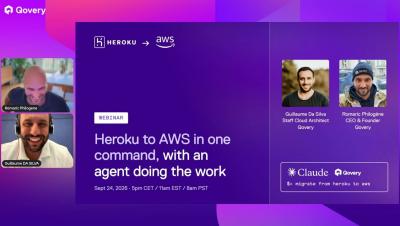
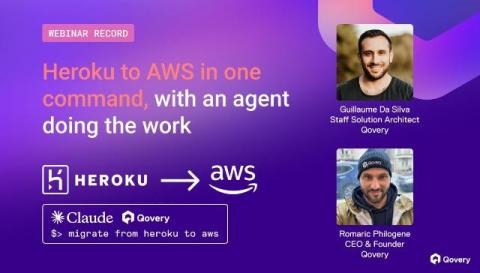
Heroku to AWS in One Command, With an Agent Doing the Work (Webinar Replay)

Replay and recap of our live session: an AI agent reads a Heroku Rails app and deploys the full stack to AWS through Qovery from one prompt. Chapters, timestamps, the four ways teams leave Heroku, and the steps a human should still own. Romaric founded Qovery to make Kubernetes accessible to every engineering team. He writes about platform strategy, developer experience, and the future of cloud infrastructure.

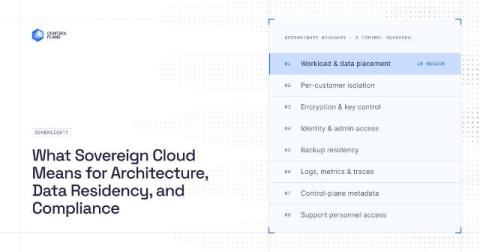
What Sovereign Cloud Means for Architecture, Data Residency, and Compliance

Sovereign cloud is a system design problem. It asks where workloads run, where data lives, who can administer the system, which legal authorities can compel access, who controls encryption keys, and where backups, telemetry, and control-plane metadata land. Selecting a region answers only part of that problem.

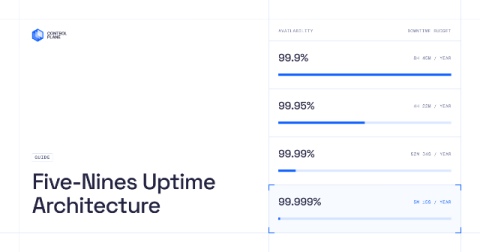
Five-Nines Uptime Architecture: What Single-Region, Multi-Region, and Multi-Cloud Designs Can Deliver

99.999% availability allows about 5 minutes 15 seconds of downtime per year, or about 26 seconds per month. That budget includes every failed deploy, certificate expiry, DNS misconfiguration, and provider incident in the request path. One regional outage lasting an hour consumes more than 11 years of five-nines budget. This guide explains which architecture tiers can reach that number, which cannot, and why.

Shipped: A customer support experience that starts with an answer

When you have a question about your cloud or AI spend, you want an answer quickly, not a ticket that disappears into a queue. Support should not mean waiting for business hours, repeating your account details to multiple people, or wondering whether anyone picked up your message. That changed this week for every CloudZero customer. You get answers to most product and account questions immediately, at any hour, and when your question needs a person, they already have context.

We stopped asking an LLM how much its own work would cost

There’s a specific kind of measurement problem worth naming precisely rather than dramatizing: this month we found that our model-routing agent was assigning a token budget to every unit of work, and that budget was noise in the strict sense. Fixing it meant improving a system that’s mostly right, not tearing one down.

You made coding faster. Guess where the bottleneck went next.

Somewhere in the last year, your team's code output went up. Pull requests are opened faster. The backlog of small fixes and routine changes started clearing quicker than it used to. If delivery still feels roughly as slow as it did before, that's what happens when you speed up one part of a process without touching anything downstream of it.

How does fragmented telemetry affect an AI system's ability to reason what's really happening?

Fragmented telemetry limits what AI can understand. When logs, metrics, and traces remain siloed, AI sees individual signals instead of the full story. That can lead to incorrect conclusions and unexpected outcomes. This is where AI observability matters. Virtana connects telemetry across the stack, giving AI the context it needs to correlate signals, understand dependencies, and identify what is really happening.

How to Do Azure Cost Allocation by Team or Department

Learn how to allocate Azure costs across departments and get a clear view of who is spending what. In this video, we’ll show you practical ways to track and allocate Azure costs by department using Azure cost management practices. You’ll learn how to organize cloud spend, assign costs to teams or business units, improve cost visibility, and make Azure cost discussions easier between finance, engineering, and IT teams.

The Cloud Repatriation Bill: What UK Businesses Didn't Budget for and How to Control Cost

Half of organisations spent more on public cloud than they had planned for last year. According to IDC research, reported by ITPro, 59% expect the same to happen again this year. That gap between what businesses expect to spend and what they actually spend is usually what starts the repatriation conversation. It is also where the next miscalculation begins.

Fragmented Azure visibility? One Azure monitoring tool that tracks every layer

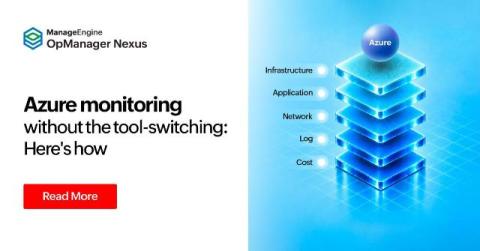
Most Azure monitoring setups look the same: Azure Monitor for metrics, Application Insights for apps, Log Analytics for logs, a separate tool for network, and another for cost. Each works in isolation. None of them talk to each other when something breaks. The Azure monitoring tool in ManageEngine OpManager Nexus consolidates infrastructure, application, network, log, and cost visibility data into a single console.

AI finally plans like every other line in my budget

September is associated with football, foliage, flannel and, for some, the Financial Plan. As we put pen to paper (or agents to harnesses), there’s a few core elements that have always driven the P&L outlook for the following year: rep productivity and new product releases driving new sales, expansion and contraction against the install base, employee roster changes, and discretionary spend.

Stop capping your best people.

Somewhere in your company, a team is three weeks into the AI project that’s going to matter. Somewhere else, a support pilot from the spring is still summarizing every ticket with a frontier model, and nobody has looked at it since it started working. On the invoice they’re identical, and the company has two moves: leave everything open, which funds the waste, or cap everyone, which kills the bet.

Your AI coding gains are stuck before the code is even written

At some point this year, you likely approved a request to expand AI coding tool access across the team. The pitch was straightforward: engineers write code faster, the team ships more, the investment pays for itself. The first half happened. Engineers are writing code faster. If you're now being asked whether the investment paid off, and you're finding the honest answer is more complicated than a yes, you are not alone, and you have not been sold something broken.

17: There's No Life Without AI: Agents, MCP, and the Future of Automation With Viktor Farcic

On this episode of Kubex Talks, technology critic Viktor Farcic returns to talk with Andrew Hillier about the rapidly changing landscape in tech. Viktor has gone from AI skeptic to believer, claiming that there really is no life without AI anymore, from a professional standpoint.

Why Cloud Cost Optimization for Engineers Fails

Learn why cloud cost optimization for engineers fails and how to fix it with developer-centric FinOps practices. See how Harness helps. Engineers often ignore cloud costs due to a lack of visibility, context, and ownership in their daily workflows. By shifting cost governance left and integrating real-time cost insights into CI/CD pipelines, teams build lasting cost accountability.

Best LLM inference providers 2026: 16+ on cost per outcome

An LLM inference provider hosts open-weight models like Llama, DeepSeek, and Qwen behind a pay-per-token API, handling GPUs, scaling, and serving for you. The same Llama 3.3 70B model ranges from $0.10 to $1.04 per million input tokens depending on who serves it, so provider choice is a pricing decision. Top picks as of September 2026: Groq and Cerebras for speed, DeepInfra for price, Together and Fireworks for breadth, Baseten for custom models.

Build vs. buy: should you build your own AI cost management tooling?

Build when the problem is narrow (one provider, one team, simple attribution) and the tooling is strategically yours to own. Buy when AI spend spans providers, arrives untagged, and needs unit costs finance will trust, because that build is a multi-quarter platform project with a permanent maintenance tail. Price both paths in engineer-years before deciding. CloudZero sells the “buy” side.

Perplexity pricing in 2026: Free vs. Pro vs. Max, and who should pay

Perplexity pricing runs $0 for Free, $20 a month for Pro, and $200 a month for Max, with enterprise seats listed from $40 per user. Pro fits most people who search for work daily. Max exists for heavy automation. The prices are verified against Perplexity's live plans page as of September 2026. When Perplexity published a customer quote on its own pricing page, it chose an unusual one.
Predictable Cloud Egress Is Finally Here: How Megaport Unlocks It All

Discover how AWS Direct Connect flat-rate pricing makes cloud egress predictable and how Megaport enables high-volume data migration. AWS has announced flat-rate pricing for Direct Connect, bringing more predictable egress costs to eligible 10 Gbps and 100 Gbps Dedicated Connections. Here’s what the new egress pricing model means for bulk data migration, plus how Megaport helps you make the most of it with private connectivity to the storage and compute your workloads need.

How Does Google Photos Work to Back Up and Sync My Files?

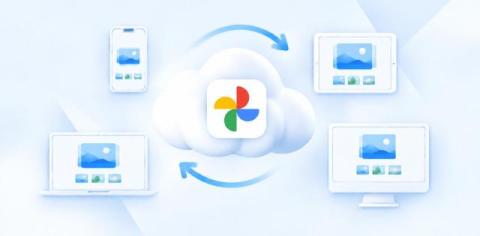
Google Photos is part of Google’s product suite, but works differently from Google Drive, which focuses on storing your files and collaboration with others. So how does Google Photos work? Google Photos is dedicated to protecting your photos from accidental deletion or data loss by automatically uploading your photos to Google Photos, backing them up in the cloud, and making them accessible across all devices.

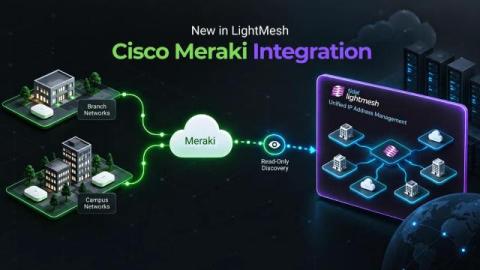
New in LightMesh: Cisco Meraki Integration

Some features start on a roadmap. Others start with a recurring customer request: Can LightMesh connect to Meraki? That request kept coming up. Now the answer is yes. LightMesh supports Meraki sites with multiple VLANs or a single LAN through the new cloud integration for Cisco Meraki. Appliance addressing from Dashboard syncs into LightMesh as subnets (with VLAN ID when Meraki provides one), and device or client LAN IPs only when they fall inside those CIDRs.

Kling AI pricing in 2026: plans, credit costs, API packages, and the spend no invoice shows

Kling AI pricing runs from a free tier of 66 daily credits to a reported $180 per month, with annual billing about 34% cheaper. Kling 3.0 bills per second: 6 to 12 credits for standard resolutions and 30 for native 4K. The API sells separate prepaid packages from $9.80 to $7,560.

ElevenLabs pricing in 2026: plans, credits, and agent costs

ElevenLabs pricing runs from a free plan to $990 per month across six published tiers, with custom Enterprise above that. Plans meter usage in credits, where one credit roughly equals one character of speech. Voice agents cost $0.08 per minute on every tier, plus separate LLM and telephony charges. The AI agency PxlPeak published its own ElevenLabs invoice: $303 for January 2026, covering voice content for six clients, IVR systems for two, and live voice agents for three.

Token-based pricing: how AI usage billing works (2026)

Token-based pricing charges for AI by the volume of text a model processes, metered separately for input tokens (what you send) and output tokens (what the model returns). As of 2026, OpenAI, Anthropic, and Google all bill their APIs this way, and the model is spreading into enterprise chat products. Bills scale with usage rather than seats.

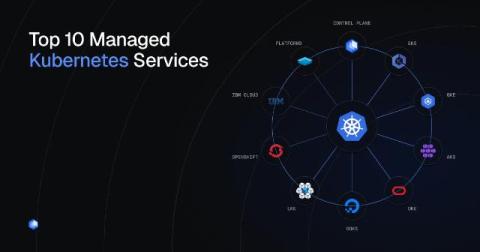
Top 10 Managed Kubernetes Services

Kubernetes has become a standard foundation for modern containerized applications, but operating clusters still requires significant engineering work. In the CNCF’s 2025 annual cloud native survey, published in January 2026, 82% of container users reported running Kubernetes in production. As adoption matures, the question for many teams is no longer whether to use Kubernetes, but how much of the operational burden they want to own.

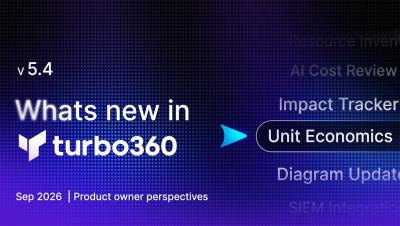
Unit Economics & AI Cost Review: What's New in Turbo360 v5.4

Move the FinOps conversation from what you spend to the value you get back. Unit Economics puts your own KPIs next to Azure cost so you can talk in margin, not just bill. New holistic trackers prove what your reservations and schedules are really saving, an AI Cost Review agent turns "how are we doing?" into a full analysis in about a minute, and rightsizing now reaches your Log Analytics workspaces.

The Best Black Friday VPN Deals of 2026

Looking for the best VPN Black Friday deals of the year? Then you’ve come to the right place! Internxt VPN is included with all our paid plans, which also include encrypted cloud storage, for a massive 87% off. Not only do you get a VPN, but you can also choose from a privacy suite to get everything you need to protect your privacy online this Black Friday. Interested? Find out the pricing of our Black Friday deals, features, storage, and more below.
How Upsun Dispatch runs workflows, from issue to reviewed code

Upsun Dispatch is generally available to the public as of today. Our previous article explains what it is and why we built it. This round, we take you into the details of how it works, the primitives it consists of, and the functionality available right away. You'll also get a glimpse of our roadmap at the end of the article.

Open Sourcing Kubex's GPU Process Exporter: Gain Visibility in Your Shared GPUs

Table of Contents GPU sharing with NVIDIA hardware is becoming easier to adopt in Kubernetes but it hasn’t been easier to observe. Time-slicing lets multiple workloads share the same GPU. MPS allows CUDA workloads to execute concurrently. Schedulers like KAI make it easier to manage these shared environments. But sharing a GPU introduces a problem that is easy to underestimate.
Introducing Upsun Dispatch - AI helped your engineers ship more code, now you can ship more product

AI models got good enough that teams want to let them loose on the backlog. Then somebody asks who approved that change, what is waiting on a decision, and what the agent actually cost. Upsun Dispatch gives your team and your agents a shared place to work together. It runs on the repository you already have, connects to the tools your team already uses, and keeps a person on the decisions that matter.

Best Black Friday Deals and Discounts You Don't Want To Miss [2026]

Wondering what the big deal is with Black Friday? And why does every business on earth seem to be obsessed with the quasi-holiday? Or are you just looking for great deals? Black Friday has become a sort of global cultural institution. Everyone knows about it, some look forward to it, and a few go crazy for the big day. It may be hard to believe, but Black Friday hasn't always been a thing, and it's actually a relatively recent development.
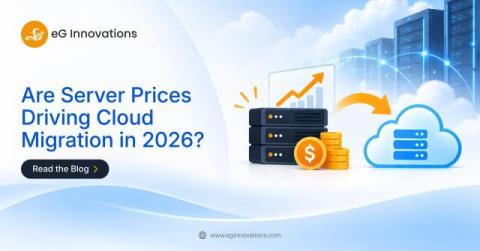
Are Server Prices Driving Cloud Migration in 2026?

For years, moving workloads to the cloud has been driven by scalability, flexibility and the desire to reduce the capital expenditure associated with running a data center. In 2026, however, there is another factor entering the conversation: the rising cost of buying and refreshing physical servers. The question is now whether rapidly increasing hardware prices are enough to push organizations that might previously have refreshed their on-premises infrastructure towards cloud alternatives.

150+ AI statistics for 2026: spend, cost, and AI ROI

Worldwide AI spending will reach $2.59 trillion in 2026, up 47% from 2025, according to Gartner. Yet only 37% of organizations report any earnings impact from AI, McKinsey finds. These AI statistics cover what companies spend, what AI costs to run, and the ROI they're actually getting. That gap between the two headline numbers is the story of AI in 2026.

From a $60K invoice to a $200B earnings call, few can explain the AI bill

CloudZero’s own AI Economics Pulse for September found the 75th percentile of its 430-company customer panel crossed 10% of its cloud bill on AI for the first time in August. Gartner’s latest survey found only 22% of organizations have scaled AI successfully and 11% don’t know what their own function spent on it last year. CJ Gustafson showed what that gap looks like on an actual invoice this week.

From automotive repair to data centres

Blagomir Petrakiev, Data Centre Services Engineer in Maidenhead, made the move from automotive customer service to data centre operations after studying for his Cisco Certified Network Associate (CCNA) certification. In this Q&A, Blagomir shares what it’s like working behind the scenes at Pulsant, from infrastructure checks and remote hands tasks to learning new skills and building a career in digital infrastructure.

JFrog Agent Power for AWS Kiro

JFrog is bringing software supply chain governance to AWS Kiro. Operating as a power plugin within Kiro, JFrog delivers package safety, agentic access to the JFrog platform, and the JFrog AI Catalog. With simple setup, AI agents make supply chain aware decisions right inside the IDE, ensuring dependencies come directly from Artifactory rather than unverified public registries.

Cloud Migration Strategies, the 6 Rs, and How to Avoid Getting Stuck Mid-Move

Consider a platform team that spends four months building a thorough migration plan. Its pilot, a stateless order-status API, runs on AWS within three weeks. Six months later, that API is still the only workload in the cloud. In this scenario, the blockers are not exotic technical failures.

Shipped: Know what you actually pay per token on OpenAI

Picture two teams running the same million input tokens through the same model. One team’s tokens are cache hits, queued through the batch API. The other team’s are fresh, sent live. On a current-generation OpenAI model, cached input runs about a tenth the price of a fresh token, and batch processing cuts whatever’s left in half. Stack the two: at a list rate of $2 per million tokens, one team’s bill comes to 10 cents, the other’s to two dollars.

Are AI agents about to break cloud computing?

AI agents can write code and run tools on their own now. The problem is they still need somewhere to actually do it. exe.dev's David Crawshaw joins Michael Reid to break down why persistent virtual machines might become the backbone of agentic AI, and what happens to cloud economics when one person is running dozens of agents at once.

Compliance guardrails for regulated delivery

One multinational running on Upsun operates more than 400 websites. Each subsidiary has its own sites, its own team, its own release schedule, and its own local requirements. What they share is one infrastructure control layer: the same access model, the same encryption defaults, the same activity records, the same region and backup policy on every project. Adding the 401st site does not add a 401st set of infrastructure controls for someone to review.

How is the SaaS Market Performing in 2026?

Software as a Service (SaaS) dominates corporate technology purchases in 2026. The cloud powers communications, finance, customer management, analytics, cybersecurity, HR, and more. Software spending is soaring, but purchasers choose value-based subscriptions. Business conditions affect SaaS enterprises. Higher costs, shifting technology spending, mergers, and corporate shutdowns limit demand but also create opportunities. A company shutdown 2026 report might cover software spend, customer retention, and investment trends. Gartner anticipated $1.47 trillion in software spending in July 2026, up 15.5% from July 2025.

Why engineers ignore cloud costs, and how AI Cost Management Agents fix it

Engineers ignore cloud costs because of broken feedback loops, not apathy. Learn what AI cost management is, why AEO matters more than ever, and how a cost management agent embeds accountability directly into engineering workflows. Engineers ignore cloud costs because cost data arrives too late and too disconnected from their workflow to act on.

Best LLM gateways in 2026: 30+ AI gateways compared on cost control

An LLM gateway is a proxy that sits between your applications and model providers, handling routing, failover, caching, and cost controls through one API. The strongest picks in 2026: LiteLLM for self-hosted control, OpenRouter for instant multi-model access, Portkey for managed governance, and Bifrost for production-scale throughput. Enterprises spent $37 billion on generative AI in 2025, a 3.2x jump in one year, per Menlo Ventures.

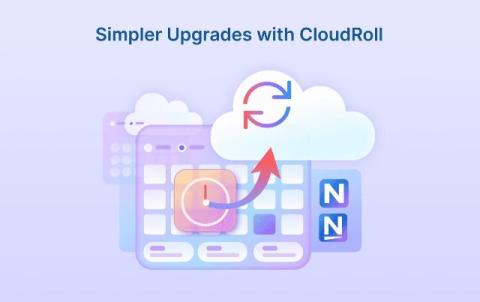
Ubuntu Pro in-place upgrades for Virtual Machine Scale Sets on Azure

You can now upgrade Ubuntu Server Virtual Machine Scale Sets on Azure to Ubuntu Pro without rebuilding the set. Your instances keep serving traffic. The change is a license update, not a new image. Users could already perform in-place upgrades to Ubuntu Pro for individual VMs. Now, we’re extending the feature to scale sets – groups of load balanced virtual machines that you can manage as a single unit.

How to right-size the handoff between two agents

model-right-sizer-schema is a Claude Code skill that designs the typed contract between one agent and the controller that dispatches it. Point it at an agent plus its controller and it returns a JSON prescription with typed in/out fields, an exclusion list that keeps raw logs out of the reply, a before/after size delta, then writes the contract into the agent's own file. It picks from nine portable output-shape families, or your repo's own.

Stop assembling audit evidence by hand: generate it on every deploy

Somewhere in every compliance program is a person who spends the week before an audit pulling logs out of several different systems, reconstructing who had access to what, and hoping the screenshots match what the auditor actually asks for. None of this work makes the system more secure. It just makes the existing security visible to someone who's checking. That gap, between the controls that are actually in place and the evidence that proves it, is where most audit prep time goes.

The network layer securing your multicloud traffic

You migrated the workload. The app's live across clouds. But is the traffic between them actually locked down, or just assumed to be? There's a layer of the network doing the heavy lifting here, and it goes by a name that gets confused with something else constantly. Full breakdown on our blog, link in bio.

A typical day in the data centre

What does a typical day look like for the people working behind the scenes of a data centre? From hardware installations and cabling to troubleshooting, customer requests and supporting critical works, every shift brings something different. In this 'day in the life', Leon Strong, Data Centre Services Engineer for Maidenhead, shares what it’s like to work in a hands-on technical role, what they enjoy most and their advice for anyone considering a career in data centre engineering.

Almaden, Inc. Announces General Availability of CIQ Cloud, an Operational Visibility Platform for MSPs and IT Teams

Almaden, Inc. today announced the general availability of CIQ Cloud, its Operational Visibility platform designed to help Managed Service Providers (MSPs) and internal IT teams monitor, understand, govern and optimize increasingly complex cloud and SaaS environments. Modern organizations rely on Microsoft 365, Google Workspace, cloud infrastructure, SaaS applications, identity services, security platforms, DNS and a rapidly growing range of AI technologies.

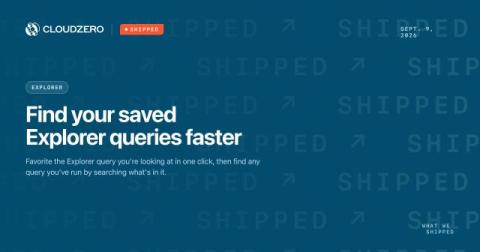
Shipped: Find your saved Explorer queries faster

Most people rebuild the same handful of Explorer queries: the monthly close view, spend by team for the staff meeting, the filter set that isolates a service you’ve been watching for two months. When we shipped query history and favorites earlier this year, it gave you a way to save up to 12 Explorer configurations.

n8n pricing in 2026: every plan, the execution math, and what AI agents change

n8n pricing runs €24 per month for 2,500 workflow executions (Starter), €60 for 10,000 (Pro), and €800 for 40,000 (Business), with 17 percent off on annual billing and custom Enterprise pricing above that. Every plan includes unlimited users and unlimited workflows. The self-hosted Community Edition is free with unlimited executions; you pay only for your server.

CoreWeave pricing in 2026: every GPU rate and what a node really costs

CoreWeave, a GPU cloud provider, prices start at $6.16 per GPU hour for an Nvidia H100 and reaches $8.60 for a B200, sold as fixed multi-GPU nodes: an 8x H100 node lists at $49.24 per hour on demand. Spot rates run up to 60 percent below on demand, reserved contracts discount up to 60 percent, and egress is free.

From idea to working software: what the full development lifecycle needs to look like

GitHub's research found that developers using Copilot completed tasks 55% faster than those who didn't. Tools like GitHub Copilot and Cursor, powered by large language models such as Claude or GPT, are designed to automate the tedious parts of programming so engineers can focus on harder, more creative problems. With this. new repos spin up every week. The promise is being kept. But where are the products?

Shipped: Turn on the ServiceNow integration yourself in Labs

The ServiceNow integration is in Labs now, which means any CloudZero admin can switch it on and start routing cost work into their incident queue the same day. What that gives you is a full loop between the money and the work. A monthly Optimize pass surfaces recommendations with a dollar figure on each one. Pick the ones worth acting on, open incidents for all of them at once, and each ticket shows up carrying the resource, the finding, and the context an engineer needs.

Your AI Economics Pulse for September 2026

Across a same-store panel of 430 CloudZero customer organizations, AI reached 2.66% of the median company's cloud bill in August 2026, up from 2.61% in July and roughly four times its level a year ago. The 75th percentile crossed 11%. The share of organizations with at least 10% of cloud spend attributed to AI jumped to 28.2% from 23.9%, the largest one-month move that tier has posted. Two-thirds of the panel now spends at least $1,000 a month on AI. The typical bill barely shifted.

Azure Virtual Desktop Monitoring: A Complete Guide

Azure Virtual Desktop (AVD) puts the user’s desktop at the end of a long delivery chain: the Azure control plane, host pools, session hosts, profile storage, the network, and the endpoint on the user’s desk. Any one of them can make a session feel slow, and none of them looks broken from inside the others. That is why performance work on AVD starts with continuous monitoring across the whole chain rather than at either end of it. Azure Virtual Desktop Monitoring is what closes that gap.

How to move photos to cloud storage easily, securely, and privately

If you have a large collection of photos you don’t know what to do with, and need a fast, efficient way to store and keep your memories protected, then cloud storage may be the option for you. Moving your photos to cloud storage is a simple way to store, back up, and manage your photo library without relying only on your phone, computer, or physical storage devices. But how do you move photos to the cloud, do your photos automatically get backed up, and how much cloud storage do you actually need?

How Azure Fundamentals Can Strengthen Your Cloud and Digital Technology Skills

Many people encounter AZ-900 (Microsoft Certified: Azure Fundamentals) as a checkbox and never ask what it teaches them beyond Microsoft Azure. The more useful question is whether a fundamentals-level credential can build digital skills that remain relevant after the exam or whether it amounts to little more than a badge.

Data residency in 2026: what regulators now expect from your cloud, and how to prove it

Ask a compliance team where their EU customer data lives, and most will point confidently at a dashboard showing a Frankfurt or Dublin region. Ask their legal counsel whether that data is beyond the reach of a foreign government demand, and the confidence usually drops. Those are two different questions. Since 12 September 2025 there has been a dated EU obligation that turns on the second one rather than the first.

Top 10 Heroku Alternatives

Heroku is not shutting down. On February 6, 2026, Heroku CPO Nitin T Bhat announced that the platform was moving to a sustaining engineering model: new feature development has stopped, but Heroku remains actively supported and production-ready. There is no announced EOL date or migration deadline, existing apps can keep running, credit-card customers can continue using the service, and existing Enterprise customers can renew. What changed is the roadmap, not immediate availability.

The 5 Levels of Running Coding Agents

If you're trying to run more than a few AI coding agents at once, the real problem shifts from prompting to managing where they live and what they can reach. This video walks through the five levels of agent management, from the IDE all the way to a fleet running in the cloud with access to your own services.

Hybrid cloud management: 6 challenges IT teams need to solve in 2026

In 2026, a hybrid cloud is no longer something organizations are working toward; it's already where they are. According to Forrester's The State Of Cloud Series 2026, the vast majority of enterprises across major markets, including the United States, India, Australia and New Zealand, Canada, and the Asia-Pacific region, are running some form of a hybrid cloud, combining public cloud platforms with private infrastructure, colocation data centers, and sovereign cloud providers.

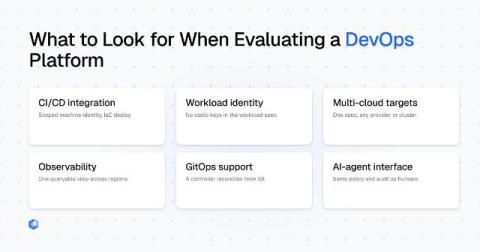
What to Look for When Evaluating a DevOps Platform

DevOps platform feature lists increasingly look alike. CI/CD, multi-cloud, observability, GitOps, and AI-friendly automation can all appear as checkboxes while the implementation burden still falls on your team. The useful signal appears when you ask how each capability actually works, what evidence a vendor can show, and which parts your team still has to build. Can pipelines authenticate with a scoped machine identity? Can workloads reach cloud APIs without static keys?

DHCP tells you what was leased. It does not tell you what is answering.

Your DHCP server knows which addresses it assigned. It does not know which of those addresses are answering on the wire right now. That gap shows up in every hybrid network where static devices, reservations, and stale leases sit beside active workloads. Leased and live are different questions. DHCP scopes answer the first. Subnet ping-sweep answers the second. Together they give IPAM fresher last-seen context without handing an NMS credentials across the network.

GPT-6 Astra pricing: What OpenAI's new flagship costs in 2026

GPT-6 Astra is OpenAI's flagship reasoning model, released September 3, 2026. It costs $10 per million input tokens and $50 per million output tokens on the standard API tier, with cached input at $1 and cache writes at $12.50. That is 2.5 times GPT-5.6 Sol's promotional rate and matches Anthropic's Fable 5.1 on both headline numbers. Batch and Flex halve those rates, Fast mode doubles them, and any prompt past 272K input tokens reprices the entire request.

AI cost calculator: estimate your total spend

An AI cost calculator for the whole wallet adds four lanes: seats and subscriptions, API and token usage, cloud AI services, and GPU infrastructure. Average 2026 totals run $25 per employee per month at light adoption, $100 to $150 at active adoption, and $300 or more at AI-heavy companies. Getting to your number takes four lane subtotals and three corrections.

How to verify your Azure Application Gateway is zone-redundant

Having a redundant failsafe is one of the best things you can do to ensure high availability in the cloud. It’s rare for cloud regions to go offline, but it can happen, even on major platforms like Azure. While you might not have control over your provider’s reliability, you do have control over your own, and redundancy is a key part of that. Here’s how you can check if your Application Gateways are availability zone (AZ) redundancy, and how to verify redundancy using active testing.

Making Shared GPUs Even Safer with Kubex and HAMi-core

Table of Contents A few months ago, we introduced Kubex support for the KAI Scheduler to improve GPU sharing for production inference workloads. The basic model is simple: The KAI Scheduler handles placement and GPU sharing. Kubex continuously observes usage and adjusts those allocations as demand changes. KAI provides the scheduling foundation. It lets multiple workloads share a GPU while accounting for the amount of GPU each workload requests. Kubex then closes the loop.

Shipped: Self-serve your MCP server credentials

Enterprise agent platforms need a client ID and client secret in hand before they will connect to anything. An admin with the Modify MCP Settings permission can now issue that pair directly in Settings, connect the platform, and manage the credential lifecycle on whatever schedule your security policy requires. No support request, no wait.

The case for preview environments with production data

Before he joined Upsun, Andrew Kester spoiled the biggest sale of a client's year. He was one of two or three web developers at a creative agency that did branding, logos, print, and websites. A design boutique was about to run its annual trunk show, and the discounts and featured brands were meant to stay secret until the reveal on Tuesday at noon. The client asked for a preview. The preview reached production.

If We're Not Up, The Checkout Breaks

Kintsugi puts sales tax compliance on autopilot for 7,300 companies selling into 110 countries, and its tax engine sits inside other companies' checkouts. The answer has to arrive before the shopper finishes paying. "Typically, a customer's expectation is that we are returning the sales tax estimate on the invoice within 100 milliseconds." The cost of missing is not abstract: "For every minute that our sales tax API, if it ever goes down, our customers are not able to collect roughly $4 million in sales tax that they should be collecting.".

Railway vs Render vs Your Own Cloud Account: What Actually Fits a Scaleup Outgrowing Managed PaaS

An honest 2026 comparison of Railway, Render, Fly.io and deploying into your own AWS, GCP, Azure or Scaleway account - with the six measurable signals you have outgrown managed PaaS, a priced cost model, and a four-step framework with if-then verdicts. Romaric founded Qovery to make Kubernetes accessible to every engineering team. He writes about platform strategy, developer experience, and the future of cloud infrastructure.

Our Customer Success AI bill tripled. Here's why we're spending more.

Pop quiz: If you spend $40,000 per month on Anthropic, and you’ve got two customers, what’s your cost per customer? If you bypassed the easy answer of $20,000 and said, “Scott, you old trickster, that’s not enough information to answer that question,” you’ve won today’s prize: a lesson in the perils of average costs. Let’s flesh out the situation: You put an AI feature in your product, a document assistant powered by Claude.

Shipped: Rightsize Kubernetes workloads without leaving your MCP client

Changing a Kubernetes resource request takes two numbers: what the workload requests, and what it uses. The CloudZero MCP server now returns both, by cluster, namespace, or workload. This gives you a number you can defend. Usage comes back as P95 over the date range you query, 30 days by default. When an engineering lead asks whether a service runs on a smaller request, that is the figure that settles it. Over-provisioning and under-provisioning show up on the same query.

LLM token cost: pricing per token explained

LLM token cost is the price a provider charges per token a model reads or writes, quoted in dollars per million tokens. Input and output bill at separate rates, with output priced at roughly 5x input. As of September 2026, published rates range from under $0.10 to more than $180 per million tokens on top-end reasoning tiers. In late 2025, Hardik Sonetta of Thomson Reuters Labs published a warning about the most common prompt caching mistake in production.

Why compliance keeps slowing your releases (and what to change first)

A team ships at a steady pace for most of the year. Then an audit approaches, and delivery slows. Engineers get pulled off feature work to support the audit, producing the configuration exports, logs, and environment checks that the evidence depends on. The slowdown lasts as long as the audit does. It is tempting to read this as a team that needs to move faster or be bigger. It is usually neither.

Cloud Cost Management for Observability: A Practical Guide

Observability spend is outgrowing infrastructure budgets. What drives the cost up, how pricing models work, and a practical framework to manage it. Sejal Pandey works on content and growth at Last9, writing about observability, reliability, and SRE practices.

Moving Beyond OOM Kills: Introducing Memory QoS in Kubernetes 1.37

Table of Contents For most of Kubernetes’ history, memory management has been a blunt instrument. Cross your limit, and the kernel kills your container. There has been no equivalent to CPU throttling, no graceful backpressure, just a hard stop. With Kubernetes 1.37, that changes: Memory QoS, built on cgroups v2, graduates to Beta and is enabled by default.

For whoever has to explain the cloud bill to finance every month.

As infrastructure gets more complex, with workloads spread across clouds, regions, and providers, every hop your data takes between them adds up. Where do these costs actually come from? Has your team ever traced a surprise bill back to data movement? With Megaport, cloud egress costs are minimized by routing data privately between providers, avoiding the higher transfer rates associated with public internet routing.

SaaS Sprawl Is Becoming an IT Problem: Here's How to Bring It Under Control

For most organizations, SaaS sprawl does not begin with a bad technology decision. It starts with a useful tool. Marketing needs a new analytics platform. Sales adopts prospecting software. HR adds an applicant tracking system. Engineering signs up for another monitoring service. Someone discovers an AI tool that saves several hours a week and puts it on a company card. Each purchase makes sense on its own.

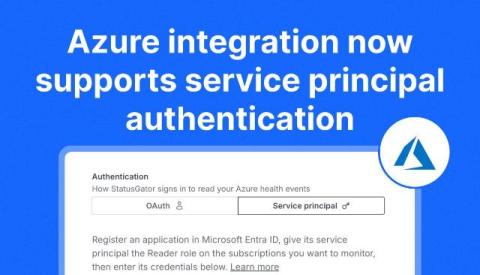
Azure integration now supports service principal authentication

We’ve released some improvements to our Azure status integration. StatusGator can now read your Azure Resource Health events via a service principal. Previously the only supported authentication mechanism was OAuth. Both pull the same data and produce the same alerts – the difference is who the connection belongs to, and what happens to it over time.

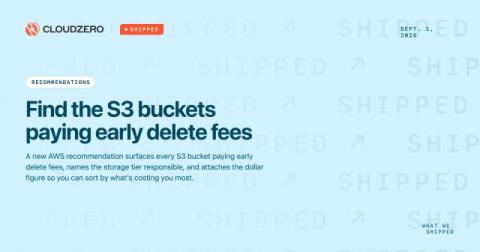
Shipped: Find the S3 buckets paying early delete fees

S3 lifecycle rules move data to Standard-IA or Glacier to cut storage cost. CloudZero now flags the buckets where that move backfires: an early delete fee is charged when an object leaves its tier before the tier’s minimum storage duration. The cause isn’t always a misconfigured lifecycle rule. A manual delete, an overwrite, or an object written straight into the tier by a replication or backup job produce the identical charge.

AI usage tracking: Monitor spend by team, feature & model

AI usage tracking means measuring who and what consumes AI across your company, by team, feature, and model, then converting the usage into spend and cost per unit of work. Provider consoles stop at totals per API key. Tracking puts names on those totals: which team, which product, which model, and whether any of it was worth the money. In May 2026, CNBC reported that “almost every Fortune 500 is tracking overall AI usage,” quoting ModelOp CTO Jim Olsen. The same reporting carried his warning.

Repo rightsizing: audit every model call in a repo you already shipped

Repo rightsizing is a single-pass audit of every real model call in a codebase you already shipped: SDK invocations, sub-agent dispatch sites, and agent frontmatter pins. Each call site is scored on the job it actually does, and the result commits as one blueprint file you can diff next quarter. It replaces one-skill-at-a-time reviews, which miss files where a single model key covers two different jobs.

The gap between individual AI productivity and team performance

As a product manager at Upsun with a computer engineering background, Kateryna Dvornichenko had spent months researching competing tools in the agentic development space, running tests, comparing features, and building a picture of where the market was heading. She realized the tools were impressive, but something kept standing out. "Collaboration was not the strong point of any of them," she says. "Everyone stays on their own machine with their own setup.".

AI is changing how organizations operate

AI is changing how organizations operate, but one thing has not changed: critical services cannot fail. Whether it is financial markets, healthcare, or other mission critical environments, organizations need observability that delivers value quickly, not weeks or months later. In this clip with theCube, Virtana CEO Paul Appleby explains how Virtana combines high fidelity telemetry with AI-driven intelligence to discover dependencies, correlate relationships, and deliver actionable insights within hours.

Navigating Rising Ad Costs: An Honest Review of Google Ad Guy's Hybrid Search Model

Running digital ad campaigns in Australia has become increasingly tough for business owners. Google Search remains the most effective place to find high-intent customers. When someone needs an urgent electrician, a commercial lawyer, or a local service provider, Google is still their first port of call. However, rising cost-per-click (CPC) rates, automated algorithm updates, and widespread agency burnout have made running profitable ad campaigns trickier than ever.

Why More Technology Is Becoming a Service Instead of a Product

A growing number of technology purchases no longer end at checkout. A phone gains new AI features months after launch, a vehicle receives software updates from the cloud, and a security camera may lose important functions if its online service disappears. The physical product still matters, but increasingly it is only the visible edge of a much larger system.