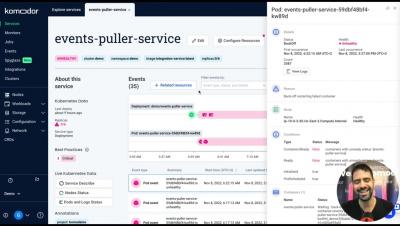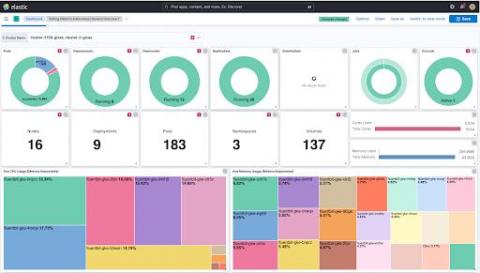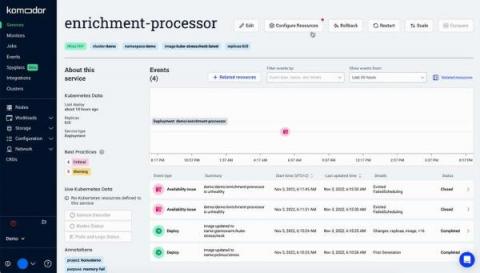
As a developer, it can become challenging to manage Kubernetes and develop applications simultaneously. That’s why we put together this guide to show you how the Kubernetes Dashboard can help developers overcome this problem and get an overview of the cluster and its workloads. From this, developers can focus more on application development while stressing less on cluster management.
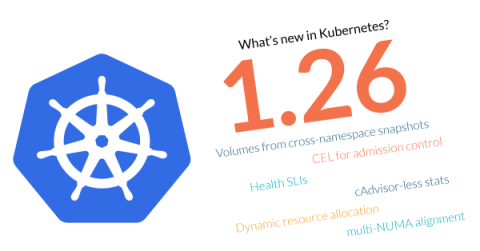
Kubernetes 1.26 is about to be released, and it comes packed with novelties! Where do we begin? This release brings 37 enhancements, on par with the 40 in Kubernetes 1.25 and the 46 in Kubernetes 1.24. Of those 37 enhancements, 11 are graduating to Stable, 10 are existing features that keep improving, 16 are completely new, and one is a deprecated feature. Watch out for all the deprecations and removals in this version!
Rancher, the open source container management platform, uses Fleet to enable its continuous deployment features. Fleet brings GitOps functionality to Rancher. Fleet in Rancher 2.7.0 can fetch Helm charts from OCI registries. Using OCI registries to store Helm charts is an increasingly popular storage method. It allows storing your charts in a registry alongside your container images. This unifies the storage options for charts and reduces friction. Using a chart in an OCI registry is fairly simple.
We are excited to announce that deploying Kubewarden in air gap environments has been simplified and documented! For that, you will need a private OCI registry accessible by your Kubernetes cluster. If you’re unfamiliar with Kubewarden, it’s a policy engine for Kubernetes. Its mission is to simplify the adoption of policy-as-code. Kubewarden policies are WebAssembly modules; therefore they can be stored inside an OCI-compliant registry as OCI artifacts.
As Kubernetes becomes increasingly integrated across IT environments, organizations are growing more ambitious in how they use the technology, building established use cases like infrastructure management and microservices into new and ambitious fields like machine learning and edge computing. Is Kubernetes ready for this new era? What obstacles still lie in the way that risk slowing growth? Our Kubernetes State of Play for 2022 sought to answer these questions and more.
The Rancher Team are excited to announce the general availability of Rancher v2.7. Rancher v2.7 is a monumental milestone in the lifecycle of Rancher and introduces the ability to be a truly interoperable, extensible platform through the concept of extensions. The extensions now make it possible for users to build extensions on top of Rancher with complete autonomy.
Content What’s New in Sysdig is back again with the November 2022 edition! I am Matt Shirilla, an Enterprise Sales Engineer based in Texas, and I am very excited to update you with the latest feature releases from Sysdig. For Sysdig Monitor, this month brings new filtering for AWS Cloudwatch Metric Streams and a new Lambda Extension for AWS Lambda Telemetry API , plus the release of new Advisories.
Kubernetes has come of age with more organizations adopting a microservices architecture at scale. But scale brings a whole slew of new challenges, especially with Kubernetes, which is designed to operate as a single cluster. However, the usage of Kubernetes, especially at leading-edge organizations operating at scale, has crossed the single-cluster threshold.
s3gw is an S3-compatible service, focused on deployments in a Kubernetes environment backed by any PVC, including Longhorn (https://longhorn.io). Since its inception, the primary focus has been on Cloud Native deployments, however, the s3gw can be deployed in a myriad of scenarios, provided there is some form of storage attached.
When working with containers in Kubernetes, it’s important to know what are the resources involved and how they are needed. Some processes will require more CPU or memory than others. Some are critical and should never be starved. Kubernetes defines Limits as the maximum amount of a resource to be used by a container. Requests, on the other hand, are the minimum guaranteed amount of a resource that is reserved for a container.
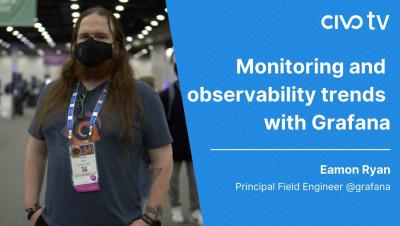
Monitoring any type of resource can be challenging. But Kubernetes monitoring is a special kind of challenge. Not only are there a variety of different Kubernetes layers and resource types to monitor, but collecting monitoring data from Kubernetes can be difficult if you use a managed Kubernetes service that limits your access to the underlying infrastructure. For all of these reasons, Kubernetes monitoring requires a different approach.
Sysdig is pleased to announce that we’ve achieved the Amazon Linux 2022 Ready designation as part of the Amazon Web Services (AWS) Service Ready Program. Amazon Linux 2022 (AL2022) is the newest Linux operating system from AWS available to support your workloads running on Amazon EC2. The team at Sysdig validated AL2022 with Sysdig Secure and Sysdig Monitor to ensure full support for our container security and cloud-native monitoring capabilities with this latest OS.
Content Learning how to monitor the Kubernetes API server is crucial when running cloud-native applications in Kubernetes environments. The Kubernetes API server can be considered as the front end of the Kubernetes control plane. Any interaction or request from users or internal Kubernetes components with the control plane go through this component. Ensuring you monitor the Kubernetes API server properly is of vital importance to ensure your Kubernetes cluster works as expected.
We spoke with two members from the SRE team, Alex Blyth and Zulhilmi Zainudin, to learn more about their role at Civo. Through this series, we aim to provide you with an overview of the different roles we have at Civo and what advice our team has. You can discover more about our team in our “day in the life of a Go Dev” and “day in the life of an Intern” blog.
Before I dive into the launch of Cycle’s latest feature (and it’s a big one!) I want to share some context about how we got here. Let’s rewind back to 2015: containers, at least in their modern form, had just begun to take the developer ecosystem by storm. At the same time, we at Cycle were watching everything unfold: from Docker’s meteoric rise to the first few releases of tools like Kubernetes, Rancher, and so on.
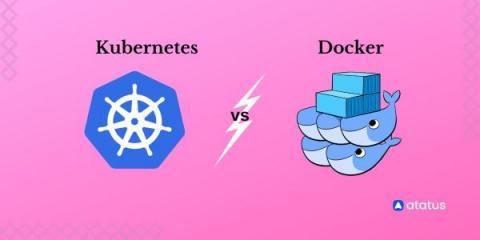
Docker is a PaaS product, developed by Docker.Inc to containerize applications. It does so by combining app source code with OS libraries and dependencies required to run that code in any environment. Kubernetes is a similar tool developed by Google, which scales up this containerized application after deployment. While one works in building the containers the other essentially helps in scaling it up, then why so much buzz around these two?

Data is becoming increasingly essential to businesses globally, allowing for insights to be gathered around critical processes and operations. Over time, the traditional systems put in place to hold our data have become unsuitable for modern-day needs due to the continuous growth of data. Edge computing has emerged to reshape the current computing environment and allow data to be processed closer to where it’s being generated.
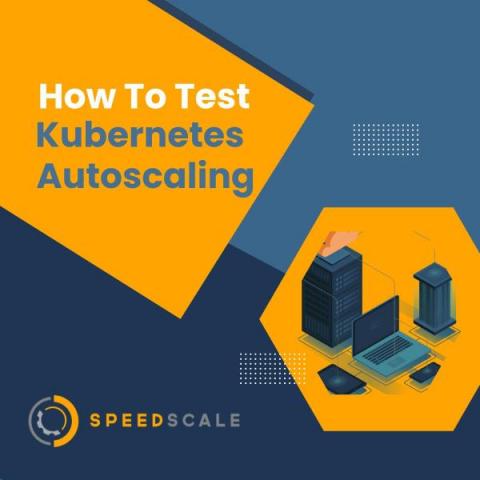
Properly testing a service’s APIs to ensure that it can handle production traffic presents many challenges for engineers—SREs need to guarantee the resiliency of their application, while developers must ensure that their features perform well at any given scale. Speedscale is a testing framework built for Kubernetes applications that enables you to load test with real-world production scenarios by replaying actual API traffic that your application has experienced.
There is a common painful workflow with many observability solutions. Each data type is separated into its own user interface, creating a disjointed workflow that increases cognitive load and slows down Mean Time to Diagnose (MTTD). At Coralogix, we aim to give our customers the maximum possible insights for the minimum possible effort. We’ve expanded our APM features (see documentation) to provide deep, contextual insights into applications – but we’ve done something different.
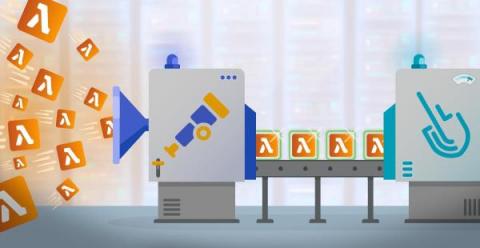
Observability in serverless computing environments, such as AWS Lambda, has always been a challenge.
RAN has incrementally evolved with every generation of mobile telecommunications, thus enabling faster data transfers between user devices and core networks. The amount of data has increased more than ever with an increase in the number of interlinked devices. With existing network architectures, challenges lie in handling increasing workloads with the ability to process, analyse and transfer data faster. The 5G ecosystem requires virtual implementations of RAN.
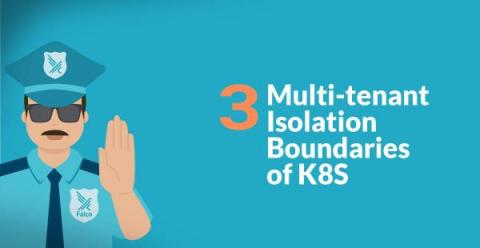
Many of the benefits of running Kubernetes come from the efficiencies that you get when you share the cluster – and thus the underlying compute and network resources it manages – between multiple services and teams within your organization. Each of these major services or teams that share the cluster are tenants of the cluster – and thus this approach is referred to as multi-tenancy.
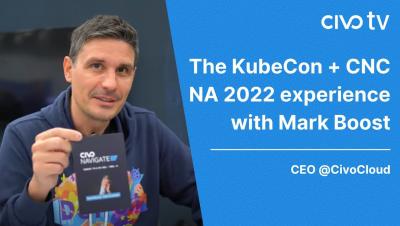
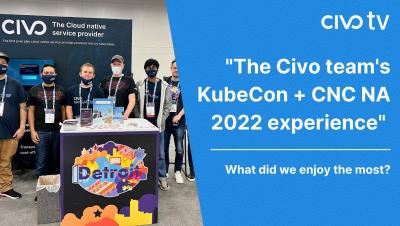
Throughout KubeCon + CloudNativeCon NA 2022, our team was able to speak to over 100 people from the cloud-native community to learn more about their thoughts and experience of the event. This blog will explore what the community thought was the hot topic of discussion at KubeCon + CNC NA 2022, which includes topics such as security, cost, and developer experience. Check out the full video below.
Detroit, known by its nickname “Motor City'', is a bustling and beautiful city filled with dazzling architecture, food, history, and of course, people.This year, it was home to KubeCon 2022. The city is close to home for Jake and I, 45 minutes from where we started Cycle; it was wonderful seeing how the city has grown the last few years. The art deco style buildings loomed overhead, and the smell of freshly cooked food wafted through the downtown area just outside the venue.
An avid bird-watcher once told me that for bird-watching beginners, it’s more important to focus on learning about the birds and identifying their unique songs rather than trying to find the perfect pair of binoculars.
It’s a fact of life: as the Kubernetes API evolves, it’s periodically reorganized or upgraded. This means some Kubernetes resources can be deprecated and later removed. We deserve to keep track of those deprecations and removals easily. For that, we have just released the new deprecated-api-versions policy for Kubewarden, our efficient Kubernetes policy engine that runs policies compiled to Wasm.
At the start of October, Dinesh Majrekar, CTO, and Mark Boost, CEO at Civo spoke at KubeCrash, about application deployments of old, cloud-native processes of today and edge native deployments of the future. Watch their session below to learn about the challenges we are about to face with an edge-first architecture and what we can do today to be ready. We then took to Detroit for KubeCon + CNC NA 2022 where we hosted an array of talks, workshops, and events.
Docker is one of the most popular tools for containerization, and several tools have been developed by the open-source community to monitor what happens inside of Docker containers. This guide focuses on one tool specifically: cAdvisor.
In technology, nothing is static. We need to be open to experimenting with new platforms and avoid getting locked into any one single entity or technological solution. With all the recent events, many people are looking for alternatives where they can post microblogging content like they did on Twitter. Mastodon has recently become significantly more popular due to its decentralised nature and the power of enabling different communities to define themselves.
Securing a Kubernetes cluster is far from a simple task. How do you know if you have correctly configured volumeMounts in your in-cluster containers? And what about all those workload resources, such as Deployments, Jobs, Pods, etc? Luckily, you can use Kubewarden, an efficient Kubernetes policy engine that runs policies compiled to Wasm. This means you can run powerful specifically-written policies, our reuse existing Rego policies for example.
As you might be aware, each team has its own unique workflow based on the project type, size of the company, team preferences, and a number of other factors. The larger the team, the more difficult it is to keep things under control: disputes become more regular, delivery deadlines may postpone, priorities always change - the list may go on and on. Adapting Git is the first step in resolving these challenges, as it can be used in almost any workflow.
Software development and the DevOps lifecycle now requires continuous integration and delivery, also referred to as CI/CD. To help users automate the steps between a developer checking in code and releasing that code into production, open source CI/CD solutions are created.
Kubecon 2022 just concluded with plenty of exciting announcements, including our new open-source project, Helm-Dashboard, but we’ve got some more news to share on top of that.
Google Kubernetes Engine (GKE) is a managed Kubernetes service that enables users to deploy and orchestrate containerized applications on Google’s infrastructure. Datadog’s GKE integration, when paired with our Kubernetes integration, has always provided deep visibility into the health and performance of your clusters at the node, pod, container, and application levels.
Cloud-native applications offer a lot of flexibility and scalability, but to leverage these advantages, we must create and deploy a suitable environment that will enable cloud-native applications to work their magic. Managed services, self-managed services, and bare metal are three primary categories of Kubernetes deployment in a cloud environment.
As an operations engineer (SRE, IT manager, DevOps), you’re always struggling with how to manage technology and data sprawl. Kubernetes is becoming increasingly pervasive and a majority of these deployments will be in Amazon Elastic Kubernetes Service (EKS), Google Kubernetes Engine (GKE), or Azure Kubernetes Service (AKS). Some of you may be on a single cloud while others will have the added burden of managing clusters on multiple Kubernetes cloud services.