

Operations | Monitoring | ITSM | DevOps | Cloud

Bridging partners in pursuit of agentic AI - Part 2: How leaders can position themselves for the future

From ecosystem foundations to future advantage In Part 1: Why partnerships matter for enterprise intelligence, we explored how enterprises are moving from experimentation to scalable impact with agentic AI and how ecosystems make that possible. But naturally, the next question is: Where do we go from here?
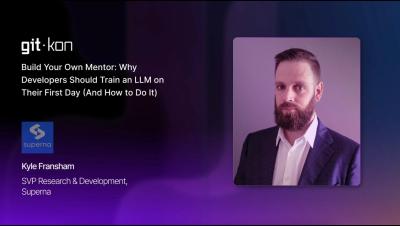
Why Every Developer Needs Their Own AI Knowledge Base (It's Easier Than You Think)

Ever feel like you're drowning in documentation scattered across Confluence, Slack, Jira, and Git commits? Kyle Fransham, Senior VP of R&D at Superna, shares why every developer should run their own local LLM and shows you exactly how to do it. In this GitKon talk, Kyle reveals how to turn your personal "master document of knowledge" into a queryable AI assistant running directly on your laptop. No cloud dependencies, no organization bottlenecks...just your own development copilot that understands your unique workflows, tips, and tribal knowledge.

AI Agent for Incident Resolution: Combining Intelligence with Autonomous Actions

Incident management is a high-stakes function. IT operations teams and SRE teams may play different roles, but when a priority incident surfaces, it is often all-hands-on-deck to ensure it is resolved in minimal time. That’s because of the high impact of incidents-if not resolved in time, they can cascade and impact other IT systems, leading to downtime, business disruptions, monetary losses, and impacting brand value, compliance, and regulatory rules.

AI-Powered Translation Tools: A Hidden Asset for Scaling DevOps Globally

DevOps or development (Dev) and IT operations (Ops) teams are no longer confined to single geographic locations or language groups. With over 80% of organizations now practicing DevOps (a figure projected to reach 94% in the near future), the challenge of scaling operations globally has never been more critical. Yet, one persistent bottleneck continues to slow down even the most sophisticated DevOps workflows: language barriers.

AI Software Development Solutions: Transforming Modern Business

Artificial intelligence is no longer a futuristic concept-it has become a critical driver for businesses across all industries. Companies that embrace AI can streamline operations, unlock valuable insights from data, and innovate faster than their competitors. By leveraging ai software development solutions, organizations can automate routine tasks, accelerate product development, and improve decision-making. These solutions are increasingly central to digital transformation strategies, giving businesses a competitive edge in a rapidly evolving marketplace.

Demo of Raygun's remote MCP

This Raygun remote MCP demo highlights the new depth of context available. The agent isn’t just fetching error lists. it’s reasoning through stack traces to find the issues. Combine this with the ability to now view associated deployment versions, browser information, breadcrumbs, customer data and more, the agent becomes infinitely more capable at solving errors. We’ve even heard of some of the early testers going from having errors in production to having them solved within minutes.

Data Sovereignty in the Age of AI: A Conversation with Kelsey Hightower and Mark Boost

Join Kelsey Hightower and Mark Boost at Civo Navigate London as they discuss sovereignty in the context of AI and cloud computing. The conversation highlights the need for a more nuanced approach to cloud computing, one that balances the benefits of public cloud with the need for control and sovereignty. The discussion emphasizes the importance of open protocols and the role of the community in driving innovation, and notes that the adoption of AI workloads is driving a shift towards more decentralized and sovereign cloud architectures.

Bridging partners in pursuit of agentic AI - Part 1: Why partnerships matter for enterprise intelligence

The pace of change in AI development has been dizzying. In just a few years, we’ve moved from experimenting with AI, machine learning (ML), retrieval augmented generation (RAG), and agents to asking how these innovations can solve real business problems. Enterprises are no longer impressed by the novelty and possibilities; instead, they expect outcomes.