The latest News and Information on Digital Experience Monitoring for End Users, Employees and Remote Working.
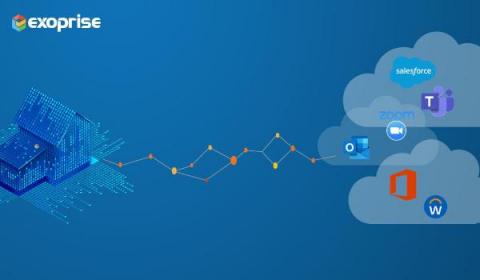
Microsoft had its corporate earnings call yesterday and posted weaker guidance. But guess what? Several hours later, the tech giant was hit by a networking outage that took down Azure and other services like Teams and Outlook, affecting millions of users globally.
If you have been following the news over the last few months, you will agree that the buzzwords for this year are – inflation and recession. Yet, even in these turbulent times, delivering an excellent digital employee experience (DEX) remains an essential aspect of IT. As organizations continue to add various collaboration, communication, and end-user technologies to the mix, new problems will surface.
Bandwidth monitoring provides IT administrators with the assurance that the network has sufficient capacity to run business-critical applications. In addition, network ops team have end-to-end visibility to identify network hogs that cause the congestion. Typically, when a single component overloads in any network, it can bring the entire operation to its knees and impact the employee digital experience. For example, even if you may have a dedicated service plan from your ISP, employees will end up complaining about issues like large file transfer time and slower applications.
Gartner predicts that spending on public cloud services will rise to 21% in 2023. Most organizations today support fully remote operations and use SaaS services from the cloud. But is your Microsoft Systems Center Operations Manager (SCOM) tool suitable for monitoring mission-critical services like Microsoft 365? Don't get us wrong - SCOM is a comprehensive monitoring tool for servers, infrastructure, and apps such as Exchange and SQL. However, the recently released Microsoft SCOM Management Pack for monitoring Microsoft 365 lacks clout.
Many enterprises are taking a customer-centric approach to meet customer demands more efficiently and upscale their businesses. However, several siloed communication and workflows within these organisations often make it challenging to achieve the desired experiences for customers. Additionally, the initiatives adopted by the enterprises usually don't provide an extensive understanding of the end users' experiences. The market's answer to this problem is monitoring software. Enter digital experience monitoring.
The world is getting back to normal… I attended my first conference after three years of almost no travel and Gartner did not disappoint. The Gartner IT Symposium//Xpo™* drew thousands of attendees to Orlando, Florida from around the globe and I think everyone was as excited (and - a bit - nervous) as I was to be back together again. As Gartner does annually, they identified Top Strategic Technology Trends for 2023.
Microsoft Office 365 monitoring for the entire company is a big achievement. When the pandemic took hold worldwide, the once "nice-to-have" applications became the "go-to" apps. During this time, CIOs became responsible for relocating their employees to a remote workplace and providing reliable end-user services, such as Microsoft Teams, Outlook, SharePoint, and more. But even as the pandemic subsides, hybrid work gains prominence, and events like the Microsoft Ignite become in-person, monitoring the end-to-end connectivity and network performance of Microsoft 365 still remains a high strategic priority for CIOs.