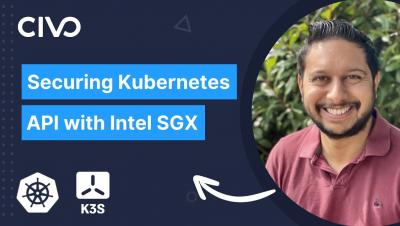
Confidential K8s Control Plane - Securing Kubernetes API with Intel SGX
Learn about confidential computing and how it applies to the Kubernetes Control Plane in managed clusters in this tutorial by our CTO, Dinesh Majrekar.


The latest News and Information on DevOps, CI/CD, Automation and related technologies.
Over the last 18 months at incident.io, we’ve done a lot of migrations. Often, a new feature requires a change to our existing data model. For us to be successful, it’s important that we can seamlessly transition from the old world to the new as quickly as we can. There are few things in software where I’d advocate a ‘one true way,’ but the closest I come is probably migrations. There’s a playbook that we follow to give us the best odds of a smooth switchover.
#iphonetips #shorts #imessage #imessageeffects
Virtual machines (VMs) have been around for quite some time now and have become a cornerstone of modern-day IT infrastructure. They provide a convenient way to run multiple operating systems on a single physical machine, allowing users to consolidate their hardware and save costs. However, as VM technology has evolved, newer versions of VMs have been introduced, such as generation 1 and generation 2 VMs.
Welcome to this three-part mini-series on real-time Linux. In Part I, we set the stage for the remainder of the series by defining a real-time system, and went through common misconceptions. We also covered the broad market applications of a real-time Linux kernel. Several applications across a wide range of use cases and verticals require real-time computing capabilities. Sectors like industrial automation, energy and transportation have strict precision requirements for their systems.