Operations | Monitoring | ITSM | DevOps | Cloud

The latest News and Information on Containers, Kubernetes, Docker and related technologies.

Forecasting Kubernetes Costs

The benefits of containerizing workloads are numerous and proven. But, during infrastructure transformations, organizations are experiencing common, consistent challenges that interfere with accurately forecasting the costs for hosting workloads in Kubernetes. Planning the proper reservations for CPU and memory before migrating to containers is a persistent issue Densify observes across our customers.

Zero to hero: Enterprise multi-cloud application management from Day 0 to Day 2, on any substrate

Kubernetes and Operators have stormed the IT industry, but the enterprise landscape is still a mix of bare metal, virtual machines and Kubernetes, on-prem and on public clouds, all running different workloads. How can we manage the lifecycle of all those applications across all these environments, whithout having to learn new tools and frameworks as the industry is already moving to serverless? In this fast-flowing demo we will show you how the Charmed Operator Framework brings a unified approach for application management across clouds and infrastructure generations.

Guide To AWS Load Balancers

The AWS Elastic Load Balancing (ELB) automatically distributes your incoming application traffic across multiple targets, such as EC2 instances, containers, and IP addresses, in one or more Availability Zones, ultimately increasing the availability and fault tolerance of your applications. In other words, ELB, as its name implies, is responsible for distributing frontend traffic to backend servers in a balanced manner.

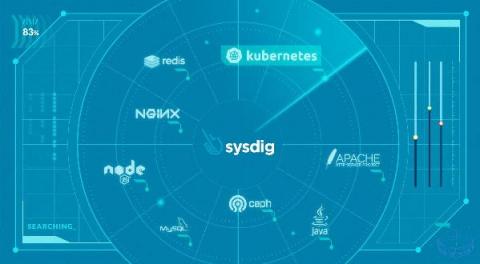
The 15 Best Container Monitoring Tools For Kubernetes And Docker

There are many tangible benefits to using containers for your computing needs. Containers help break large applications into smaller packages that are more agile, scalable on-demand, resilient, cost-effective, and less resource-hungry than monolithic apps or workloads running on traditional virtual machines (VMs) or bare metal servers. They also enable developers to develop applications in one environment, deploy them in another, and run them anywhere.

Best Practices and Tips for Writing a Dockerfile

Docker is a high-level virtualization platform that lets you package software as isolated units called containers. Containers are created from images that include everything needed to run the packaged workload, such as executable binaries and dependency libraries. Images are defined in Dockerfiles. These resemble sequential scripts that are executed to assemble an image.

The Best Tools for Monitoring Your Docker Container

It can be difficult to comprehend and successfully scale your services as modern orchestrated settings grow larger and more sophisticated. Container monitoring allows you to see the health and performance of your dynamic container infrastructure in real-time. Container monitoring is the practice of collecting and analyzing performance metrics to track the performance of containerized applications built on cloud-based microservices.

Workload access control: Securely connecting containers and Kubernetes with the outside world

Containers have changed how applications are developed and deployed, with Kubernetes ascending as the de facto means of orchestrating containers, speeding development, and increasing scalability. Modern application workloads with microservices and containers eventually need to communicate with other applications or services that reside on public or private clouds outside the Kubernetes cluster. However, securely controlling granular access between these environments continues to be a challenge.

The What and The Why of Cloud Native Applications - An Introductory Guide

Companies across industries are under tremendous pressure to develop and deploy IT applications and services faster and with far greater efficiency. Traditional enterprise application development falls short since it is not efficient and speedy. IT and business leaders are keen to take advantage of cloud computing as it offers businesses cost savings, scalability at the touch of a button, and flexibility to respond quickly to change.

Leading Kubernetes Management Tools For 2022

Kubernetes is the leading container-orchestration tool that was open-sourced in 2014 by Google and has helped engineers across the globe to significantly lower their cost of cloud computing ever since. Kubernetes also provides a resilient framework for deploying applications. Kubernetes management tools are quickly becoming essential to those that wish to monitor their containers on an ongoing basis, test, export and create intuitive dashboards.