We Celebrate Linux Turning 30!
Some very special guests join us to celebrate Linux turning 30!


The latest News and Information on Containers, Kubernetes, Docker and related technologies.
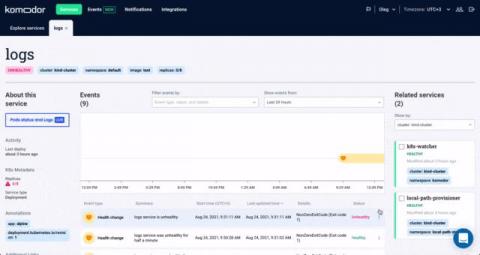
Time is invaluable. Besides being one of those can’t-argue-with universal truths, this is also one of the guiding principles behind Komodor; the promise behind our ‘troubleshooting efficiently and independently’ motto. ‘Pods Status and Logs’ is the latest of our timesaving features that enables you to quickly drill down in the pods of an unhealthy service, all from the comfort of your Komodor dashboard.
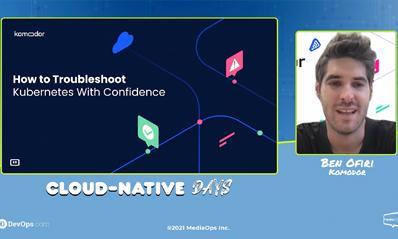
We recently attended the 2021 Cloud-Native Days Summit, where our co-founding CEO Ben Ofiri gave a lightning round talk on How to Troubleshoot Kubernetes With Confidence. In case you missed it, here’s a recording and transcript for your convenience.
Extended Berkeley Packet Filter (eBPF) is a relatively new feature for Linux kernels that has many DevOps, SREs, and engineers excited. But is it a one-stop shop solution for all of your Linux kernel needs? Let’s take a look at what eBPF does well, and how it stacks up against standard Linux iptables.
The idea to fully manage applications and infrastructure using a Git-based workflow, or GitOps, is gaining a lot of traction recently. We are seeing more and more Shipa users adopting GitOps as the cloud-native deployment methodology. While it is no secret that ArgoCD and FluxCD are by far the most used tools today, we see FluxCD users trying to address the challenges below.