Operations | Monitoring | ITSM | DevOps | Cloud

The latest News and Information on Cloud monitoring, security and related technologies.

How Much Does Cloud Backup Software Cost?

Cloud backup solutions are characterized by diverse offerings, each with its own set of features, security measures, and pricing schemes. Our analysis will dissect the various components that constitute the cost of utilizing these services, ranging from storage and bandwidth fees to data transfer and retrieval expenses.

Migrating a BizTalk Request-Response routing solution with LOB Adapters

Welcome again to another BizTalk Server to Azure Integration Services blog post. In my previous blog post, I discussed how you can implement the aggregation mapping pattern inside Logic Apps. Today, I will address a very interesting BizTalk Server topic and how we can redesign our solution to implement the same capabilities inside Azure Integration Services: How you can migrate a BizTalk Server content-based routing solution with LOB Adapters – in this particular case, SQL Server.

Releasing IAM EKS User Mapper in open-source

I'm super excited to share something amazing our team at Qovery has been cooking up lately: the IAM EKS User Mapper. This isn't just any tool – it's our answer to a problem we know so many of you face: managing AWS IAM user access to Kubernetes clusters efficiently and securely. It's open-source and available to everyone now on GitHub.

Azure Savings Plan for Compute Resources

Have you ever struggled with keeping up with the changes in your virtual data center needs and the savvy, precise Reservations you planned and purchased? Realizing that right after you bought them, the application team decided to swap their Kubernetes cluster to the newest model. Suddenly, you are paying a VM twice: the reservation plus the new model!

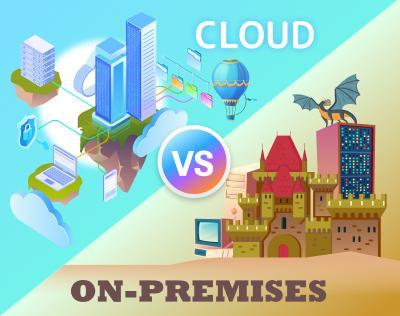
Cloud vs On-Premises: Back to Earth or Up in the Clouds?

Research shows that most US companies go cloud-first when choosing where to deploy a new application. Indeed, cloud computing brought many new amazing solutions to people’s lives. But… Is it the only way? In 2024, are on-premises solutions a viable option for companies?

Sponsored Post

A leap forward in cloud migration: Avantra Cloud Edition for RISE with SAP

RISE with SAP bundles transformation services, ERP software, partner expertise guides, and business analytics to facilitate cloud migration for ERP processes and data. It lets users follow a clean core strategy for ERP optimization and innovate their business processes on a larger scale. Businesses can also enjoy real time data viewing and AI backed user interactions. The no and low code development tools further reduce operational and maintenance costs, allowing swift business process customization.

Leveraging Cloud-Based Call Center Solution for Business Growth

In today's fast-paced business environment, cloud-based call center solutions are increasingly recognized as crucial tools for driving growth and enhancing customer service. These innovative solutions offer a new frontier in business communication, combining the flexibility and scalability of the cloud with powerful customer service capabilities. This exploration dives into the transformative impact of cloud-based call center technologies on business operations, underscoring their role in streamlining customer interactions, boosting efficiency, and enabling sophisticated data management, ultimately contributing to substantial business growth.

Azure Savings Plan vs Reserved Instances

In the world of cloud computing, Azure is a leading player, offering a wide range of services for businesses of all sizes. As organizations continue to migrate their workloads to the cloud, cost management becomes a critical aspect of their strategy. Two key options for optimizing costs on Azure are Azure Savings Plans and Reserved Instances (RIs). In this blog, we will explore the differences between these two cost-saving mechanisms and help you decide which one is right for your organization.

Metrics to Monitor for AWS (ELB) Elastic Load Balancing

Amazon Elastic Load Balancing (ELB) allows websites and web services to serve more requests from users by adding more servers based on need. There are several challenges to operating load balancers, as discussed in a previous blog post: Microservices Load Balancing: Navigating the Waves of Modern Architecture. An unhealthy ELB can cause your website to go offline or slow to a crawl.