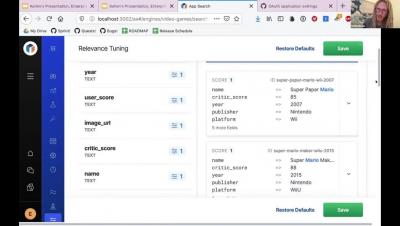
When ingesting data into Elasticsearch, it is often beneficial to enrich documents with additional information that can later be used for searching or viewing the data. Enrichment is the process of merging data from an authoritative source into documents as they are ingested into Elasticsearch. For example, enrichment can be done with the GeoIP Processor which processes documents that contain IP addresses and adds information about the geographical location associated with each IP address.
George Lucas once said, “Education is the single most important job of the human race.” When considering the requirement of education in the mastering of any role or skill, there is no debate to the truth behind his words. Education is the cornerstone on which the future is built, which is why Elastic is launching the Elastic for Students and Educators program.
If you’re like me, you’re working from home, social distancing, and staying safe during these unprecedented times. I spend a lot of time thinking about how this will impact the way we will work in the future. Going through this with our teams creates stronger bonds as we learn how to work remotely and through a global pandemic. We now spend more time in zoom meetings and use more collaborative tools than we did even just a month ago.
This article was contributed by Michael Hinkle, Probe Engineering and Manufacturing Supervisor at Texas Instruments. My name is Mike Hinkle, and I use InfluxDB to monitor my daughter’s pulse oximeter and to better understand her overall health. Through my career as an engineer, currently at Texas Instruments, I was aware of time series databases and I love to play with various technologies.
Earlier this year Python 2 entered End of Life — and Splunk has already released versions of Splunk Cloud and Splunk Enterprise that provide a Python 3 runtime. As the developer of an app that is published to Splunkbase, if your app contains Python code, you need to update it to work with Python 3 and Splunk Enterprise 8.0 by July 1, 2020 as the Splunk Enterprise and Splunk Cloud releases after that date will no longer support the Python 2 runtime.
Even with tough economic times, e-commerce is up 25% since the beginning of March. But, fraud has increased as well; according to Malwarebytes online credit card skimming has increased by 26% in March alone. In our April “Staff Picks for Splunk Security Reading” blog post, I referenced a story about an e-commerce site getting hacked with a “virtual card skimmer” (thanks Matthew Joseff for sharing this with me).
Platforms like Heroku give you the freedom to focus on building great applications rather than getting lost setting up and maintaining infrastructure. One of the many great features of working with it is the Heroku logs that enable monitoring your stack error troubleshooting. It helps speed up the process when things go wrong. In this Heroku tutorial, we’ll uncover best practices for making the most of Heroku logs.
The Splunk Security Research Team has been working on new improvements and additions to the Splunk Attack Range, a tool that allows security researchers and analysts to quickly deploy environments locally and in the cloud in order to replicate attacks based on attack simulation engines. This deployment attempts to replicate environments at scale, including Windows, workstation/server, domain controller, Kali Linux, Splunk server and Splunk Phantom server.