Operations | Monitoring | ITSM | DevOps | Cloud

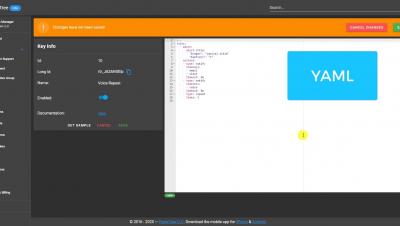
Logz.io Infrastructure Monitoring: Configuring Alerts and Log-Metric Correlation

If you’ve followed our latest blog posts, you’ll have learned how to send metric data to Logz.io and visualize that data on Infrastructure Monitoring – our Grafana-based metrics monitoring solution that we made Generally Available on Monday. At this point you’ll have some nice looking Grafana dashboards in your account.

Command Center, Outdated, or Perfect Time for IT Operations?

Many of OpsRamp customers have established a digital operations command center for hybrid IT monitoring and management. Is now the time to invest in the ability to gain visibility across your entire infrastructure in one place? In this interactive session we'll dive into the concept of a digital operations command center, share examples and demonstrations to outline why this is more important than ever as organizations adopt remote work strategies and prioritize digital transformation initiatives.

Anodot Raises $35M Led by Intel Capital

I’m very pleased to announce that we’ve secured an additional $35 million in funding, bringing our total capital raised to $62.5 million. Intel Capital led our series C fund, along with support from SoftBank Ventures Asia, Samsung NEXT and La Maison. Existing investors Disruptive Technologies L.P., Aleph and Redline Capital Management also participated. Over the past year, we doubled our revenue.

Remove Manual Bottlenecks in DevOps with AIOps

DevOps pipelines generate massive amounts of data. To maintain the stability and speed of application delivery, operations leaders must analyze it quickly and continuously. But how can they keep DevOps — and their business — agile? Gartner’s “Augment Decision Making in DevOps Using AI Techniques” provides, in our view, the answer for operations leaders to make precise data-driven decisions and automate actions for rapid application delivery.

Observability is crucial for service assurance, but only scales with AIOps

To leverage IT innovations like cloud computing, containers and microservices, and to meet customer experience expectations, IT teams must monitor their applications and services differently. The reason is that developers are deliberately disseminating information through their code in order to understand and manage the complexity in today’s ephemeral and dynamic environments.

Optimizing your alerts to reduce Alert Noise

Reducing alert fatigue starts from your monitoring platform - setting the right thresholds to trigger alerts and understanding which of these are essential to be sent into your on-call platform is a start. This post outlines some of the best practices that help you reduce alert noise and improve your on-call experience. The word noise implies something unpleasant and unwanted. You combine that with on-call and it adds a factor of annoyance to the already overwhelming process.

Tech Talk: Getting to a Hybrid IT Strategy with OpsRamp

Are you prepared for managing the requirements of both on-premises and multi-cloud infrastructure discovery, monitoring and management? Do you have the right strategy for event management and automation in place? What about AIOps? In this session will talk about methods and strategies for maximizing efficiency and service delivery specifically for the challenges of the hybrid, multi-cloud environment.

CloudFabrix Alert Watch - Correlation and Suppression

Modern hybrid-IT environments are monitored by numerous multi-vendor and multi-domain monitoring tools that generate humongous amounts of alerts and events, most of which are not readily actionable. The Industry term for this is “Alert Noise”. Noisy alerts increase the risk of real alerts going undetected causing service outages. These alerts also carry siloed information missing the application or service context.