

Operations | Monitoring | ITSM | DevOps | Cloud

How One AI-Localized String Broke Our Build and Cost Me $6,000 (And What I Do Differently Now)

The string that broke our last release was four words long. It passed review, went green in the build, and shipped to our German locale with a corrupted placeholder that turned the checkout button into a runtime error. Customers there could not complete an order for most of a Saturday before a screenshot reached me. The broken button cost us roughly $6,000 in lost orders that weekend; the fix itself took ten minutes. What I do differently now started with understanding why it happened.

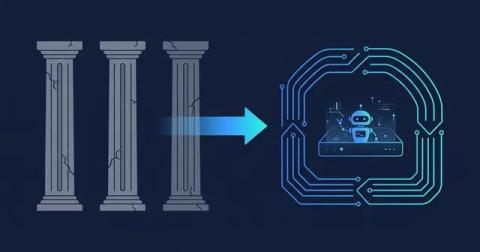
The Three Pillars Were Built for Humans

It was 2am and I was paying for the privilege. Something was on fire in production, and I’d done the modern thing: I pointed an AI agent at it. It ingested the dashboards. It read the logs. It walked the traces. Then it handed me back a beautifully formatted paragraph that said, in effect, “latency is elevated on the checkout path.” I knew that. The page told me that.

Shipped: LiteLLM is probably under-counting your Claude spend

If you run Claude through LiteLLM, some of that spend is probably going uncounted – and you can’t see it, precisely because the data isn’t there. Routing through a gateway is messier than it looks: LiteLLM alone can carry Claude several ways – the OpenAI-compatible endpoint, and the Anthropic pass-through proxy that the native SDK and Claude Code use – and each path describes the same call differently.

What Customers Are Doing With AI and Honeycomb

At O11yCon, we talked to engineering teams across the industry, and the numbers are starting to get genuinely wild: Mixpanel DevOps Engineer Eddie Bracho told us their engineering team is generating 50% more PRs than before AI came into the mix (sorry). That kind of velocity is exciting, but it's also a pressure test for every part of your stack that isn't writing code, including your observability practice. Here's what we're hearing from customers about how that's playing out.

5 pitfalls to avoid when measuring DevEx in the AI era

Developer experience, commonly known as DevEx, describes how an organization’s systems, workflows, tools, and culture affect developer productivity. A positive DevEx leads to tangible organizational benefits, including faster releases, increased innovation, and reduced technical debt. Measuring DevEx enables engineering management to quantify their team’s impact and understand where to direct improvement efforts.

Debug and evaluate your AI app from your coding agent with Datadog Agent Observability

Coding agents like Claude Code, Cursor, and Codex CLI handle the coding parts of building an AI application well. The harder work comes after: understanding why a response went wrong, building eval sets that reflect real production behavior, and keeping up with an application that changes faster than any one-off script can. Teams spend 60–80% of their time on evaluation and error analysis, and much of that work needs to be redone every time the stack shifts.

Building an AI Ready Data Backbone: Dima Kan at AICamp 2026

The Aiven Platform is more than a collection of open source services for streaming, storing and analyzing data. The platform ensures that all services run reliably and securely in the clouds of your choice, are observable, and can easily be integrated with each other and with external 3rd party tools.

The Journey to Achieving Hyperscale Availability with AI-Driven Prediction

At hyperscale, a regional cloud outage is not merely a technical disruption—for Samsung Account, which serves 2.1 billion users across three global regions, it is an immediate global service crisis. Fragmented, region-siloed monitoring creates blind spots that make early detection nearly impossible, leaving SRE teams perpetually reactive rather than predictive. The path to proactive reliability requires both a philosophical shift and a foundational change in how observability data is collected, unified, and reasoned over.