Operations | Monitoring | ITSM | DevOps | Cloud

Why Most Enterprise AI Agent Programs Overspend, and What Actually Fixes It

Enterprise AI agent programs overspend because leaders optimize token costs, which represent just 20-25% of variable run costs. Human oversight accounts for 70-75%. The real fix is reducing exception rates and embedding governance directly into agent execution from the start.

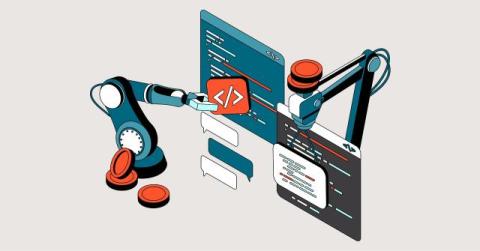
Codex vs. Claude Code in 2026: cost, capability, and which one your team should pick

Codex is OpenAI's terminal-based autonomous coding agent, bundled into ChatGPT plans and billed through token-based credits. Claude Code is Anthropic's terminal-based coding agent, sold through Claude subscriptions or the API. Codex is cheaper to enter; Claude Code is stronger on complex work. Both run $100 to $250 per developer monthly at active use.

AI coding tools cost compared: Copilot, Cursor, Claude Code & Codex

AI coding tools cost between $0, on GitHub Copilot's free tier, and $200 per developer per month at list price. GitHub Copilot is cheapest to start at $10. Codex is cheapest per task for ChatGPT subscribers. Claude Code has the most predictable ceiling. Cursor is the most variable. Once agents run all day, vendor-reported usage lands at $100 to $250 per developer monthly, no matter which one you pick.

Loop Engineering Guardrails for iGaming with Claude Code and CX CLI

Tuning guardrails can take time. To accelerate this, we combined the power of Claude Code, Coralogix Telemetry and the CX CLI, to build a loop that iterates on guardrails. To test our loop, we built a fictional chat interface for an iGaming operator, that took bets, gave odds on markets and more, but with a catch: this agent was not permitted to make predictions about where the market was going. With our goal in place, we got to work designing our loop.

AI harnesses for telco autonomous networks

Across the global landscape, telecommunications operators have already deployed machine learning for predictive maintenance, customer care chatbots, and anomaly detection. However, as the industry transitions toward Autonomous Networks Level 4 (AN L4), where networks can make intent-driven, predictive decisions and perform closed-loop management with minimal human intervention, a fundamental architectural challenge has emerged.

Canonical joins the Open Secure AI Alliance

Canonical is now part of the Open Secure AI Alliance, announced by NVIDIA with partners across cloud computing, cybersecurity, enterprise software, open source foundations, and AI research. The alliance aims to develop and share open technologies, techniques, and tools to safeguard software and agents in the age of AI.

The availability of SEO and AI search services in the Western Balkans

SEO and AI search services in the Western Balkans are making a significant impact on the international market. Agencies in this region are uniquely positioned to provide expertise for clients in the USA, UK, and EU, thanks to a combination of skilled talent and competitive costs. Understanding the advantages of hiring a Macedonian agency can help organizations maximize digital visibility and optimize online performance.

Will AI agents replace database IDEs? The future of database development

AI is already good at writing SQL, which is why people keep asking whether AI agents will replace database IDEs. But letting an agent work on a production database is still a much bigger leap. In tests reported by BIRD, a text-to-SQL benchmark built from 95 real databases across 37 professional domains, human experts reached 92.96% execution accuracy. The best single-model entry reached 80.04% in June 2026. The model failed roughly one task in five; the humans, about one in fourteen.