Mailchimp
Not subscribed to OpsMatters Newsletter


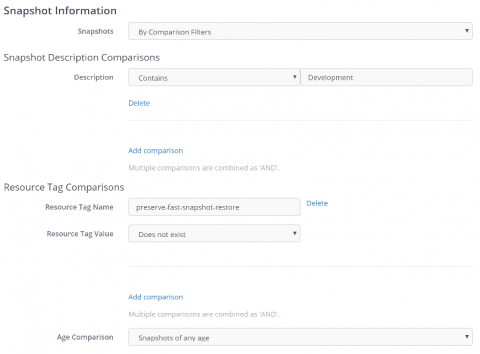
A few weeks ago, Amazon announced a new feature for EBS snapshots: Amazon EBS Fast Snapshot Restore (FSR). Normally, accessing data on new EBS volumes was quite slow as the data is lazy-loaded from S3. When Fast Snapshot Restore (FSR) has been enabled on an EBS snapshot, new EBS volumes created from that snapshot will allow fast data access. While this feature is very good, it’s very expensive to keep enabled on an EBS snapshot for a long time.
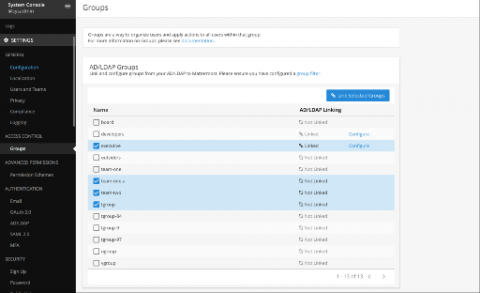
Enterprise compliance policies begin with data. How can you better protect sensitive data—such as proprietary or customer information—by limiting access to authorized individuals? Compliance officers and IT security teams alike need tools that give them oversight and governance over user access to the company systems that store such data. Your messaging platform is no exception. Sometimes, sharing confidential information with partners and vendors is necessary to do business.
John F. Kennedy described the journey into space as "...the most hazardous, and dangerous, and greatest adventure of which man has ever embarked." And that can sometimes feel like it applies to cloud asset management, too! While there are many analogies one can draw between space and the cloud, the idea of a vast, seemingly limitless, expanding area where new, ever stranger, things are discovered all the time seems quite apt.
Thousands of customers leverage the official Elasticsearch Service (ESS) on top of Elastic Cloud to get the best experience for running Elasticsearch — including all of Elastic’s exclusive products such as Elastic Logs, Elastic APM, Elastic SIEM, and more.
Hey, there. This is part four of the Elastic SIEM for home and small business blog series. If you haven’t read the first, second, and third blogs, you may want to before going any further. In the Getting started blog, we created our Elasticsearch Service deployment and started collecting data from one of our computers using Winlogbeat. In the Securing cluster access blog, we secured access to our cluster by restricting privileges for users and Beats.
API Gateway is a serverless service by AWS to expose cloud services through private or public HTTPs endpoints. It is used by many serverless teams to connect frontend applications to backend systems in a secure, scalable and seamless way. API Gateway integrates with Lambda, DynamoDB, S3 and a variety of other AWS services. The main issue with API Gateway, so far, was its cost. At $3.50 per million requests, it can be more expensive than Lambda itself.
We did a compilation of all announcements from the AWS re:Invent 2019 that are relevant for Serverless teams, broken down by services.
Up until now, DynamoDB has been the only option of a truly serverless database battle-tested for production environments. Especially after launching the on-demand throughput capacity optimization, is a perfect-fit database engine for serverless projects.