Operations | Monitoring | ITSM | DevOps | Cloud

DeepSeek vs Llama vs GPT-4 - Open-Source AI models compared

Artificial intelligence is no longer a futuristic concept—it is shaping how businesses operate, how researchers innovate, and how people interact with technology. Models like DeepSeek-R1 , a promising new entrant, alongside established players such as Llama 3 and GPT-4o, are at the forefront of this transformation. These tools are not just about technological advancement; they are about solving real-world problems and driving meaningful progress.

How a Global Banking Leader Tackled Memory Overload with HEAL Software

In the financial sector, where system reliability directly impacts customer trust and revenue, even minor IT inefficiencies can spiral into costly crises. For one of the world’s largest banks—supporting 25 million customers, 2,000 branches, and 3,000 ATMs—a hidden challenge threatened its reputation: unpredictable memory consumption in critical applications.

The importance of error budgets for SREs and how to monitor them

Digital-first customers who are always on the go expect a seamless experience. But let’s face it—100% uptime is a myth. Trying to achieve it can drain resources and stifle innovation. This is where error budgets come in. They help site reliability engineers (SREs) find the sweet spot between delivering reliability and development velocity. With error budgets, teams can focus on building a robust system without burning out over perfection.

Finding Your Way: Using Metrics to Explore Organizational Architecture

Imagine being the new developer in a bustling tech company. Everyone is rushing to meet deadlines, and no one has time to explain the tangled web of services, databases, and messaging systems that make up the organization’s architecture. You search high and low for documentation, but the few diagrams you find are outdated or incomplete. Feeling lost? This is where metrics can come to the rescue.

Managing External-DNS & cert-manager with Komodor

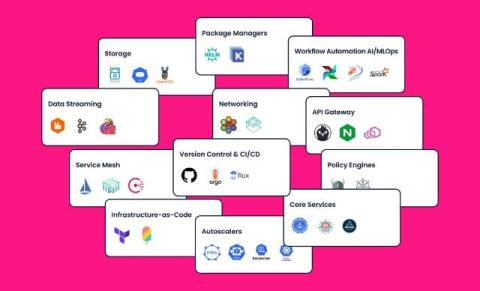
Recently we’ve explored the evolving role of Kubernetes as a full ecosystem, rather than just a platform, diving into the power and complexity of add-ons. These tools, as highlighted previously, are key to augmenting Kubernetes core capabilities, and adding-on (as their name implies) essential capabilities not supported directly by Kubernetes itself.

What is synthetic monitoring?

Synthetic monitoring proactively assesses application performance, allowing us to detect potential issues before they impact users. When combined with tracing, it becomes more effective by linking synthetic tests to actual system traces. This integration offers deeper visibility and granular insights into application behavior, enabling more effective, data-driven decisions to optimize performance.

Create a Splunk pipeline to filter, mask, and route logs - without SPL2

In this video, we will take a look at how you can create a Splunk Data Management pipeline to filter, mask and route your logs with using any SPL2 code. For this demo we have used Ingest Processor to build our pipeline but the same concept can be used for Edge Processor as well.

Pod Exec in K8s: Advanced Exec Scenarios and Best Practices

Remember using SSH to access servers? It was the go-to method for troubleshooting or making changes to a system. But in the world of containers, SSH doesn't quite fit. Kubernetes and containers work differently; they're dynamic and spun up and down frequently. That’s where kubectl exec comes in. It lets you run commands inside a pod directly, without needing to rely on SSH or worry about the pod being ephemeral. It’s simple and fits the nature of modern, containerized environments.

OpenMetrics vs OpenTelemetry: A Detailed Comparison

When it comes to monitoring and observability, two of the most discussed standards are OpenMetrics and OpenTelemetry. While both are designed to collect and transmit metrics, they have distinct goals, use cases, and communities driving their development. In this guide, we'll break down what each of these projects is, how they compare, and how they fit into your monitoring stack.

Kubernetes Pods vs Nodes: What Sets Them Apart

Kubernetes has revolutionized how we manage containerized applications, bringing scalability, reliability, and flexibility to the forefront. Two fundamental components of Kubernetes are Pods and Nodes, and understanding their differences is crucial for anyone working with Kubernetes clusters. While most people are familiar with these terms, a deeper dive into the specifics can help you optimize your Kubernetes setup and avoid common pitfalls.