Operations | Monitoring | ITSM | DevOps | Cloud

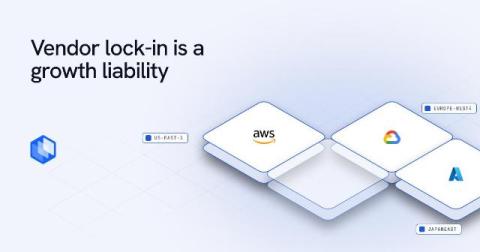
The Case for Multi-Cloud: Why Vendor Lock-In Is a Growth Liability

Multi-cloud architecture protects engineering organizations from three compounding liabilities that single-cloud stacks accumulate silently: a narrowing hiring pool, data residency exposure that surfaces the moment you sign a regulated enterprise customer, and eroded pricing power at exactly the point your cloud spend is accelerating fastest. Redundancy is a side benefit, not the reason to adopt it. The redundancy argument for multi-cloud is the wrong argument to make early.


The MetricFire MCP Server | AI-Powered Monitoring

Monitor your infrastructure using natural language with the new MetricFire Model Context Protocol (MCP) Server. In this video, you'll learn how to connect the MetricFire MCP Server to AI assistants like GitHub Copilot and use simple prompts to search metrics, visualize data, create alerts, and manage your monitoring environment—without writing API calls. In this video, you'll learn how to.

Safer Pipeline Changes, Flexible Deployment, and More

August 5, 2026 The latest VirtualMetric DataStream release focuses on how pipeline changes move from idea to deployment, safely and without slowing teams down. Version 2.1 puts a deliberate step between building a pipeline and shipping it to production, along with new deployment options for Directors and multi-tenant ingestion for teams managing data across many customers. Here’s what’s new.

What Is a ROADM?

A Reconfigurable Optical Add-Drop Multiplexer (ROADM) is a network element that selectively routes specific wavelengths of light across a fiber optic network without converting the signals into the electrical domain, forming the very foundation of modern optical transport networks. It allows operators to manage data traffic dynamically at the photonic layer. Fixed OADMs came first.

Infrastructure Monitoring Tools Enterprise IT Teams Should Evaluate in 2026

As enterprise IT environments become increasingly distributed, monitoring infrastructure performance is more challenging than ever. Organizations must manage on-premises systems, cloud services, virtualized environments, databases, networks, containers, and digital workspaces from a unified operational framework. This growing complexity has elevated the importance of modern infrastructure monitoring tools that provide end-to-end visibility, proactive alerting, and intelligent diagnostics.

Best Synthetic Monitoring Tools for Citrix, Web Apps & Digital Workspaces

Employee productivity and customer satisfaction depend on the consistent performance of digital workspaces, virtual desktops, web applications, and SaaS platforms. While reactive monitoring identifies issues after users experience them, synthetic monitoring tools enable organizations to detect and resolve performance problems before business operations are affected.

The August 6, 2026 GitHub Actions Outage: Queued Jobs, Throttled Webhooks, Impact Lasting 10 Hours

On August 6, 2026, GitHub opened an incident for degraded Actions performance at 15:22 UTC. Within about twenty minutes, Actions availability was listed as degraded, workflow runs were failing to start or failing partway through, and the Actions REST API was returning errors. Pages was pulled into the same incident shortly afterwards. The status page marked Actions and Pages as mitigated at 00:05 UTC on August 7, and closed the incident at 02:04 UTC.