Taloflow
The easiest way to manage AWS costs. Taloflow analyzes and forecasts AWS costs in real-time so you can get ahead of anything that would rack up the AWS bill.


Between late 2019 and early 2020, I interviewed more than 200 CTOs of growing US and EU startups on the topics of the Cloud and their working methodologies. I discovered that 86% of these SMB startups use the Cloud and that 48% started their business on Heroku and then migrated to a Cloud provider - especially AWS (Amazon Web Services).
June was the month where many of us stretched our legs, glad to be out of quarantine — and then immediately went back inside due to fears of a second wave. “One step forward, one step back,” offers an adequate summary of life in a pandemic. It’s also a sentiment that applies to the ongoing challenge in mitigating glitches and outages.
Flowmon has recently joined Fortinet’s Open Fabric Ecosystem by integrating with FortiGate and FortiSIEM. This cooperation brings automated system for threat detection and response, blocking security risks in their infancy, and giving time to administrators to carry out forensics.
This article was originally published on NetworkDataPedia. The one complaint that an IT administrator dreads to receive is one where an end user says, “My application is slow!”. The application in question can be a web application, an enterprise application like SAP, Microsoft SharePoint, or a SaaS application like Salesforce or Office 365.
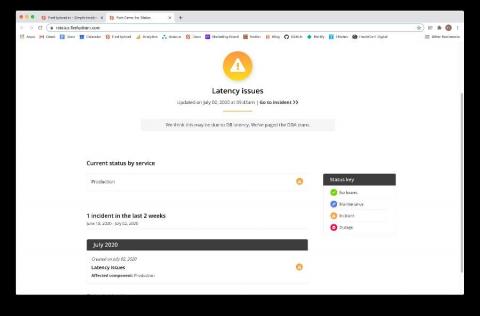
Communication is one of the hardest things to do well while responding to incidents. At FireHydrant, we’ve focused on helping people communicate well within their teams when responding to incidents, and also after the fact during post-incident reviews. But what about communicating with your customers? During an incident, your customers want to know that you’re aware of the problem and are working to mitigate or resolve it.