Digital experience relies heavily on the performance of your website, its servers, and your applications. The user experience is most impacted by load time or responsiveness. The fastest applications usually win the day, but there’s more to website performance monitoring than simply measuring speed. Website performance monitoring looks holistically at your site or application.
In our last post, we covered CloudWatch Metrics in a great deal of detail. We looked at how we can use it to monitor the health of our Lambda functions, including setting up service dashboards as well as alerts. In this post, we will focus on its sister service – CloudWatch Logs. We’ll see how it works and how to get the most out of it.
AWS bills are notoriously complicated, and the Amazon Cost Explorer doesn’t always make it easy to understand exactly where your money is going. When we embarked on our journey to reduce our AWS bill, we wanted more than just the Cost Explorer to help us figure out where to optimize — and when all you have is a hammer, every problem sure looks like it can be solved with Honeycomb!
In July 2019, OpsRamp launched the new Partner Program to help reseller, service provider, and system integration partners build expertise around multi-cloud infrastructure monitoring and modern incident management. July was also a month of industry recognition, with CRN naming OpsRamp as an emerging vendor in the Cloud category. Our resident experts continued to contribute to industry publications with several articles and podcasts.
Test automation plays a significant role in software development. It improves speed, better detects errors and bugs, is repeatable, scalable, has broader coverage, and more. Let’s take a look at test automation using a CI/CD pipeline. In today’s competitive world, great speed in developing software, features, and fixes are vital.
08 Aug 2019 We've just released another major new feature - global monitoring locations! We now provide website checks from 6 locations worldwide: Australia, Canada (east), Germany, India, UK and USA (west). Read on to see how it works, why it's useful and how to get started...
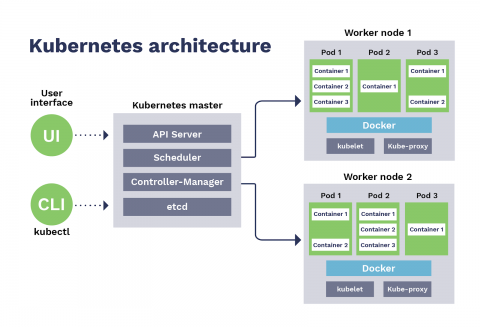
It's no secret that the popularity of running containerized applications has exploded over the past several years. Being able to iterate and release an application by provisioning its dependencies through code is a big win. According to Gartner, “More than 75% of global organizations will be running containerized applications in production” by 2022.
Have you been attending Stackery’s Serverless Summer School? As a non-engineer, I’ll admit, I was a little nervous. Was it going to be over my head? Would I spend the entire Twitch stream furiously writing down all the terms I didn’t know so that I could ask about them later? Would my brain need some debugging after trying to download a bunch of information that I didn’t really get?