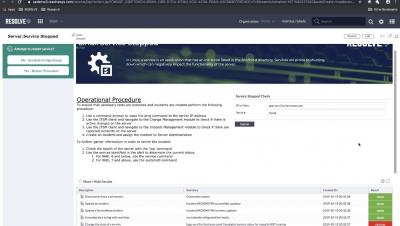
Splunk FixStream Resolve
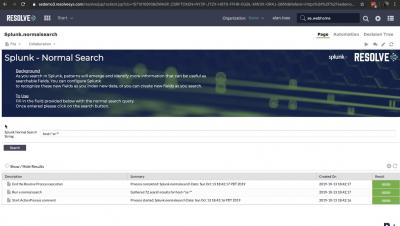
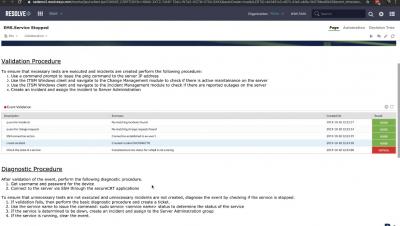
Splunk monitoring feeding FixStream, to identify an issue within the broader service stack, sending to Resolve for automated remediation.


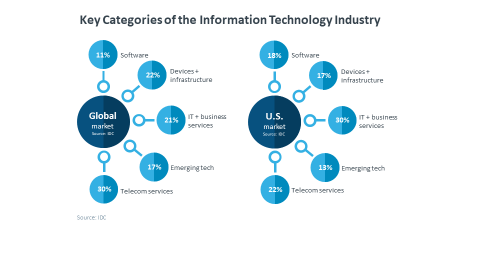
IT is pervasive in today’s setting. Businesses, governments, and individuals use IT products constantly for different purposes. In fact, it is forecast that the global spend would reach $5 trillion by the end of 2019. Most of the money streaming into the IT industry comes for corporations and government agencies. Households are also contributing to it, including home-based commercial ventures.
With the release of the WordPress REST API (version 4.7 circa 2016), WordPress developers started deploying the application as a headless CMS. As the WordPress community started to embrace this architecture, more and more developers are starting to use it in production. Now thanks to the growing number of plugins, WordPress as a headless CMS is starting to become the go-to deployment strategy.
Software teams seeking to provide better products and services must focus on faster release cycles. But running reliable systems at ever-increasing speeds presents a big challenge. Software teams can have both quality and speed by adjusting the policies around ongoing service ownership. While on-call plays a large part in this model, advancement in knowledge, more resilient code, increased collaboration, and practice also mean engineers don’t have to wake up to a nightmare.
In this 740 release, the top priority has been solving certain software failures. From now on, even releases are intended to solve bugs and improve the existing features, whereas odd ones focus on extending the feature range, with the purpose of increasingly refining Pandora FMS.
There’s no sure-fire way to tell whether or not serverless tech is going to grow or even be around next year. Every post-apocalyptic movie has thought me that technology is the first thing to go after a catastrophic event happens. And if that happens we’ll have to return to some ancient tech like ** knock on wood ** containers.
In 2008, Netflix was struck by a disaster. A fast-growing global streaming service was well on its way to transform the entertainment industry when the management faced a problem exposed by a data center failure. Even though it was a single issue, it shut the entire service down, depriving the company of millions in profits and effectively ending the shipments of DVDs (they were still a thing in 2008).
In the first part of our AWS S3 series, we discussed what AWS S3 buckets are, the difference between S3 and EC2s, advantages of AWS S3 object storage, and AWS S3 API integration. In this next post, we’ll be covering AWS S3 Monitoring, including the importance of leveraging data and monitoring metrics, and how Sumo Logic provides insight into your infrastructure with S3 logs.