Operations | Monitoring | ITSM | DevOps | Cloud

The Place Where Modern Operations & Technology Come Together



Google Announces MultidimPodAutoscaler (MPA) for GKE
Google has quietly rolled out a new beta feature for Google Kubernetes Engine (GKE): the MultidimPodAutoscaler, or MPA. Announced in early July 2026, MPA gives GKE users a single custom resource that scales both horizontally and vertically at the same time.


DNS Spy Now Connects to GoDaddy. Every Domain, Every Record, Read-Only.
GoDaddy manages more domains than any registrar on earth, so it has always been near the top of our provider integration list. There was just one problem: in May 2024, GoDaddy restricted its API to accounts holding ten or more domains — fifty for some endpoints. Overnight, certificate renewals broke, dynamic DNS scripts died, and every small business with one or two domains was locked out of automating anything.

Agentic AI in the Data Center: What It Really Means, and Why Security Has to Come First
Agentic AI means a system that acts on behalf of a specific person, within that person’s exact role and access permissions — not a general term for “smart” software. In data center infrastructure, agentic AI only becomes safe to deploy once three things already exist: a complete monitoring pipeline, an analytics pipeline, and a control pipeline governed by strict role-based access control.

Cortex | Enhanced Filters in Engineering Intelligence
Filtering in Engineering Intelligence just got a lot more precise. In this Feature Friday, Principal Product Manager Christine Byun walks through the enhanced filters now live across the platform, using PR cycle time in the Data Explorer as an example. What's new: Try it out in Engineering Intelligence today.
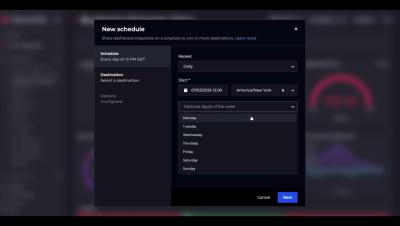
Scheduled Sharing Demo
A brief introduction to Scheduled Sharing in SquaredUp.

8 Best Anti-spam Software To Increase Email Security
With an increasing number of employees working from home, getting top-notch security software has become more important than ever before. While spam can be harmless and viewed as a minor productivity issue, it’s also a significant source of email-borne threats that can put the whole company at risk. Therefore, getting a robust, scalable anti-spam filter is now a necessity, especially for IT services providers and other large-scale use cases.

N-sight Quarterly Release Roundup, Q2 2026
Listen to Mike Adler, N-able Chief Technology and Chief Product Officer, provide an informative update about the latest new capabilities introduced for N-sight UEM. You'll learn about: Stay up to date on our latest updates and get a preview of what’s coming next.

Navigation Menu: New UI Changes Quick Tip
Learn how to seamlessly navigate the updated Megaport Portal. This quick video walks you through the new collapsible left-hand navigation menu, making it easier than ever to move around the Portal and free up screen space while you work. This video shows how to.