Operations | Monitoring | ITSM | DevOps | Cloud

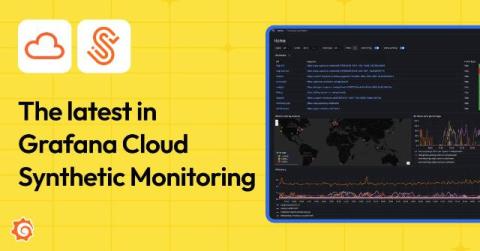
Grafana Cloud updates: k6 browser checks in Synthetic Monitoring, an easier way to share dashboards, and more

We consistently roll out helpful updates and fun features in Grafana Cloud, our fully managed observability platform powered by the open source Grafana LGTM Stack (Loki for logs, Grafana for visualization, Tempo for traces, and Mimir for metrics). In case you missed it, here’s a roundup of the latest and greatest updates for Grafana Cloud this month. You can also read about all the features we add to Grafana Cloud in our What’s New in Grafana Cloud documentation.

RUM vs. Synthetic Monitoring: DevOps Team's Essential Guide

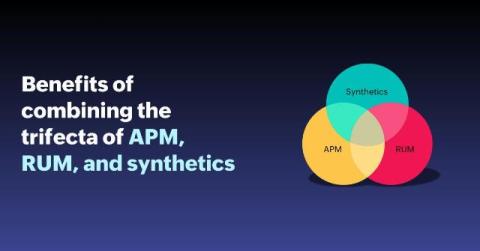
Application slowdowns or outages interrupt the user experience and web performance. This significantly impacts brand reputation, leading to customer churn and a heavy dent in the competitive edge. This is where Application Performance Monitoring (APM) comes in. APM tracks application performance to ensure a positive user experience. Real User Monitoring (RUM) and Synthetic Monitoring are two approaches to analyzing your app’s performance and the digital experience they provide.

Set up browser tests in Splunk Synthetic Monitoring using the Chrome DevTools Recorder

In this video I’ll introduce you to the Chrome DevTools Recorder and how you can use it with Splunk Observability Cloud’s Synthetic Monitoring feature. I’ll explain what the Recorder is and then demonstrate how you can create a recording. We’ll then export the recording and upload it as a new browser test in Splunk’s Synthetic Monitoring feature. After uploading, I’ll walk through the test results and explain when it makes sense to use the Recorder for your Synthetic Monitoring tests.

Introduction to Splunk Synthetic Monitoring in Splunk Observability Cloud

In this video I’m going to introduce you to Splunk Synthetic Monitoring in Splunk Observability Cloud. I’ll explain what synthetic monitoring is and then demonstrate a simple example by creating a browser test for a sample e-commerce site. I’ll also demonstrate how you can link issues found through synthetic monitoring with backend code due to its integration with Splunk APM.

The Best Synthetic Monitoring Tools in 2024

Want to learn more about the best synthetic monitoring tools in 2024? You’ve come to the right place. Synthetic monitoring refers to the process of using a software to test and evaluate the functionality of an application or a website. By following a script, synthetic monitoring mimics the behavior of a user, navigating through pages or filling out forms.

The importance of synthetic monitoring for DevOps

As businesses strive to reduce waste, contain costs, and boost profits in today's hyper-competitive tech ecosystem, increasing launch speeds has become critical. The faster and smarter you launch, the quicker you reap the rewards. In fact, in 2018, over 46% of dev teams used agile project methodologies to hack their launchpad and create more streamlined pipelines. But, while many organisations are nailing the 'speed' part of launches, few have taken steps to optimise the delivery value stream.

The importance of end user experience monitoring

In 2024, customer experience will be the biggest driver of success. While the business world glances at the financial horizon with worried eyes, finding ways to retain users, capture new leads, and create meaningful, long-lasting brands is more critical than ever. According to Forrester, the ROI of customer experience is 9,900%. For most businesses, the value of user experience is apparent—lower costs, improved loyalty, higher satisfaction, and a higher overall LTV.

Maximizing Cost Efficiency in AWS Cloud Environments: Leveraging Synthetic Monitoring Tools for Real-Time Insights

Find out how synthetic monitoring improves cost efficiency in AWS Cloud environments. Discover the advantages, tools, and best practices for maximizing AWS resources and raising performance.