Operations | Monitoring | ITSM | DevOps | Cloud

Feature Release: Obkio Insights: Automatic Network Diagnostics (Beta)

Today, we’re launching Obkio Insights, our biggest feature yet, in beta, and the one we’ve been building toward for 8 years. Insights is launching in beta. That means existing customers can start using automatic network diagnostics today, with more root cause coverage, refinements, and improvements rolling out over the coming months based on real-world feedback. As with any beta, you may run into the occasional bug or rough edge.

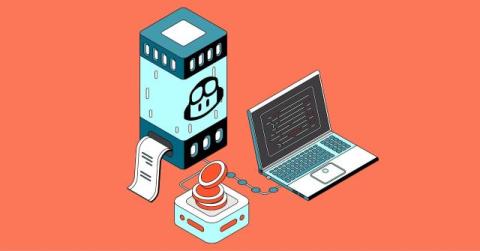
AI SRE Agent Audits Runbook Coverage and Opens the PRs: AURA

3 a.m., the pager fires, and the runbook describes a service that shipped three versions ago. Ask the agent what the cluster actually has instead. Runbooks go stale because clusters change faster than documentation does. Every deploy, every new service, every renamed alert widens the gap between what is running and what is written down.

How to Survive SOX Compliance Season Without Rebuilding Your Records

Why does SOX season turn into a hunt for screenshots and forwarded approval emails? The controls were almost certainly running all year. The record of them running is scattered across a ticketing tool, an identity directory, a backup console, and someone's inbox. SOX compliance puts financial reporting under a legal standard, and the IT team ends up carrying a large share of the proof. Change approvals, user access lists, backup jobs, and batch schedules all become audit evidence.

How Does a Telemetry Pipeline Work?

Telemetry passes through several stages before anyone can use it. Searching it, charting it, and alerting on it all come later. Each stage makes one decision about the data. Their order separates a pipeline that saves money from one that adds a hop. Most teams meet this layer late, usually after a monitoring bill jumps. Here is how a telemetry pipeline works, stage by stage: By the end you can map your own telemetry flow against the five stages, and see which one is costing you.

Background AI agents, meet task containers

Task containers are now generally available on Upsun Cloud, giving you a place to run AI agents alongside the rest of your application. The agent runs as a container inside your Upsun Cloud project, next to the app it works on, with the same access to your environment and data as everything else deployed there. The lifecycle is the part that's new: it fits how agent workloads behave instead of forcing them to pretend to be servers. A few things up front: This is a hands-on guide.

Are you lost in the cloud? A practical guide to cloud migration strategy

What's in this article? For over a decade, the enterprise IT narrative was simple: move everything to the public cloud. Yet as enterprise architectures have matured, many UK technology leaders have discovered that hyperscale cloud environments do not always deliver the outcomes they expected. The promises of seamless scalability and lower total cost of ownership often come with trade-offs that become more apparent over time.

GitHub Copilot Enterprise pricing [2026]: seats, AI credits, and the September cliff

GitHub Copilot Enterprise pricing is $39 per user per month, and since June 1, 2026, each seat includes $39 in monthly GitHub AI Credits, pooled across your whole organization and consumed by token usage at per-model rates. The seat price is fixed. The bill is not: usage beyond the pooled credits is charged on top, which is why the real Enterprise question in 2026 isn't the price per seat. It's your engineers' token consumption.