Operations | Monitoring | ITSM | DevOps | Cloud

The Evolution of Security Tools at Microsoft

The Evolution of Security Tools at Microsoft The development of security tools like MBSA and HF Net Check Pro addresses the need for effective network-wide security scanning. Microsoft created internal tools to manage vulnerabilities and transitioned to XML for scalability. The rise of malware threats increased the urgency for patch management, leading to the distribution of tools and best practices on CDs. This narrative highlights the shift from physical media to digital formats in update distribution.

Top tips: Dismantling data silos in your organization

Top Tips is a weekly column where we highlight what’s trending in the tech world and list practical ways to explore these trends. This week, we're going over how you can eliminate data silos in your organization to enable smoother data flows. The free flow of data is one of the clearest signs of organizational health. When data is locked away—isolated in disparate systems that don’t communicate with each other—you’re dealing with a data silo.

The 1st Successful Commercial Moon Landing | Firefly's Blue Ghost Mission 1 | Grafana Everywhere

Firefly’s Blue Ghost Mission One successfully landed on the moon with the help of Grafana. In this behind-the-scenes talk, learn how real-time dashboards powered critical decisions during descent, tracked payloads, and helped operators visualize everything from footpad sensors to lunar gravity. Footage and photos courtesy of Firefly Aerospace.

Ops Explained: AIOps vs. DevOps vs. MLOps vs. Agentic AIOps

There’s a common misconception in IT operations that mastering DevOps, AIOps, or MLOps means you’re “fully modern.” But these aren’t checkpoints on a single journey to automation. DevOps, MLOps, and AIOps solve different problems for different teams—and they operate on different layers of the technology stack. They’re not stages of maturity. They’re parallel areas that sometimes interact, but serve separate needs.

Top Five Reasons Telemetry Pipelines Should Be on Every Engineer's Radar

You’ve probably felt the pain: data pouring in from every corner of your stack, tools choking on volume, dashboards lagging behind reality, alerts firing (or worse, not firing) without context. If that sounds familiar, it’s time to get serious about telemetry pipelines. Whether you're an SRE trying to stabilize a flapping service or a developer navigating multi-cloud chaos, a telemetry pipeline helps you take control of the data firehose.

Datadog + OpenAI: Codex CLI integration for AIassisted DevOps

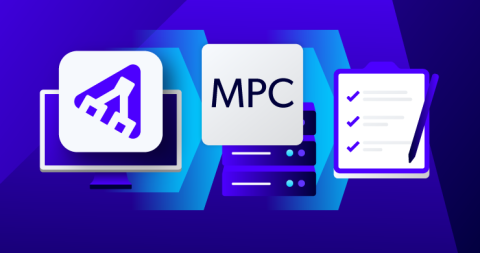
We are exploring how we can help on-call engineers troubleshoot incidents more effectively by providing the OpenAI Codex agent with access to real-time observability data in terminals. We've developed an integration and new tool visualizations that connect OpenAI's Codex CLI to the new Datadog MCP server. In this post, we'll share what we've been experimenting with: enabling an AI agent to retrieve production metrics, logs, and incidents from Datadog in real time and act on that context.

Lumigo Copilot AI Launches to Automate Root Cause Analysis and Remediation

Today, we’re announcing the general availability of Lumigo Copilot, the most intelligent AI-powered observability assistant on the market, built for the complexities of modern microservices. Copilot emerged from a simple realization: Distributed systems produce too much fragmented data across too many layers, making troubleshooting slow, reactive, and deeply manual. Copilot changes that.

7 Generative AI Use Cases for Enterprise Reinvention and Market Dominance

Generative AI has moved beyond early-stage experiments into an emerging driver of enterprise value. By automating complex tasks, personalizing customer interactions at scale, and accelerating innovation cycles, organizations adopting Generative AI (GenAI) see measurable performance improvements. For businesses, the challenge now lies not merely in adoption but in precise alignment of AI capabilities to strategic business goals, driving revenue, optimizing costs, and mitigating risks effectively.