Operations | Monitoring | ITSM | DevOps | Cloud

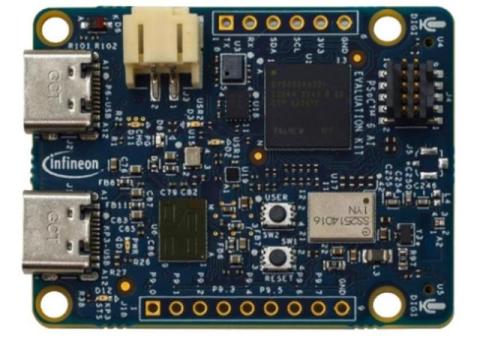
Accelerating Edge AI: Infineon Introduces Development Kit for ML Innovations

The PSoC 6 AI Evaluation Kit is purpose-built for developers who need to bring AI capabilities to the edge, where real-time decision-making and energy efficiency are crucial. Unlike traditional cloud-based systems, where data must be transmitted to remote servers for processing, the PSoC 6 solution enables inference to occur directly at the data source-right at the sensor. This architecture provides numerous advantages, including.

Feature Store Benefits: The Advantages of Feature Stores in Machine Learning Development

Feature stores are rapidly growing in popularity as organizations look to improve their machine learning productivity and operations (MLOps). With the advancements in MLOps, feature stores are becoming an essential component of the machine learning infrastructure, helping organizations to improve the performance and ability to explain their models, and accelerate the integration of new models into the production.

How to Choose Your Machine Learning Specialization as a Student

Specialization helps unlock new abilities to elevate your career in one of the most dynamic and fast-evolving niches. Machine learning is a relevant niche across all industries, from healthcare to finance, so there are various paths to explore. However, deciding what to settle for can become confusing with the many options. It's like when you want to pay for essay services; there are numerous essay writing websites, which make it challenging to determine which one suits your needs, and thus, you have to be careful with your selection to pick the right one.

Azure Machine Learning Pricing - 2024 Guide to ML Costs

Undoubtedly, AI is our future—which means it’s past time to integrate machine learning models into your FinOps multi-cloud tech stack. AI turns simple tasks into something that can be executed at the click of a button. With well-trained models, FinOps, MSPs, and Enterprises can automate cost detection, forecasting, and anomaly identification, streamlining complex financial operations without increasing their workforce. The good news?

How to Deploy Machine Learning Models into Production

Machine learning (ML) models are almost always developed in an offline setting, but they must be deployed into a production environment in order to learn from live data and deliver value. A common complaint among ML teams, however, is that deploying ML models in production is a complicated process. It is such a widespread issue that some experts estimate that as many as 90 percent of ML models never make it into production in the first place.

Machine Learning and AI Explained

There is no escaping the discussion about how machine learning (ML) and AI systems will revolutionize how people and industries work. Most of this discussion needs to be revised, as companies are still evaluating how AI systems (typically Large Language Model (LLM) systems like OpenAI ChatGPT, Google Gemini, Anthropic Claude and others) enhance worker productivity and deliver business benefits. Cybersecurity is one sector where extensive use of AI-enhanced solutions is common.

How Machine Learning and AI are Transforming Telecom's Future

The telecommunications industry is no stranger to rapid technological advancements, but the integration of machine learning (ML) and generative AI is taking it to new heights. AI and ML are not just about technological transformation; they’re also revolutionizing people, processes, and the entire telco landscape. For tech enthusiasts and business leaders, understanding how these AI-driven innovations are shaping the future is crucial.

Optimise your ML workloads on Kubernetes

Kubernetes has proven to be a vital tool for developing and running ML models. It enhances experimentation, workflow management, and ensures high availability while handling the resource-intensive nature of AI workloads. With optimizations, Kubernetes can further improve resource utilization, making AI/ML projects more efficient.