Operations | Monitoring | ITSM | DevOps | Cloud

How to Optimize Spark Enterprise Application Performance | Pepperdata

Does your big data analytics platform provide you with the Spark recommendations you need to optimize your application performance and improve your own skillset? Explore how you can use Spark recommendations to untangle the complexity of your Spark applications, reduce waste and cost, and enhance your own knowledge of Spark best practices. Topics include: Join Product Manager Heidi Carson and Field Engineer Alex Pierce from Pepperdata to gain real-world experience with a variety of Spark recommendations, and participate in the Q and A that follows.
How to Maximize the Value Of Your Big Data Analytics Stack Investment

Big data analytics performance management is a competitive differentiator and a priority for data-driven companies. However, optimizing IT costs while guaranteeing performance and reliability in distributed systems is difficult. The complexity of distributed systems makes it critically important to have unified visibility into the entire stack. This webinar discusses how to maximize the business value of your big data analytics stack investment and achieve ROI while reducing expenses. Learn how to.

How DevOps Can Reduce the Runaway Waste and Cost of Autoscaling

Autoscaling is the process of automatically increasing or decreasing the computational resources delivered to a cloud workload based on need. This typically means adding or reducing active servers (instances) that are leveraged against your workload within an infrastructure.

Learn How to Simplify Kubernetes Performance Management | Pepperdata

Complex applications running on Kubernetes scale super fast, but this can create visibility gaps that can make detecting and troubleshooting Kubernetes issues as difficult as finding a needle in a haystack. Although Docker and Kubernetes are now becoming standard components when building and orchestrating applications, you’re still responsible for managing the performance of applications built atop this new stack.

Big Data Performance Management Solution Top Considerations

The growing adoption of Hadoop and Spark has increased demand for Big Data and Performance Management solutions that operate at scale. However, enterprise organizations quickly realize that scaling from pilot projects to large-scale production clusters involves a steep learning curve. Despite progress, DevOps teams still struggle with multi-tenancy, cluster performance, and workflow monitoring. This webinar discusses the top considerations when choosing a big data performance management solution.

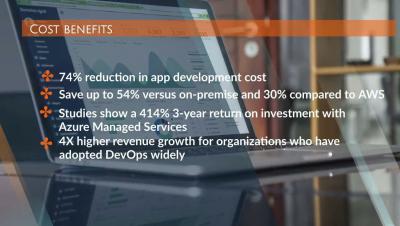
Application Modernization With Azure

By running your applications and data on Azure, you get the innovation, flexibility, and affordability you need to more easily modernize and digitally transform your business, backed by the premium security policies and services you expect from Microsoft. Whether your goal is to make better decisions, perform important tasks faster, build apps more efficiently, drive profitability, or anything in between, #Microsoft and #Azure can provide your organization with the right tools to bring #applications and #data together and get the job done.

Observable Web Applications

Users don’t see your distributed services, cloud architecture, or instrumentation—they only see how the web app is working. Understanding their experience in the client-side is the first step towards understanding the rest of the system. We’ll explore how to make your client-side applications more observable through error tracking, web performance, and usage analytics. With better understanding of real-user experience, you’ll better understand the real behavior of your systems.

Splunk RUM troubleshoots customer-facing issues faster to deliver better user experiences

With Splunk RUM you can quickly navigate from high-level page performance to the source of an issue itself, across your entire architecture for full-stack, end-to-end visibility. A critical component in the Splunk Observability suite, Splunk RUM offers NoSample^TM^, full-fidelity data capture with support for OpenTelemetry - meaning you’ll find root cause without switching monitoring tools, with more context across your distributed systems.