Operations | Monitoring | ITSM | DevOps | Cloud

Metric Watch - a real-time view of past, present, and future of metrics

Enterprise operations monitor various metrics associated with the stability, performance, availability, and other such aspects of business, application, and IT infrastructure. These could be business KPIs such as footfall, checkout time, and sales of the flagship stores. These could be performance metrics such as the response time of business-critical applications. These could be the queue length or enqueue rate of the backbone message queues.


WhiteScreen.VIP: The Perfect Companion for Monitor Testing and Maintenance

Feeling overwhelmed when it comes to finding a dead pixel or uneven brightness on the monitor? Not everybody is here! Many users encounter this issue, which is somewhat common, and may prove to be a troublesome problem, causing reduced productivity and creativity. There’s a very effective remedy: A clean white backdrop.

What's the ROI of reliability?

Reliability doesn’t happen by itself. Making a system reliable and resilient enough that your customers can count on it takes a combination of time, effort, and resources that could be used elsewhere, such as shipping new features. It’s also not optional. In an era where downtime costs an average of $14,056/min (or $843,360/hr), outages have a material impact on businesses. Unfortunately, most systems are sprawling and complex enough that even small amounts of downtime can add up quickly.

Snowflake is the Database Management System of the Year 2024

DB-Engines reveals Snowflake as the DBMS of the Year 2024, beating PostgreSQL and Oracle. DB-Engines is today announcing that Snowflake is our DBMS of the Year for 2024, the third time it has claimed the top spot having previously been ranked first place in 2021 and 2022. Second in the rankings was PostgreSQL, followed by Oracle in third place. Snowflake has emerged as the most popular database management system over the past year, outpacing all other 423 monitored systems.

Accelerate root cause analysis with Watchdog and Faulty Kubernetes Deployment

Understanding and managing the impact of Kubernetes changes is one of the biggest challenges for modern DevOps teams. Every modification to a manifest, whether it’s adjusting memory limits, tweaking CPU allocations, or updating container images, has the potential to destabilize services or degrade performance.

Trusting Cribl: Strengthening Your Software Supply Chain with Transparency and Security

Let’s face it—the term "software supply chain" can feel like navigating a maze of tech jargon. Commit signing, Software Composition Analysis (SCA), eBPF monitoring, SBOM generation, provenance attestations… the list goes on. But at its core, the software supply chain is the backbone of modern development, and its security is non-negotiable. A single vulnerability in this chain can ripple through entire systems, leading to breaches, downtime, and reputational damage.

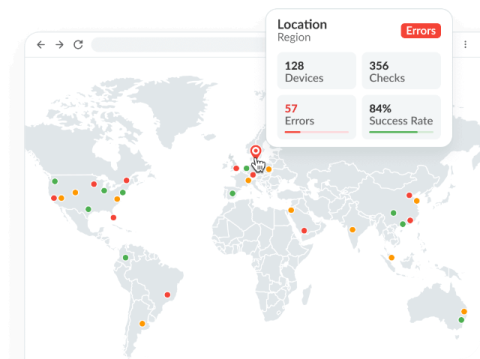
Optimizing CDN Performance with Synthetic Monitoring: Warming Up and Maintaining Cache

Synthetic monitoring involves simulating real-world user interactions with your website or application to test performance, availability, and functionality. Dotcom-Monitor’s synthetic monitoring solution takes this concept further by enabling businesses to prepopulate and maintain their CDN caches effectively.

7 Best Network Management Software Tools

Managing a network can be daunting, especially as your infrastructure grows in size and complexity. Fortunately, network management software can help you monitor, manage, and optimize your network, ensuring everything runs smoothly. This post will explore the seven best network management software tools available today. After, we’ll dive into a comprehensive guide on network management to help you understand its importance and how to choose the right tool for your needs.

Docker Networking 101

This series will guide you through the most crucial container networking concepts. You don't need to be a Docker expert to apprehend the different concepts introduced here, though a basic understanding of networking, Docker, and Kubernetes is required. You can fast-track to the second part by going to Docker Networking Part II. Docker is a tool designed to create, build, and run isolated environments inside containers. It's widely used to containerize applications to run inside lightweight containers.

Maximizing your reliability on AWS

Cloud providers like AWS excel at creating reliable platforms for developers to build on. But while the platforms may be rock-solid, this doesn’t guarantee your applications will be too. It’s the provider’s job to offer stable infrastructure, but you’re still on the hook for making your workloads resilient, recoverable, and fault-tolerant. There’s only one problem: cloud platforms are essentially black boxes.