Operations | Monitoring | ITSM | DevOps | Cloud

The Hybrid Shift: Where Workloads Are Headed and How to Move Them

Businesses migrating from a single, public cloud provider has been the direction of travel of UK digital infrastructure for years. As far back as 2020, Barclays found that 43% of enterprise CIOs were already planning to bring workloads back from the public cloud to on-premises or private cloud infrastructure. Since then, IDC, Gartner and a host of vendor surveys have tracked an increase in this intention.

Top 4 MySQL ADO.NET Providers for 2026

Modern.NET applications depend on stable ADO.NET providers to connect their logic with MySQL databases. But developers often run into familiar issues, async performance that’s unreliable, providers that differ in maturity, licensing that’s unclear, or integration friction with EF Core or cloud pipelines. In this guide, you’ll get a clear, architecture-based comparison of the top ADO.NET providers for MySQL.

3 Best PostgreSQL ADO.NET Providers for .NET Projects

In 2026, choosing the best PostgreSQL ADO.NET providers, or the right PostgreSQL.NET driver, comes down to the details. You need to know how they perform under load, how well they fit your stack, and what happens when things break. This guide compares the leading provider options side by side to help you identify the right fit for your environment. By evaluating these PostgreSQL ADO.NET providers, you can avoid pitfalls early, saving evaluation time and preventing costly fixes later.

dotConnect Providers and Entity Developer Receive Major Feature Updates

We are excited to announce major updates across our dotConnect Providers product line and Entity Developer. The release introduces expanded API support, new business objects and reports, improved authentication capabilities, and broader compatibility with modern.NET platforms. Our dotConnect product line continues to evolve with the latest technology changes.

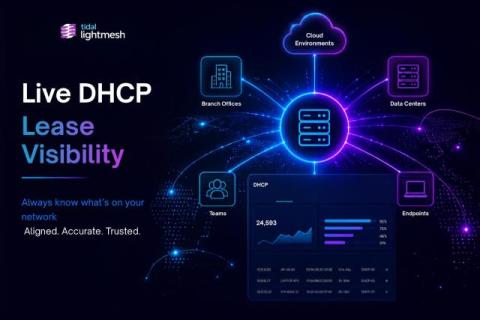
Introducing Microsoft DHCP management in OpUtils: From monitoring to full control

If you manage enterprise networks, this scenario probably sounds familiar: An IP conflict surfaces, connectivity drops for a group of users, and the confusion begins. You check your DHCP server, dig through scope utilization, and try to piece together what went wrong, often after the disruption has already occurred. For years, network administrators have needed a single console for visibility and control into DHCP.

Digital Employee Experience (DEX): why isolated technical metrics are no longer enough

Digital transformation and remote work have made the user’s experience with IT a core operational requirement. Many organizations still measure IT success through traditional metrics such as response time, system availability, and the number of tickets resolved. These indicators, while useful, hide a more complex reality. A server can be 99,9% available and yet an employee may still lose 30 minutes per day due to a slow application or an unstable connection.

Building a Defensible AI Compliance Framework

Organizations have moved past theoretical conversations about AI adoption. Models, agents, and autonomous workflows are entering production environments. Business leaders are optimistic about potential gains in efficiency, decision support, and operational scale. Yet beneath this momentum, compliance and risk teams feel a different pressure.

StatusHub Q1 2026: SolarWinds Integration, Status API Preview & CloudFest Insights

In Q1 2026, we introduced a new SolarWinds Observability integration, started preparing the upcoming Status API for release, and spent time learning directly from MSPs at CloudFest 2026 about the operational challenges shaping modern incident communication.

Run your first microbuild in 5 minutes

AI coding agents produce code faster than most teams can validate it. Without a validation step between the agent and CI, every problem gets caught after the push, and feedback arrives long after the agent has lost context. Agents need consistent feedback while they’re working so that small failures get fixed locally and CI stays focused on moving code into production.

Measure the real impact of AI coding tools on software delivery with Datadog AI Impact

Engineering teams have rapidly adopted AI coding tools, but organizations still struggle to understand their impact. Existing dashboards focus on activity, such as daily active users, acceptance rates, or lines of generated code, but these metrics don’t answer a more important question: Are teams actually shipping more, faster, and with fewer issues?