Operations | Monitoring | ITSM | DevOps | Cloud

Elastic Enterprise Search 8.2: Relevance controls for Elasticsearch

Elastic Enterprise Search 8.2 introduces new ways to ingest, search, and monitor data, giving developers the productivity benefits of using out-of-the-box capabilities along with the power and flexibility inherent in Elastic Stack tools. Operators also gain even more transparency for managing search experiences and observing search performance. For a visual walkthrough of some of the key capabilities in 8.2, check out the latest installment of What’s new in Enterprise Search on YouTube.

Using Rancher Desktop for Local Kubernetes Development

Rancher Desktop is an all-in-one solution for container management on your desktop workstation. It provides an easily maintained Kubernetes installation that runs on your local machine and streamlines setting up containerized workflows in development. Assembling a Kubernetes cluster from scratch can be daunting, because multiple components must work in unison. With Rancher Desktop, you get everything preconfigured with one software download.

How to Monitor Riak Metrics with OpenTelemetry

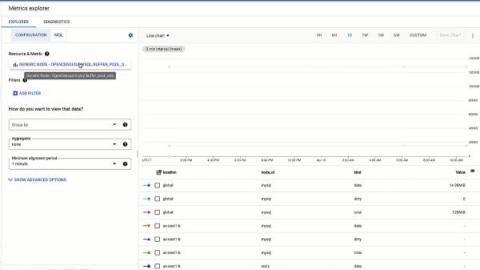
observIQ’s OpenTelemetry members contributed Riak metric monitoring support to OpenTelemetry! You can now monitor your Riak agent performance with OpenTelemetry, and deploy simply with the oIQ OpenTelemetry Collector. You can add the Riak metric receiver to any OpenTelemetry collector. This post demonstrates a configuration for shipping metrics to Google Cloud Operations with OpenTelemetry components.

What Is a CMDB and What Role Does It Play in IT?

Organizations of all sizes have a complex array of hardware, software, staff, and vendors. Each of those assets comes with complex configurations and relationships between them. Visualizing and tracking these configurations and relationships over time is critical to quickly responding to incidents. Plus, it helps inform business decisions, especially regarding future IT components and upgrades.

AWS Summit London - My top 3 sessions

Hi, fellow Qovery readers, Albane here! 👋 To give you a bit of background, I joined Qovery in August 2021, initially as a Product Owner, then moved to a Product Marketing Manager position in March 2022. So yes, I’m all about our product. However, I also spend much time learning about our partner’s products, and that’s why, on April 27, 2022, I spent the day at the ExCel Centre in London to attend the annual AWS Summit.

Proactive Monitoring vs. Reactive Monitoring

Monitoring is a fundamental pillar of modern software development. With the advent of modern software architectures like microservices, the demand for high-performance monitoring and alerting shifted from useful to mandatory. Combine this with an average outage cost of $5,600 per minute, and you’ve got a compelling case for investing in your monitoring capability.

Kubernetes Throttling Doesn't Have To Suck. Let Us Help!

In the Kubernetes (K8s) community, there is a huge misconception about CPU allocation and utilization. Even highly experienced SREs find themselves struggling with the way Kubernetes allocates CPU resources, leading to misconfigured CPU allocations and extremely negative outcomes. For starters, this results in significant quality degradation on important service components, introduced by behind-the-scenes CPU limiting (or throttling).

The MSP Provider's Guide to Getting Hired

In the years that I’ve worked with large technology vendors and an MSP provider, there were a few common denominators between the ones that were successful. Partners that were consistently at the top of the food chain were the ones consistently providing value to their customers in some area other than just one specific product or service that was being offered.

Website downtime: The one where Google Maps went down

March saw many of the big tech companies have technical issues with their products and services. But the biggest one was by far the colossal Google; Google Maps experienced the much dreaded website downtime impacting thousands of users across the globe. It was reported online that Google Maps had suffered a partial outage meaning that many couldn’t access the location tool, but why and more importantly, how?