Operations | Monitoring | ITSM | DevOps | Cloud

Three Properties of Data to Make LLMs Awesome

This post first appeared on Phillip's personal blog. Back in May 2023, I helped launch my first bona fide feature that uses LLMs in production. It was difficult in lots of different ways, but one thing I didn’t elaborate on in several blog posts was how lucky I was to have a coherent way to get the data I needed to make the feature useful for users.

SSL Certificate Errors: A comprehensive guide

SSL certificates create an encrypted connection between a web server and a user’s browser. This encryption ensures that any data transmitted remains private and secure, making it essential for protecting sensitive information like passwords, credit card numbers, and personal details. However, when there’s an issue with the SSL certificate, users can encounter errors that not only disrupt this secure connection but can also hint at potential security risks.

Enhancing Log Analytics in Loki with Cribl Stream

First, when I mention Loki, I’m not talking about one of my favorite TV shows to binge-watch or the lead character played by Tom Hiddleston, who has arguably become one of my favorite characters in the Marvel universe. I’m talking about the Loki, which is a highly available, cost-effective log aggregation system that was inspired by Prometheus. While Prometheus is focused on metrics, Loki is focused on collection of logs.

The Role of Artificial Intelligence (AI) in Digital Transformation

In today's fast-paced digital landscape, it's not enough for companies to merely adapt to change; they must lead the way in embracing transformative technologies because it’s the only way to grow and stay competitive. In this blog, we'll explore how the fusion of digital transformation and AI transformation is shaping business environments around us.
Sponsored Post

Navigating the Top 10 Linux Monitoring Challenges

In today's fast-evolving IT landscape, where technological advancements are the norm, the role of robust monitoring has become increasingly critical. As organizations embrace Linux-based systems for their flexibility, performance, and scalability, the need to effectively monitor these environments has never been more pronounced. Linux, being at the core of numerous mission-critical operations, demands a vigilant and adaptive monitoring approach to ensure optimal performance, security, and reliability.

NiCE Linux Extension Management Pack for Microsoft SCOM

The NiCE Linux Extension Management Pack enables extended Log monitoring for Linux Systems. It includes analyzing multiple rows, wild cards, log correlation, and more. The standard Linux Management Pack for System Center Operations Manager (SCOM) offers a decent level of monitoring for Linux systems, but it might have limitations when it comes to log monitoring on Linux in comparison to more specialized or dedicated log management solutions. Here are a few areas where it might be lacking.

NiCE Unified Monitoring Management Pack for Microsoft SCOM

The Unified Monitoring Management Pack discovers other monitoring systems like Icinga, Nagios, and CheckMK and brings their alerts into SCOM for unified monitoring and alert management. A FinTech provided was faced with managing several monitoring tools, all of them required to run smooth operations.

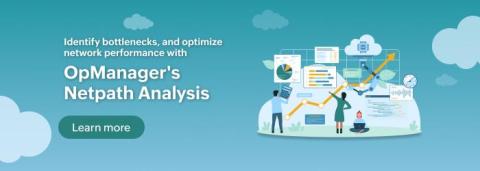
Monitor networks with microscopic precision: Understanding network path analysis

Just as an atom is the building block of all matter, a network packet is a basic unit of data transmitted over a network. But to visualize how atoms makeup a piece of metal, scientists need an electron microscope. Likewise, to visualize, observe, and, most importantly, understand the behavior of network packets in a network, a specialized tool is needed: a network path analysis tool. This tool can visually trace the path taken by network traffic from source to destination.

NOSQL vs SQL. Key differences and when to choose each

Until recently, the default model for application development was SQL. However, in recent years NoSQL has become a popular alternative. The wide variety of data that is stored today and the workload that servers must support force developers to consider other more flexible and scalable options. NoSQL databases provide agile development and ease of adapting to changes. Even so, they cannot be considered as a replacement for SQL nor are they the most successful choice for all types of projects.

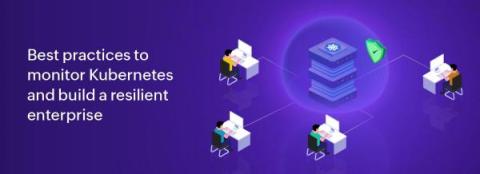
10 best practices to achieve Kubernetes resilience for enterprises

Resilience has more than one meaning, but the one we typically think of is the capability to withstand a crisis when it strikes and be equipped to face higher challenges. Building and adopting resilient technological solutions is the need of today's modern businesses. An enterprise fortified with resilience is well-equipped to face any unforeseen disruptions, mitigate damages, recover quickly, and reduce incident management costs.