Operations | Monitoring | ITSM | DevOps | Cloud

How Much Should I Be Spending On Observability?

In 2018, I dashed off a punchy little blog post in which I observed that teams with good observability seemed to spend around ~20-30% of their infra bill to get it. I also noted this was based on absolutely no data, only my own experiences and a bunch of anecdotes, heavily weighted towards startups and the mid-market tech sector. This post should have ridden off into the sunset years ago. To my horror, I have seen it referenced more in the past year than in all preceding years combined.

14 Key IT Trends for 2025

In the face of rapid technological advancements, businesses must redefine how they operate. Staying ahead of emerging IT trends is non-negotiable if you want to maintain an edge. From remarkable improvements in artificial intelligence (AI) and automation to enhanced connectivity and the provision of more personalized IT services, these developments present numerous opportunities to increase productivity and outshine competitors. Eager to learn what you should add to your IT strateg y in 2025?

AI Agent Observability Explained: Key Concepts and Standards

AI agent observability has become a critical discipline for organizations deploying autonomous AI systems at scale. This guide explores the emerging standards and best practices for monitoring, analyzing, and improving AI agent performance in enterprise environments.

IoT Advances in Automotive Monitoring and Maintenance

The Internet of Things (IoT) has become inseparable from the automotive industry, especially the monitoring and maintenance divisions. Innovations like sensor technologies and advanced analytics have transformed cars and trucks into more connected vehicles. Here's a guide on IoT advancements and what to expect in the future.

Digitate Launches ignio AIOps Platform Availability in AWS Marketplace

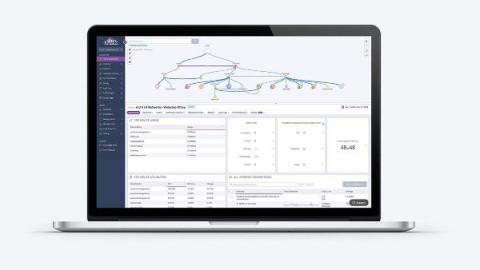
Digitate announces the general availability of its flagship product ignio™ in AWS Marketplace, a digital catalogue with thousands of software listings from independent software vendors that make it easy to find, test, buy, and deploy software that runs on Amazon Web Services (AWS).

APM Observability: A Practical Guide for DevOps and SREs

Modern application architectures have evolved from simple monoliths to complex distributed systems spanning multiple environments. This evolution has transformed how we approach monitoring and troubleshooting. Traditional monitoring methods that focus solely on uptime and basic health checks are no longer sufficient for understanding system behavior in cloud-native environments.

Cloud-Based Network Management: Benefits & How it Works

Managing networks has never been more complex—more devices, more remote work, and more security challenges. Traditional on-premise solutions can struggle to keep up, requiring constant maintenance and on-site troubleshooting. That’s why businesses are shifting to cloud-based network management, which provides real-time visibility, automation, and remote access to keep networks running smoothly.

6 Silent Traps Inside CloudWatch That Can Hurt Your Observability

One of the most common things we hear from our users, is how AWS costs keep increasing with CloudWatch often playing a big role. CloudWatch has long been the default observability solution for AWS users. While it’s great for some use-cases, it’s also important to check out and weigh other alternatives which could be better suited for modern observability demands. Let’s examine some areas where modern observability platforms outweigh CloudWatch. Note.

OpenTelemetry for AI Systems: Implementation Guide

AI systems, from machine learning models to Large Language Models (LLMs) and autonomous AI agents, introduce unique observability challenges. Their non-deterministic nature, complex dependencies, and specialized performance characteristics require thoughtful instrumentation approaches. OpenTelemetry has emerged as the leading standard for implementing observability across these systems.

What Is High Availability in SQL Server?

Developed by Microsoft in the 1980s, SQL Server is a relational database management system designed to help store, retrieve, and manage data. SQL Server’s strong data processing capabilities, robust security, and high scalability make it an excellent option for enterprise environments that need to process high volumes of advanced analytics, transactions, and more. Data availability is vital for businesses of all sizes, so organizations strive for high availability (HA).