Operations | Monitoring | ITSM | DevOps | Cloud

Unlocking Observability - Dive into OpenTelemetry's Top Use Cases

OpenTelemetry can be used for generating and collecting telemetry signals like logs, metrics, and traces. The advantage of using OpenTelemetry for observability is that it is open-source and frees you from vendor lock-in. You can use OpenTelemetry for multiple use cases OpenTelemetry is an open-source project which has emerged as the standard for achieving comprehensive observability in modern applications.

Delivering Distributed Transaction Tracing Across Integration MESH

Distributed transaction tracing (DTT) is a way of following the progress of message requests as they permeate through distributed cloud environments. Tracing the transactions as they make their way through many different layers of the application stack, such as from Kafka to ActiveMQ to MQ or any similar platform, is achieved by tagging the message request with a unique identifier that allows it to be followed.

Are there any alternatives to OpenTelemetry worth considering?

Are you looking for an OpenTelemetry alternative? Then you've come to the right place. There are no good alternatives to OpenTelemetry if your use case involves generating different types of telemetry signals like logs, metrics, and traces and their collection. In certain use cases, like monitoring only metrics or time-series data, you can use a tool like Prometheus. If you’re sure you want an OpenTelemetry alternative, then let me point you to these three here.

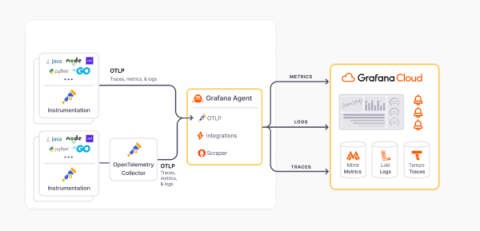
Send Lambda traces to Grafana Cloud with OpenTelemetry

AWS’s serverless technologies are popular because they provide cost effective scaling and great separation of concerns. However, observing serverless architectures like Lambda is challenging due to their transient nature and abstracted infrastructure. Unlike traditional systems with consistent hosts, serverless functions are ephemeral, often scaling rapidly and operating in isolation.

Getting Started with the OpenTelemetry Collector

In the previous article I covered how to set up auto-instrumented tracing for a Node.js app using OpenTelemetry (OTEL). We then sent the spans directly to the open source tracing tool Jaeger. I recommend you give that a read first before walking through this guide because we're going to re-use the instrumentation we set up last time. Today we're going to take things a step further by introducing the OpenTelemetry Collector.

Top OpenTelemetry Tools Most Suited for OpenTelemetry Data

OpenTelemetry is a Cloud Native Computing Foundation(CNCF) project aimed at standardizing the way we instrument applications for generating telemetry data(logs, metrics, and traces). OpenTelemetry lets you export the data it collects to any backend of your choice. In this article, we will discuss some of the top OpenTelemetry tools that are tailored to support OpenTelemetry data, offering valuable insights into the functioning and optimization of applications.

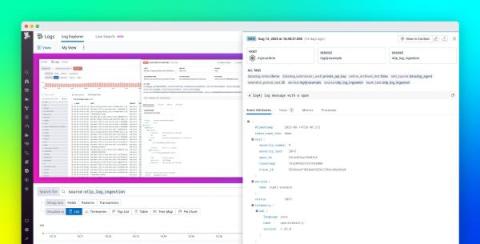
Ingest OpenTelemetry logs with the Datadog Agent

OpenTelemetry (OTel) is an open-source, vendor-neutral observability solution that provides a suite of components—including APIs, SDKs, and a data collector—that enable teams to collect and communicate telemetry data from cloud-native applications and services. OTel also defines the OpenTelemetry Protocol (OTLP), a standard for the encoding and transfer of telemetry data.

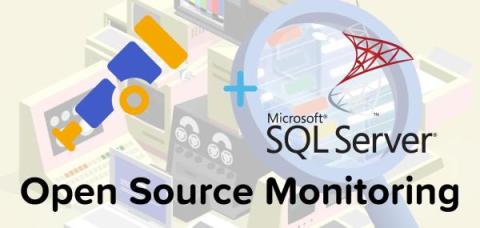
How to Monitor SQL Server with OpenTelemetry

At observIQ, we've seen growing interest in observing the health of Windows systems and applications using OpenTelemetry. Requests on the SQL Server receiver continue to garner the most interest, so let's start there. Below are steps to get up and running quickly with the contrib distribution of the OpenTelemetry collector. We'll be collecting and shipping SQL Server metrics to a popular backend, Google Cloud.

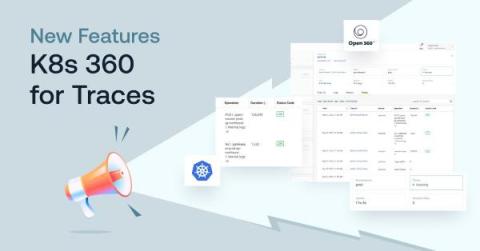
Tracing Your Steps Toward Full Kubernetes Observability

Kubernetes is one of the most important and influential technologies for building and operating software today because it’s so incredibly capable. It’s flexible, available, resilient, scalable, feature-rich and backed by a global community of innovators — that’s a pretty impressive list of intangibles to apply to any particular capability.