Operations | Monitoring | ITSM | DevOps | Cloud

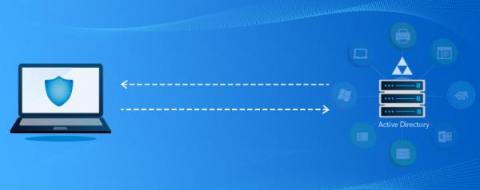
I've Been Everywhere, and the Risks it Can Bring to your Workplace

The song “I’ve Been Everywhere” was written by an Australian country singer, Geoff Mack, back in 1959, where he sang about all the towns he visited across Australia. It became famous in the US in 1962 by the country singer Hank Snow where the song hit number one. He of course did make some changes as the names of the towns were now all based in the US. And since then, many versions have been created. You will by now be wondering what has this to do with an Ivanti blog?

Understanding AWS EC2 Billing: Ways To Optimize Your Costs

EC2 instances come with a spider web of charges — when you take a look at your bill, you’ll see there are hundreds of unique line items connected to your usage. In addition to the instance, you’re also billed for storage, data transfer, and networking associated with that instance. It’s important to fully understand those charges so you can find ways to optimize your costs.

Real Time eCommerce Analytics: The Only Solution for the Holiday Season

Digital trade and eCommerce companies are generating transactions in more significant quantities than ever before. In 2020, eCommerce sales made up 19% of all worldwide retail transactions, representing $26.7 trillion in revenue. The cornerstone of any eCommerce company is providing a seamless, reliable experience where customers can log into a clean interface, browse products, and make purchases quickly and on-demand. Increased digitization after the pandemic has only heightened the stakes.

How to Measure and Improve Your Serverless Application's Health

This article will cover how the health of your serverless application can be measured and improved. Technology and its implementation methodology evolve with time very rapidly. Cost efficiency and productivity are the key drivers of technological evolution these days. With the advent of the cloud, infrastructure costs have been brought down significantly. Serverless technology adds icing to the cake!

11 Reasons Why You Should Migrate to Next-Generation DX APM

The current version of DX APM continues a long history of innovation for APM technology. More than two decades ago, the solution was the pioneer in byte code instrumentation. DX APM is now a next-generation solution for today’s complex and hybrid enterprise environments. Figure 1: Broadcom’s DX APM has evolved from Wily Technology’s invention of byte code instrumentation-based APM, which was introduced in 1998.

Introducing DX Unified Infrastructure Management

Today, we are launching the newest feature of Broadcom’s Enterprise Software Academy: DX Unified Infrastructure Management (DX UIM) resource pages. DX UIM is redefining infrastructure management with full-stack observability, an open architecture, modern admin and operator consoles, and zero-touch configuration.

Do it Yourself: Generic REST API-Based Monitoring

DX Unified Infrastructure Management (DX UIM) has more than 150 monitoring probes, which enables IT administrators to monitor everything from traditional mainframe servers to modern hybrid clouds running on a wide range of platforms and operating systems. Traditionally, a separate probe has been required to monitor each specific technology. That’s because the interface that retrieved monitoring metrics was either proprietary or technology specific.

Monitoring Cohesity with DX Unified Infrastructure Management

The Cohesity Data Platform consolidates backups, file shares, object stores, and data on a single web-scale data management platform. As a result, this platform helps reduce data sprawl and mass data fragmentation. The Cohesity platform allows teams to make their backup and unstructured data more productive for a range of efforts, including rapid app development, compliance, security, and analytics.

Full-Stack Infrastructure Observability with DX Unified Infrastructure Management

The IT infrastructure landscape has seen tremendous changes over last few years due to evolving technologies, newer business models, and ever-changing market demands. Business, market, and consumer demands are pushing such IT advancements as cloud, mobility, and IoT.