Operations | Monitoring | ITSM | DevOps | Cloud

How to Avoid SLA-Killing, Budget-Busting Cloud Performance Problems

There are lots of excellent reasons to move applications into the public cloud. But those benefits cannot come at the expense (pun intended) of performance. Your SLAs, whether explicitly stated and written into contracts or implicitly promised through your commitment to quality, are part of your brand. Falling short is costly. Even if you don’t have to pay penalty fees, your reputation and customer loyalty can take a hit.

Kubernetes Logging and Monitoring: What Kubernetes Can and Can't Do Natively

Kubernetes is a container orchestration tool, but its functionality extends far beyond just orchestrating containers in a narrow sense. It offers a range of additional features that—to a limited extent—address needs such as load balancing, access control, security policy enforcement, and even logging and monitoring. Indeed, Kubernetes’s broad functionality has led some folks to call it an “operating system” in its own right.

Putting You in Control of Your InfluxDB Cloud Spend

We recently changed the pricing of InfluxDB Cloud to let you control your cloud database spend so you spend only as much as you need to run your software and systems — with no wasted budget. If you just want a summary, check the InfluxDB Cloud pricing page. But if you’d like to nerd out on the changes we made, why we made them, and how to estimate your monthly spend on InfluxDB, then buckle up for a deep dive.

Hassle-free IP and switch port management with NetFlow Analyzer's IPAM SPM add-on

“The IP of that device? Let me look it up in this spreadsheet with a never-ending list of IP addresses! *sigh*” Sound familiar? Do you often need to block a certain port allowing unauthorized traffic, get the MAC address of the IP taking up most of your bandwidth, or scan for rogue devices entering your network? Then the IPAM SPM add-on is the solution for you!

Monitor containers on Amazon Bottlerocket with Datadog

Amazon’s Bottlerocket is a new Linux-based open-source operating system that’s designed with containers in mind. Bottlerocket is optimized and stripped down to only the essential software needed to run containers. You can apply updates to Bottlerocket in a single step, and roll them back instantly if necessary. And, because it’s open-source, you can customize the operating system to fit your specific needs.

Using Private Threat Intelligence Feeds on Hidden Security Attacks with Logz.io

Oftentimes, security attacks that were clearly recorded in logs go unnoticed. They are obscured by a large sea of log data created by most modern cloud environments. In some cases, like during a DDoS attack, there will be a huge spike in logs so it will be very clear what happened. In other situations, just a few logs will document the attack. Finding these logs can be like finding a needle in a hay stack. But if you know what to looks for, it doesn’t need to be so hard to spot these attacks.

Tips for Success When Implementing Your Transformation Initiative

Change isn’t without its detractors in terms of people and systems. A misstep in expanding application performance monitoring (APM) across full-stack application monitoring can result in the degradation of availability and performance, stopping a digital transformation effort in its tracks. Avoid this at all costs. Deploying a full-scale digital transformation is a vast undertaking well beyond the scope of this brief article.

Employee Experience - Monitoring the Metrics That Matter

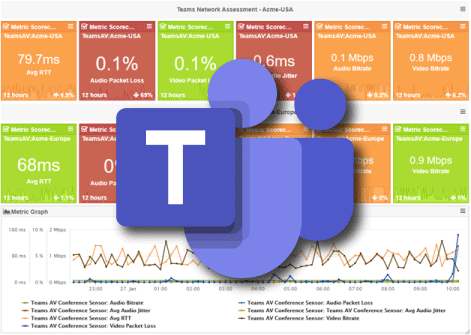
The shift to working remotely has made communication and collaboration tools, such as Zoom, Slack, and O365, an indispensable part of an employee’s workspace. Employees are no longer working within an office network where employee experience was reliable and more or less guaranteed. Instead, they are relying on their local ISP network to connect to everything and anything work-related and this has brought in a lot of vulnerabilities in an otherwise stable and secure workspace.

Do containers and Kubernetes actually reduce AWS costs?

In surveys about why organizations adopt Kubernetes, a desire to reduce overall IT costs is an oft-cited reason for adopting containers and Kubernetes. Yet after the fact, when organizations talk about surprises during Kubernetes adoption, many cite increased costs. So does Kubernetes reduce costs or not? Like so many things in life, it depends. Here are some of the reasons Kubernetes projects come in over-budget and how to avoid them.