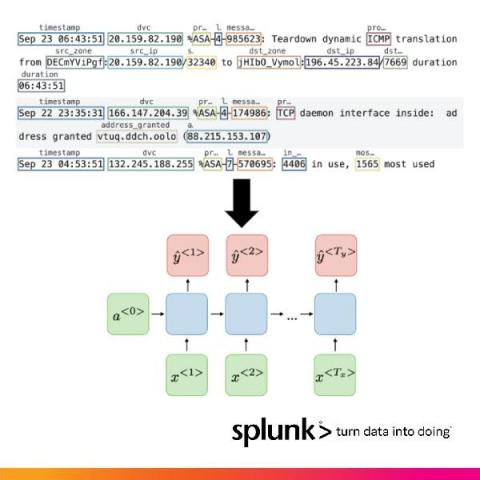
As my co-founder Caleb Hailey likes to say, collecting monitoring and observability data is essentially a solved problem. The only remaining challenges are related to getting that data where you want it to go. When dealing with different formats — say, collecting Prometheus metrics and storing them in Elasticsearch — this can be a non-trivial problem. Put simply, it’s like trying to put a square peg into a round hole.
It’s been just over six months since Splunk disrupted the Application Performance Monitoring (APM) market with the launched SignalFx Microservices APM, combining the technologies of SignalFx and Omnition. We have pushed ourselves harder and continued to invest in creating more value for our customers by making it easier for them to ingest ALL data and providing ever more powerful analytics on top of that data.
Do you SPL? Well, if you do, you probably either already know about the job inspector, or you’re about to. Either way, you probably don’t know enough. Don’t worry though, that’s all about to change. There are a few different aspects of the job inspector that everyone should be familiar with. These include the execution costs, the search job properties, and the search.log. I’m going to walk us through these areas, and some others, and their importance.
StatsD is among the most popular monitoring solutions used to instrument code with the help of custom metrics. It has become very popular over the course of the last few years and emerged as the industry standard for open source inside-the-app monitoring. It has a host of advantageous features that makes it perfect for application performance measurements.
Azure storage has provided companies with a way to store almost limitless amount of data. But just like kids in a candy store this can get out of hand, and expensive. Being able to store as much data as you want is great, however it is something that can grow to a point where you are spending more on storage than you actually need.
The age of rendering most of a web page’s contents on the server and then delivering it as a colossal HTML file is fading into the past. Modern web frameworks like Angular, React, and Vue push towards creating components instead—individual elements on the page that fetch their data in the background and poll for asynchronous updates—which can be reused across your site.
While auditing the Kubernetes source code, I recently discovered an issue (CVE-2020-8566) in Kubernetes that may cause sensitive data leakage. You would be affected by CVE-2020-8566 if you created a Kubernetes cluster using ceph cluster as storage class, with logging level set to four or above in kube-controller-manager. In that case, your ceph user credentials will be leaked in the cloud-controller-manager‘s log.
In the Information Age, data is currency. Controlling the flow of information and more importantly, protecting it has increasingly become a focal point for companies who want to remain competitive in modern markets. Improving data efficiency, integrity, and security is often how companies separate themselves from their peers. We present two of the most common methods for data transfers: FTP and SFTP.