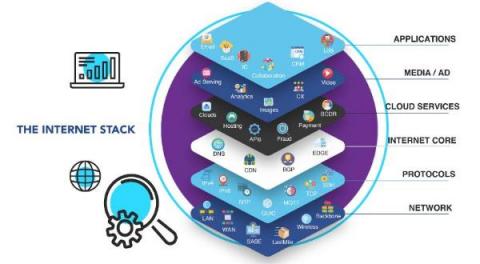
Today the Internet IS the new enterprise network your organization relies upon. However, most of your key applications and systems are outsourced to the cloud. In fact, huge parts of your Internet Stack are either outsourced to the cloud or to 3rd-parties who themselves rely upon the cloud. And that's an issue because if any of those cloud-based services go down, your network is going to be impacted.
In today’s rapidly evolving business landscape, where IT infrastructure and cloud costs play a pivotal role, organizations demand advanced solutions that streamline operations, optimize performance, and drive cost efficiency. Virtana, a trailblazer in infrastructure monitoring and observability and true multicloud cost management, has taken another leap forward by introducing a host of groundbreaking features to our flagship products.
Amid the whirlwind of today's job market and ever-evolving economy, one critical key to an organization's success emerges: empowering employees with growth opportunities that both entice top talent and secure the future of your business. As millennials and Gen Z progressively make up more of the workforce, investing in their career growth has become crucial to the future health of any organization.
CloudOps, or Cloud Operations, is quickly becoming the standard for managing IT operations in the cloud computing ecosystem. By transforming traditional IT operations to harness the full potential of the cloud, businesses are experiencing greater automation, collaboration, agility, and resilience. This article is a deep dive into the concept of CloudOps, its core components, the advantages it offers, and the steps necessary to implement it effectively within an organization.
If you wanted to switch from one project management tool to another, what would happen to your data? As more and more business operations undergo digital transformations and move online, organizations have become more reliant than ever on their digital data. Many take for granted that their data is their own and that they can take it with them if they change tools. But for those who rely on third-party tools, control of data may not be so simple.
In previous blogs, we explored how Elastic Observability can help you monitor various AWS services and analyze them effectively: One of the more heavily used AWS container services is Amazon ECS (Elastic Container Service). While there is a trend toward using Fargate to simplify the setup and management of ECS clusters, many users still prefer using Amazon ECS with EC2 instances.