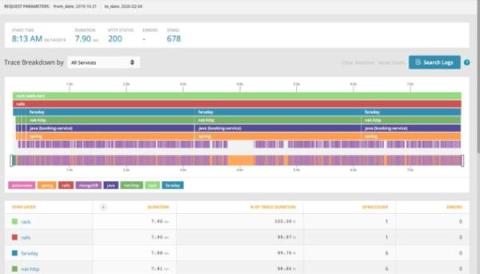
When developers build and deploy their apps, understanding what’s slow or broken in production is more a necessity than a convenience. With Sentry, developers are able to quickly pinpoint and fix issues that impact their end users or business, and we want every developer to have the best error monitoring in place from the moment they deploy code to production. So we’re partnering with Fly.io to do just that.
The costs of lackluster incident management are truly far-reaching. We’ve learned they go beyond explicit costs, like lost revenue and labor expenses. And that they go beyond the opportunity cost of engineers being diverted from building revenue-building features. The final area of incident cost that’s often overlooked is cultural drain.
Application performance management (APM) has moved beyond traditional monitoring to become an essential tool for developers, offering deep insights into applications at the code level. With APM, teams can not only detect issues but also understand their root causes, optimizing software performance and end-user experiences. The modern landscape presents a wide range of APM tools and companies offering different solutions. Additionally, OpenTelemetry is becoming the open ingestion standard for APM.
A leading provider of advanced network communications and technology solutions for consumers, small businesses, enterprise organizations, and carrier partners across the U.S. wanted to become more powerful, using automation, as to better understand the customer impact of bad weather and proactively improve their customer experience.
In my conversations with the ServiceNow partner community, there’s one thing I’m consistently asked: How do we work with you to adapt to the rapid speed of innovation and change? My answer is simple: To truly innovate, you have to understand the trends behind the innovation. ServiceNow recently collaborated with Harbor Research to scan the global marketplace.
Football is officially back, and Doug Madory is here to show you exactly how well the NFL’s streaming traffic was delivered.
Autoscaling the resources and services in your Kubernetes cluster is essential if your system is going to meet variable workloads. You can’t rely on manual scaling to help the cluster handle unexpected load changes. While cluster autoscaling certainly allows for faster and more efficient deployment, the practice also reduces resource waste and helps decrease overall costs.